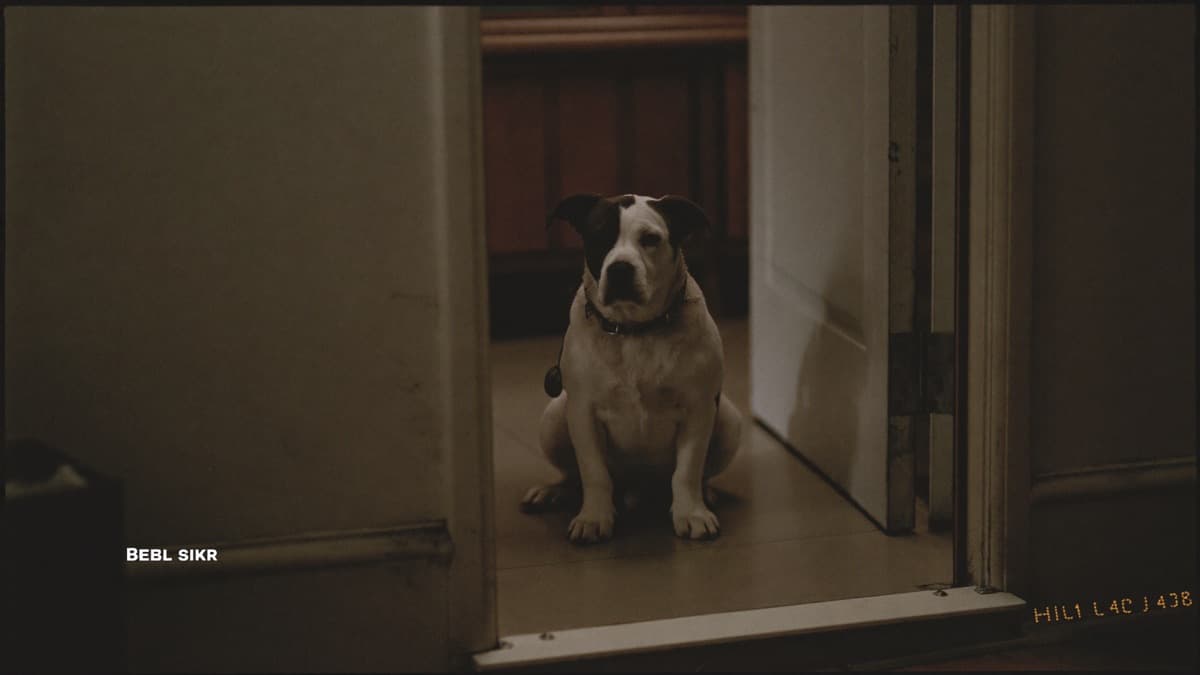
Is it separation anxiety or boredom?
This is the first question, because the treatments diverge completely. Set up a camera and watch the first 30 minutes after you leave.
Separation anxiety looks like panic with a clock on it: distress begins during your departure routine or within minutes of the door closing. Watch for pacing, continuous barking or howling, drooling and panting without heat, refusal to touch food they'd normally inhale, destruction concentrated at exit points, and no real rest for the whole absence.
Boredom or under-stimulation looks like a dog filling time: they settle after you leave, nap, then get up and entertain themselves — a cushion here, a shoe there, bin raiding, scattered chewing anywhere in the flat. Food is eaten immediately. This dog doesn't need behaviour therapy; they need more physical exercise, sniffing time, chew outlets and food puzzles before you leave.
Getting this wrong is expensive: enrichment doesn't touch panic, and anxiety protocols waste months on a dog who just needed a longer morning walk.
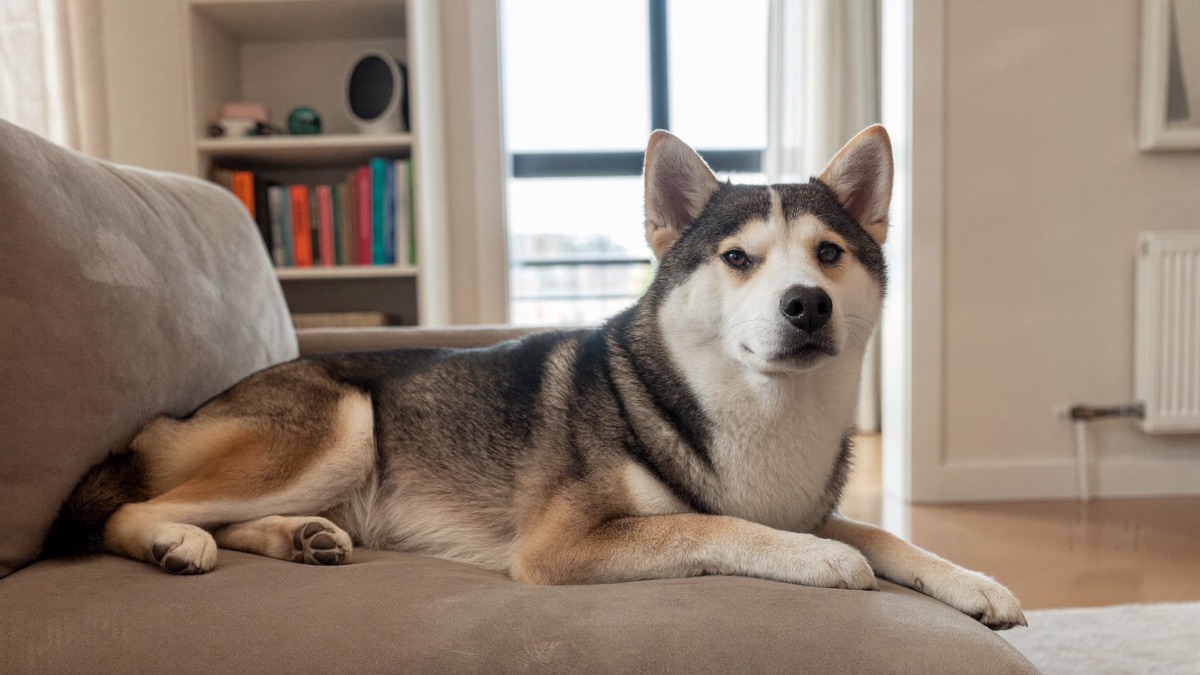
What are the signs of true separation anxiety?
The core cluster, usually visible on camera within the first 15–30 minutes alone:
- Vocalising — persistent barking, howling or whining, often the complaint that arrives via a neighbour's note — or, in an HDB block, the town council.
- Destruction at exits — scratched doors, chewed frames, shredded window blinds, damage aimed at where you disappeared rather than at random valuables.
- Toileting indoors — urination or defecation in an otherwise reliably house-trained dog, only when alone.
- Self-injury — broken nails, abraded paws, damaged teeth from crate bars or doors; escape attempts serious enough to cause harm are a red flag for immediate professional help.
- Pre-departure distress — pacing, trembling or shadowing you the moment shoes and keys appear.
Rule out medical causes with your vet first, especially for toileting changes — urinary tract issues and gastrointestinal disease mimic pieces of this picture.
Why does punishment make separation anxiety worse?
Because the behaviour isn't a choice. A dog who chewed the door frame at 9:15am cannot connect a scolding at 6pm to the act — what they learn instead is that your homecoming is unpredictable and sometimes frightening. Now the dog is anxious when you leave and anxious about your return. The "guilty look" that convinces owners the dog "knows what he did" is appeasement behaviour triggered by your posture and tone. AVSAB's guidance on humane training applies with extra force here: adding fear to a fear-based disorder deepens it. Crating an anxious dog as containment often backfires too — panicking dogs injure themselves on crate bars.
How do graduated departures work?
The protocol systematically teaches your dog that absences are safe by never exceeding what they can currently tolerate.
- Find baseline on camera. How long after the door closes does distress start? Thirty seconds? Ten seconds? That's your starting point, however humbling.
- Defuse departure cues. Pick up keys, put on shoes, touch the door handle — then sit back down. Repeat until these predict nothing.
- Do sub-threshold absences. Leave for slightly less than baseline, return calmly, no fanfare either way. Several short reps per session.
- Increase duration irregularly. Not a straight ramp — mix easy reps among longer ones (3 min, 1 min, 5 min, 2 min) so the dog can't anticipate escalation.
- Suspend real absences during training. This is the hard part. Every full-scale panic rehearsal undoes progress, so lean on daycare, a sitter, family or taking the dog along while durations build.
Progress is nonlinear. Weeks to reach 30 minutes is normal — and 30 minutes is a watershed, because most dogs who manage it can extrapolate to several hours.
When are medication and a behaviourist the right call?
Earlier than most owners think. If your dog panics within a couple of minutes, self-injures, or training stalls for weeks, ask your vet about anti-anxiety medication — daily options and situational ones exist, and evidence supports medication making behaviour modification work faster, not masking it. It lowers the panic floor so the dog can actually learn. Pair it with a veterinary behaviourist (ask your vet for a referral — the Singapore Veterinary Association's clinic directory helps if you don't yet have a regular vet) or a certified separation anxiety trainer, starting in Singapore with the AVS-Accredited Certified Dog Trainer list; this is the single condition where remote training works brilliantly, since the work happens over a camera anyway. Expect roughly S$120–250 / RM150–400 per training session, and S$350–600 / RM500–1,000 for an initial veterinary behaviour consultation, as of 2026.
What about the return-to-office transition?
Many dogs adopted or raised during work-from-home years have never learned that alone means safe — and a sudden five-day office mandate is exactly the abrupt exposure that tips vulnerable dogs into panic. If a return-to-office date is coming, start weeks ahead: build brief absences into WFH days now, keep the camera running, and treat the first solo days as training data, not a test. A hybrid schedule plus a midday walker or daycare bridges the gap while duration builds. The dogs who struggle most are the ones for whom day one back at the office is also their first four-hour absence.