How often by coat type?
Scroll sideways to compare all columns →
| Coat type | Examples | Humid-climate frequency |
|---|---|---|
| Short, smooth | Beagle, Frenchie, local Singapore Special | Every 1-2 weeks |
| Double coat | Corgi, Shiba, Golden Retriever | Every 2-3 weeks, with thorough drying |
| Long or silky | Shih Tzu, Maltese, Yorkie | Weekly, plus brushing between baths |
| Curly or wool | Poodle, Bichon | Every 1-2 weeks, aligned with grooming schedule |
| Oily-coated | Basset Hound, some Spaniels | Weekly; they get greasy and smelly fastest |
| Skin disease (vet-managed) | Any breed | As prescribed — medicated baths may be 2-3x weekly |
These are starting points. The real test is your dog: smelly, greasy, or itchy before the next scheduled bath means shorten the interval; dull, flaky, or scratchy after baths means lengthen it or change shampoo.
Why does humidity change the rules?
Three reasons. Sebum (skin oil) production and bacterial or yeast growth both accelerate in warm, humid conditions, so the "self-cleaning coat" idea travels poorly to the equator. Dogs here get wet constantly anyway — rain, wet grass, reservoir swims — and uncontrolled dampness is worse for skin than a controlled bath followed by proper drying. And skin disease is the background threat: yeast dermatitis and hot spots thrive here, and sensible bathing is part of prevention, as covered in our guide to dog skin problems in humid climates.
Over-bathing is still real. Strip the oils faster than the skin replaces them and you get dryness, itch, and a damaged barrier that infections walk straight through. The fix is rarely "never bathe" — it's a milder shampoo, lukewarm water, and honest observation of your own dog's skin.
What should I do after rain walks?
Rinse and dry, don't shampoo. A quick plain-water rinse of paws, legs, and belly removes mud, drain water, and whatever the five-foot-way contributed, then towel-dry thoroughly — especially between the toes, in the armpits and groin, and under the ears. Rain-damp fur left to slow-dry in humid air is the single most reliable recipe for hot spots (acute moist dermatitis) and musty yeast overgrowth. During monsoon season this rinse-and-dry routine might happen twice a day; that's fine, because there's no detergent involved.
Which shampoo should I use?
A dog-specific one, full stop. Dog skin is close to neutral pH (about 6.5-7.5); human shampoos — including baby shampoo — are formulated acidic and disrupt the canine skin barrier. Beyond that:
- Mild, fragrance-light formulas suit frequent tropical bathing best. As of 2026, decent dog shampoos run roughly S$15-40 / RM25-80 a bottle.
- Oatmeal or moisturising formulas help if you're bathing weekly.
- Medicated shampoos (chlorhexidine, antifungal) are treatment tools — effective, but use them on a vet's instruction with the prescribed contact time, not as everyday soap.
- Rinse longer than feels necessary. Residual shampoo in a dense coat is a common cause of post-bath itch that gets blamed on the product.
If your dog is scratching regardless of what you buy, the answer is a vet visit, not a fourth shampoo brand — clinics island-wide are listed in the Singapore Veterinary Association directory, and the Animal & Veterinary Service publishes general pet-care guidance for Singapore owners.
How do I dry my dog properly?
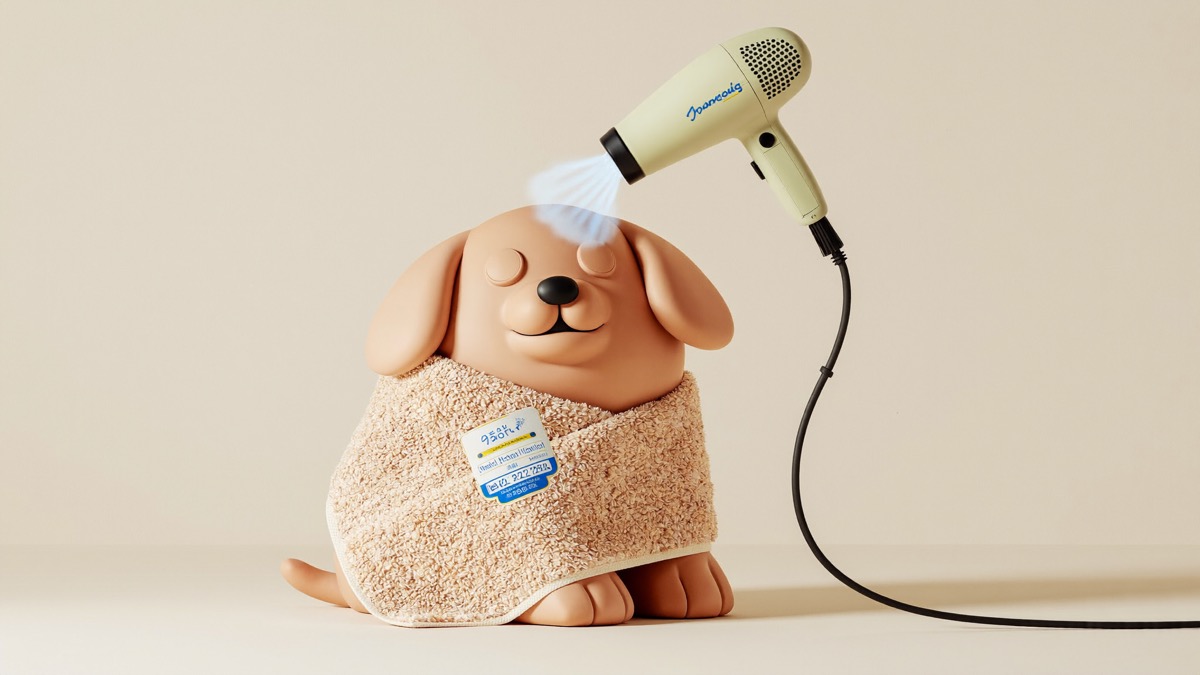
Drying is where humid-climate bathing succeeds or fails, because coats that would air-dry in an hour in Sydney stay damp all afternoon in Johor. Towel first, firmly, with the towel doing the work. Then a dryer on cool or low-warm — never hot, which burns skin under fur — until the coat is dry to the skin, not just at the surface. Double-coated and thick-coated dogs are the priority cases; part the fur and touch the skin to check. Pay special attention to the between-toe spaces, armpits, groin, tail base, and under the ear flaps. A dog left "mostly dry" in an armchair-humid room is a hot spot waiting for a weekend, and those turn from a damp patch to a raw, oozing sore in under a day.