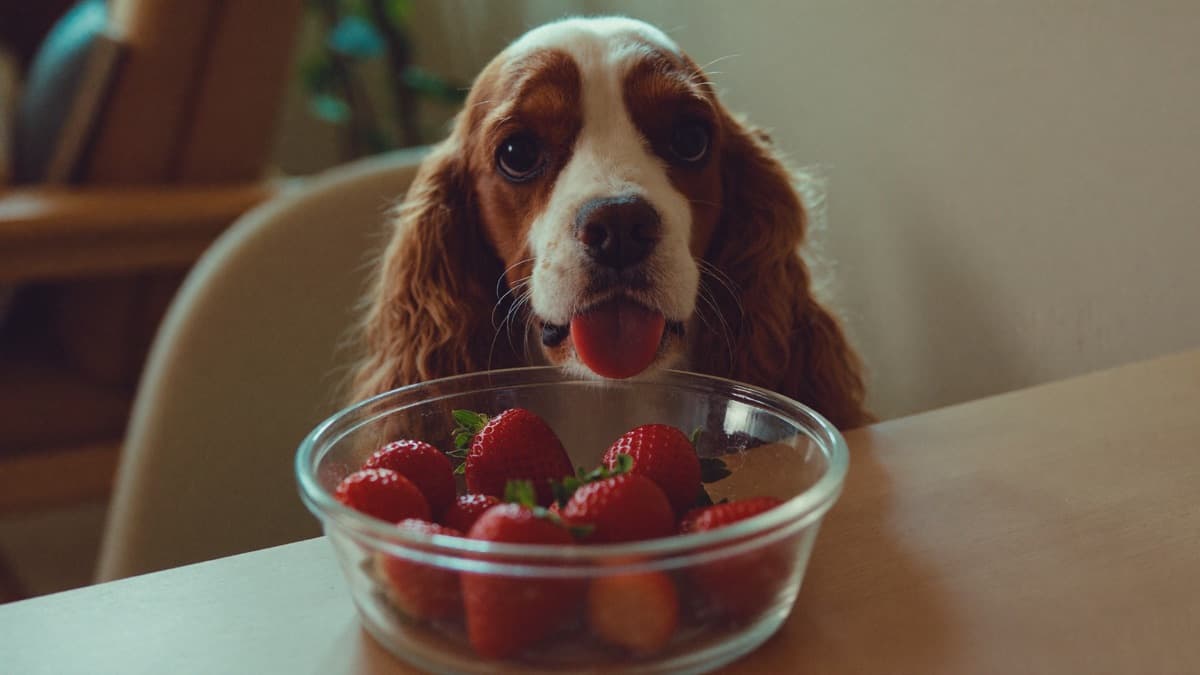
Are strawberries good for dogs?
Strawberries are about 90% water and low in calories, which makes them one of the better fruits to share. They offer vitamin C, folate, potassium, fibre and antioxidants, and their soft texture makes them easy for most dogs to chew.
None of this makes strawberries essential — a balanced commercial diet already provides complete nutrition. They do contain natural sugar, so dogs who are overweight or diabetic should only have them with your vet's blessing, if at all. For everyone else, a few pieces of fresh strawberry are a harmless way to say "good dog".
In Singapore and Malaysia, strawberries are usually an imported supermarket buy (or a Cameron Highlands souvenir). Wash them well before feeding, as you would for your family.
How many strawberries can my dog safely eat?
Follow the standard treat rule: no more than 10% of daily calories from anything outside your dog's main food. Strawberries vary in size, so think in terms of whole medium berries, chopped.
Scroll sideways to compare all columns →
| Dog size | Example breeds | Safe amount (occasional) |
|---|---|---|
| Small (under 10 kg) | Chihuahua, Toy Poodle, Maltese | ½–1 strawberry, chopped |
| Medium (10–25 kg) | Singapore Special, Corgi, Beagle | 1–2 strawberries |
| Large (over 25 kg) | Labrador, Golden Retriever, Husky | 3–4 strawberries |
Serve them a few times a week at most. The first time, offer one small piece and wait a day — some dogs get loose stools from any new food. If your dog tolerates that test piece well, you can work up to the amounts above; if not, strawberries simply aren't worth the mess, and there are plenty of gentler treats to try instead.
What strawberry products should dogs avoid?
Fresh is the only version worth feeding. Skip:
- Strawberries in syrup or canned fruit — far too much added sugar.
- Strawberry jam, ice cream, yogurt drinks and desserts — sugar, dairy and sometimes artificial sweeteners.
- Anything containing xylitol — this sugar substitute (also labelled "birch sugar") appears in some sugar-free jams, candies and baked goods and is highly toxic to dogs, causing dangerous drops in blood sugar and liver failure. Always read labels before sharing anything sweet.
- Chocolate-dipped strawberries — chocolate is toxic to dogs, full stop.
Which fruits are actually toxic to dogs?
Strawberries are safe, but don't let that create a "all fruit is fine" habit. Grapes and raisins can cause acute kidney failure in dogs, even in small quantities — no amount is considered safe. Cherry pits, and the pits of local favourites like longan and rambutan, are choking and obstruction hazards. And savoury table scraps carry their own risk: onions and garlic, staples of local cooking, are toxic to dogs. Keep the safe list short and specific rather than assuming.
When should I call the vet?
Strawberry problems are rare, but call your vet if you notice:
- Vomiting or diarrhoea that lasts beyond 24 hours
- Signs of an allergic reaction — facial swelling, hives, intense itching, or trouble breathing (rare, but treat as urgent)
- Choking, gagging or drooling after eating (whole berries can lodge in small throats)
- Lethargy, weakness or collapse
If your dog ate a xylitol-sweetened product, chocolate, or any amount of grapes or raisins, don't wait for symptoms — call your vet or an emergency animal clinic immediately. With xylitol, signs can appear within 30 minutes. In Malaysia, the Department of Veterinary Services oversees animal health nationwide, but in an emergency your nearest 24-hour clinic is always the fastest option.
What's the best way to serve strawberries to a dog?
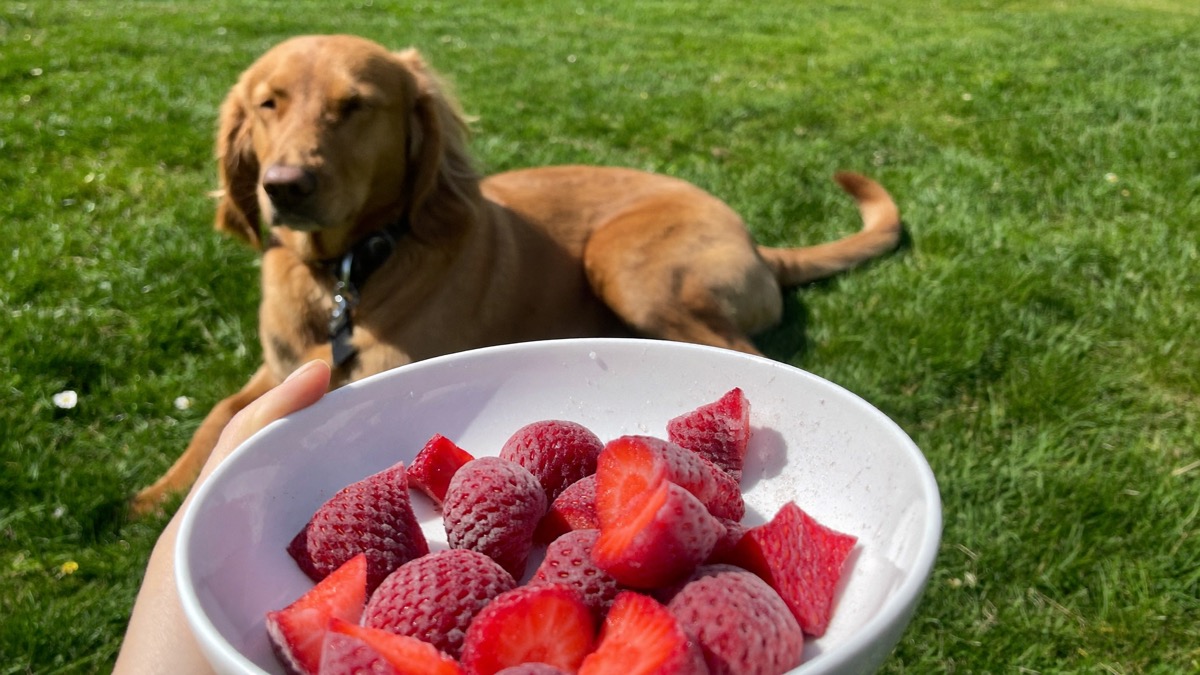
Wash thoroughly, remove the green tops, and cut into pieces sized for your dog — halves or quarters for big dogs, small dice or mash for toy breeds and puppies. In our weather, frozen strawberry pieces make a great cooling treat; you can also mash a berry into your dog's regular food or blend a couple with plain, xylitol-free yogurt for a lick mat.
Fresh, plain and portioned — that's the whole formula. Anything fancier belongs on your plate, not your dog's bowl.