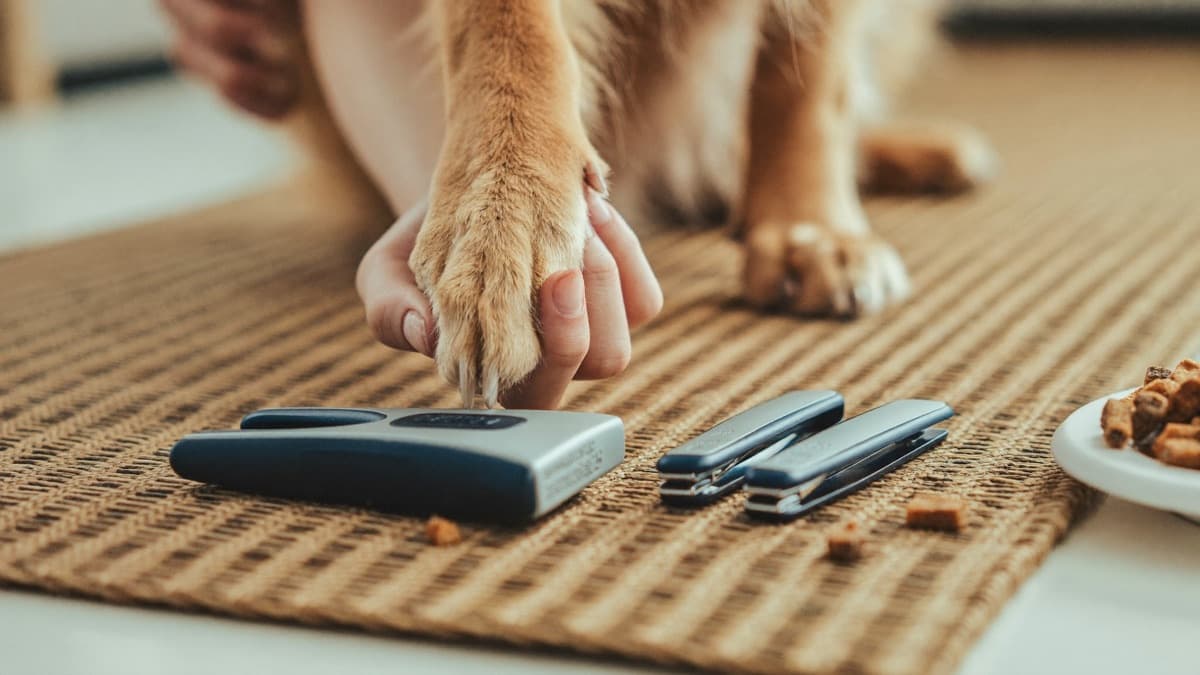
Why is my dog scared of nail clipping?
Usually one of two histories. The first is a quicking accident: the nail's quick is living tissue full of nerves and blood vessels, and cutting into it once hurts enough for the dog to remember every clipper sight and sound afterwards. Our guide to trimming dog nails safely covers how to find the quick and avoid a repeat. The second is restraint history — paws are sensitive, dogs instinctively pull them back, and a dog whose paw has repeatedly been gripped and held while it struggled learns that hands approaching feet mean being trapped. Either way, the fear is rational from the dog's side, which is exactly why force keeps failing.
What is consent-based cooperative care?
It's training that gives the dog a way to say "go ahead" and a way to say "pause" — and proves both are honoured. Counterintuitively, dogs that can opt out choose to opt in far more, because the procedure stops being something done to them.
Two beginner-friendly versions:
- The chin rest. Teach your dog to park its chin on a cushion, your knee or a rolled towel. Chin down means "working", and you handle a paw; chin up means "pause", and you stop instantly. Train the chin rest alone first — lure the chin down, mark, treat, build duration — before pairing it with any paw handling.
- The bucket game. Hold a small pot of treats to one side. Dog looks at the pot: you proceed and feed. Dog looks away: you stop. That's the whole rule, and the dog learns it controls the traffic lights.
The magic ingredient is honesty. The first time you "just finish this one nail" after the dog said pause, you've taught it that its signal is meaningless and you're back to square one.
What does the paw-handling ladder look like?
One rung per short session, and only climb when the current rung is boring:
Scroll sideways to compare all columns →
| Rung | What happens | You move on when |
|---|---|---|
| 1 | Touch shoulder, slide to elbow, treat | Dog stays relaxed, no paw pulled back |
| 2 | Hold paw for one second, treat | Paw stays soft in your hand |
| 3 | Isolate one toe gently, treat | No tension in the leg |
| 4 | Clippers visible nearby during rungs 1–3 | Clippers cause a happy look, not a lean-away |
| 5 | Clippers touch the nail, no cut, treat | Dog stays in position voluntarily |
| 6 | Clip one nail tip, jackpot of treats, done | Dog offers the paw again afterwards |
Then run a one-nail-a-day protocol: one nail each evening means every nail gets done roughly every two to three weeks, which is a perfectly good maintenance schedule, and no session lasts longer than a minute. Tiny cuts, well inside the quick, on a dog that consented — that's the whole system.
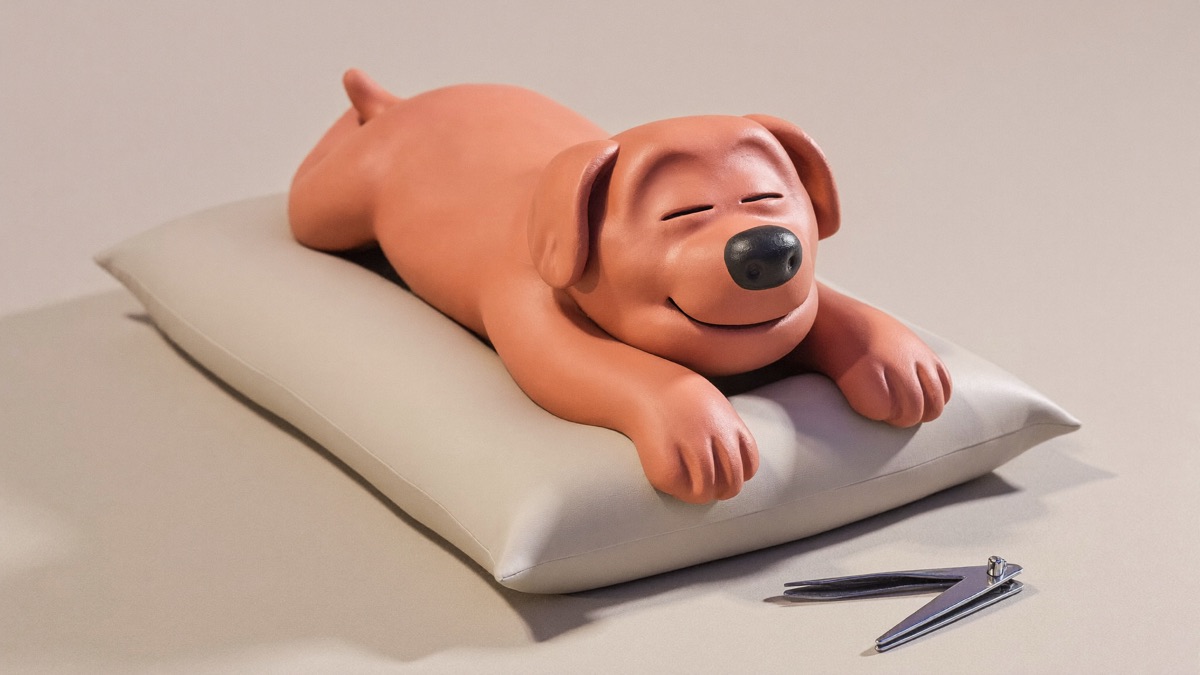
Is a scratchboard a real alternative?
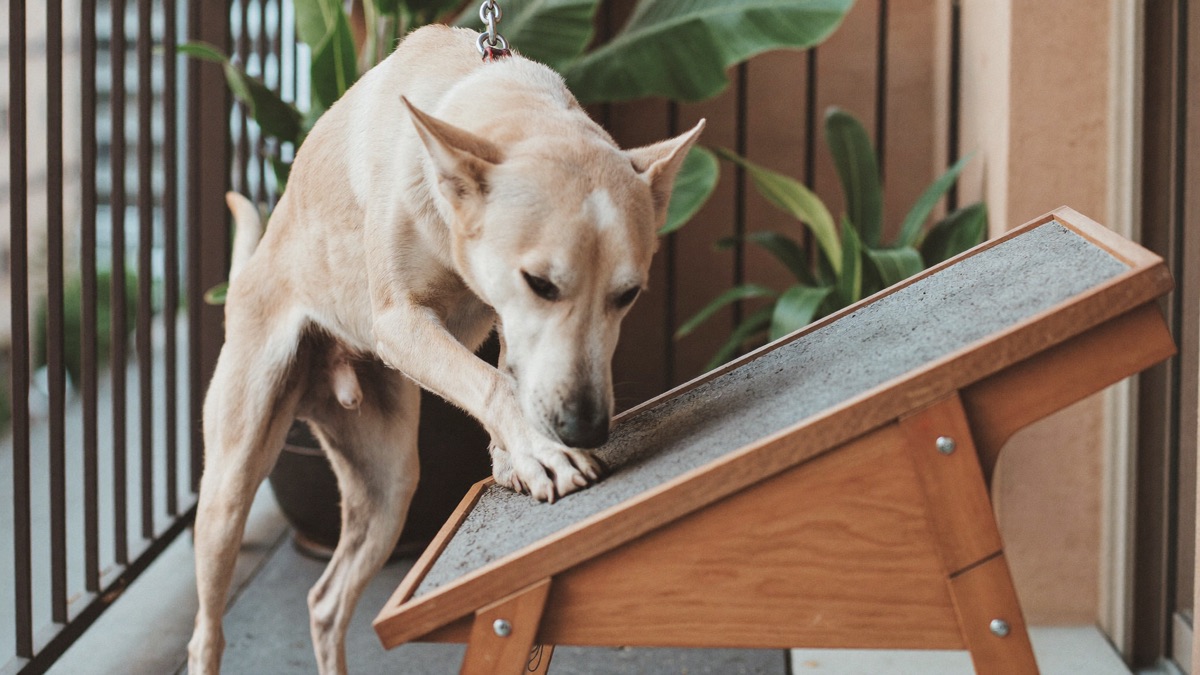
Yes — for front nails it can replace clipping almost entirely. A scratchboard is a plank or board covered in coarse grit tape or sandpaper (a DIY version costs around S$10–20 / RM15–40 in materials as of 2026, or buy one ready-made). Hold it at a slight angle and teach your dog to drag its front paws down it — most dogs learn in a few sessions because digging is already in the repertoire, and dogs that love to dig take to it instantly (see why dogs dig). The dog files its own nails, controls every rep itself, and many genuinely enjoy it. Limits: it mainly files the middle front nails, so dewclaws and hind nails still need the ladder above — but halving the number of nails you clip is a serious win. In HDB flats and condos, hind nails also wear down somewhat on daily pavement walks.
When should I get professional help?
If your dog growls, snaps or panics at rung one, or a quicking accident has left it unable to be touched below the elbow, work with an accredited force-free trainer rather than pushing through — a few guided sessions are cheaper than a bite. Overgrown nails that have gone months uncut can also curl toward the pad; that's a vet or groomer job first, ideally with the handling requests covered in our vet fear guide, then maintenance becomes yours again.