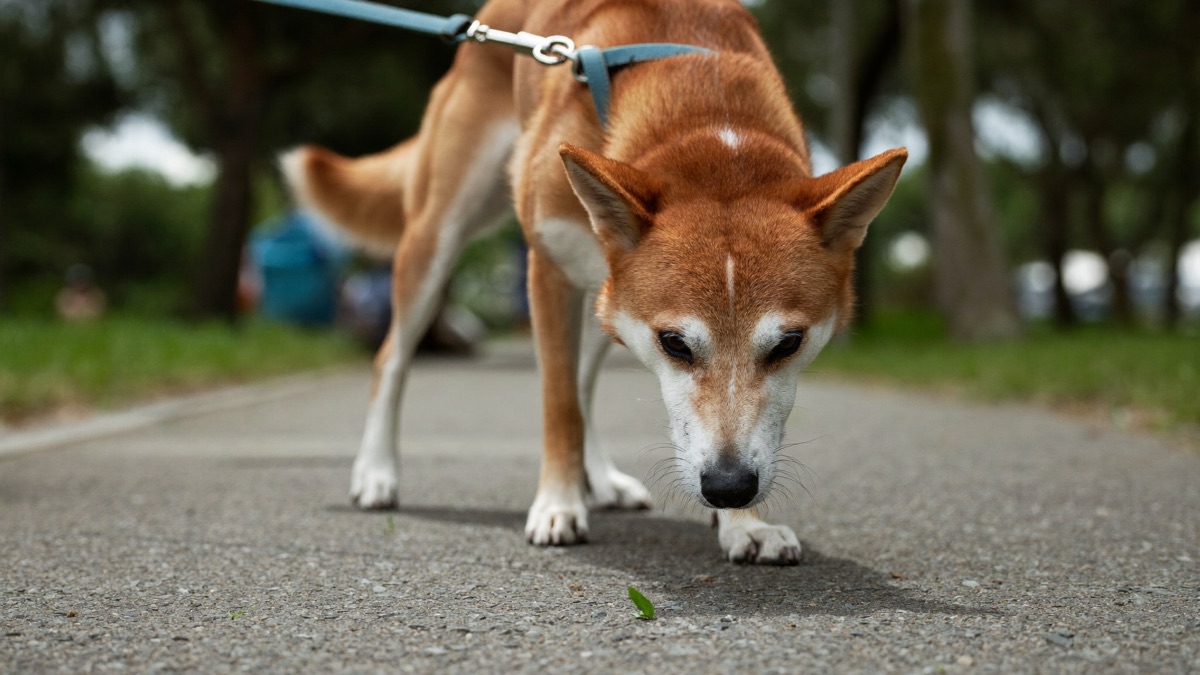
Digging sits in the same category as sniffing and chewing: a normal canine behaviour that only becomes a "problem" when it collides with human flooring. The goal is never to delete it, just to move it.
Why does my dog dig at tiles and bedding indoors?
The two big indoor drivers are comfort and temperature.
Denning is the scratch-scratch-circle-flop routine: wild canids dig shallow beds to create a spot that fits their body and feels protected, and your dog runs the same program on a S$200 orthopaedic bed. Some digging and "nesting" in blankets before sleep is completely normal, and more common in some dogs than others — Dachshunds and terriers, bred to dig, tend to be enthusiastic bedders.
Heat-seeking is the one tropical owners should know. In soil, digging exposes a cooler, damper layer to lie in. A dog in a warm SG/MY flat digging determinedly at the tiled floor, the balcony corner, or the bathroom floor is very often running that cooling program — tiles are the coolest surface available, and the dog is trying to "open" them. Persistent floor-digging plus sprawling flat on bare tile, seeking the fan, and heavy panting is a heat message: improve airflow, offer a cooling mat, and check our guide to excessive panting if it comes with other signs.
Pregnant females also nest-dig intensely before whelping, and a normally calm dog that suddenly digs frantically at floors or doorways may be anxious rather than hot — thunderstorm fear and separation anxiety both produce digging at exits.

Why does my dog bury toys and treats?
Caching. Ancestral canids buried surplus food to hide it from competitors and preserve it; your dog inherits the urge with no surplus and no soil, so the chew gets "buried" in the sofa cushions, under your pillow, or in the laundry basket — often finished with the signature nose-nudge that pushes imaginary soil over the treasure. It's harmless. If one dog in a multi-dog home caches obsessively and guards the spots, feed chews separately and reduce the competition, but otherwise enjoy the archaeology.
Is my dog digging out of boredom?
If the digging is energetic, happens mostly when the dog is under-occupied, and targets random spots rather than beds or cool corners, boredom is the likely driver — digging is aerobic, satisfying, and self-rewarding, which makes it a perfect boredom hobby. Escape digging is its cousin: digging concentrated at doors, gates, or fence lines usually means the dog urgently wants to be somewhere else, whether that's toward something exciting or away from something frightening.
Both flavours answer the same question: does this dog have enough to do? Under-exercised dogs invent jobs. Audit the basics against our guide to how often you should walk your dog, add sniffing time (a slow sniff-heavy walk tires a dog far more than the same distance marched), and put part of each meal into food puzzles instead of a bowl.
How do I channel digging instead of punishing it?
Punishment fails here for a simple reason: digging pays the dog instantly and you're rarely there at the moment it starts. Scolding after the fact teaches nothing except wariness. Channelling works:
- Build a dig box. A shallow storage tub or child's sandpit with washed play sand or shredded paper, seeded with part-buried toys and treats. Actively teach it: bury something exciting, dig a little yourself, celebrate every legal dig. Balcony-friendly and cheap.
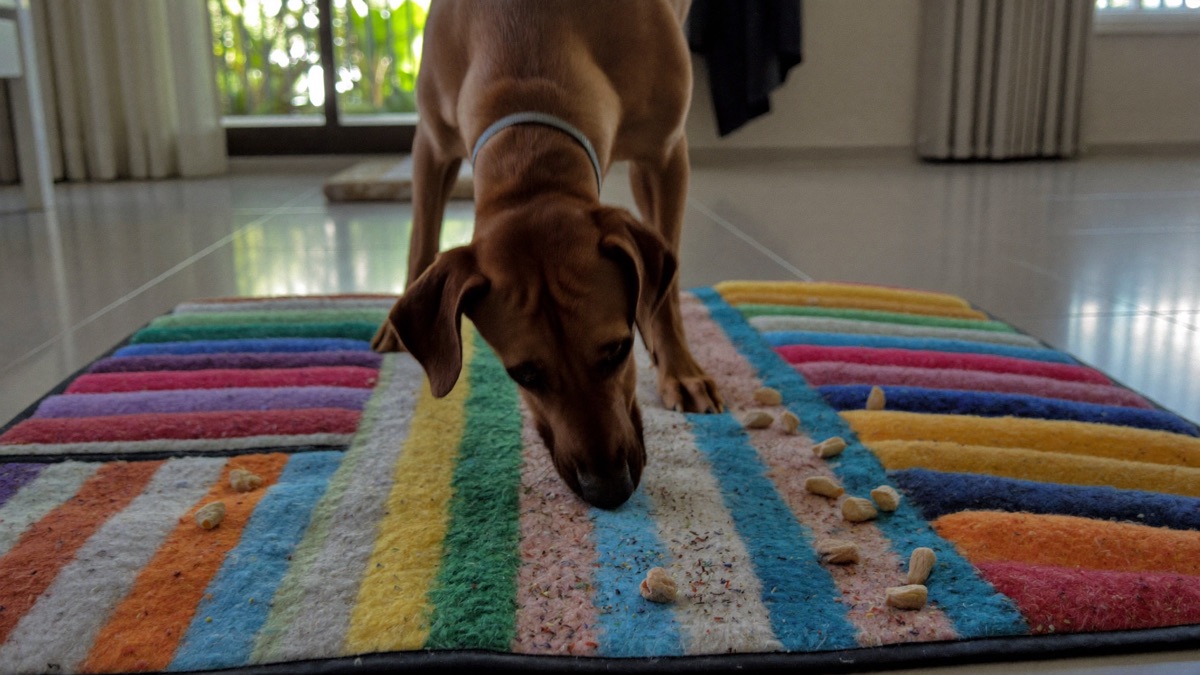
- Snuffle mats for flat-dwellers. A snuffle mat — a rubber mat threaded with fleece strips that hides kibble — delivers the forage-and-dig payoff with zero mess, and works scaled down for even the smallest flats. Rolled towels with kibble folded in do the same job free.
- Redirect, don't interrupt-and-stop. Catch the dog mid-dig at the wrong spot, call it cheerfully to the right one, and pay generously there. The rule you're teaching is "digging is fine here".
- Fix the driver. Cooling for heat-diggers, exercise and enrichment for boredom-diggers, and professional help for anxiety-diggers — frantic exit-digging when you leave is an anxiety flag, not a training problem.
When is digging a medical or behavioural red flag?
See a vet or qualified behaviourist if digging is frantic and paired with panting, pacing, or destruction around exits (anxiety), if a senior dog starts digging or scratching floors at night with confusion or restlessness (possible cognitive decline), or if the "digging" is really persistent scratching at one spot of its own body or bedding, which points to skin trouble in our humid climate — see dog skin problems in humid weather.
For everyone else: the instinct is ancient, the fix is a sandbox, and a dog with a legal place to dig is a dog with one more good outlet in a small home.