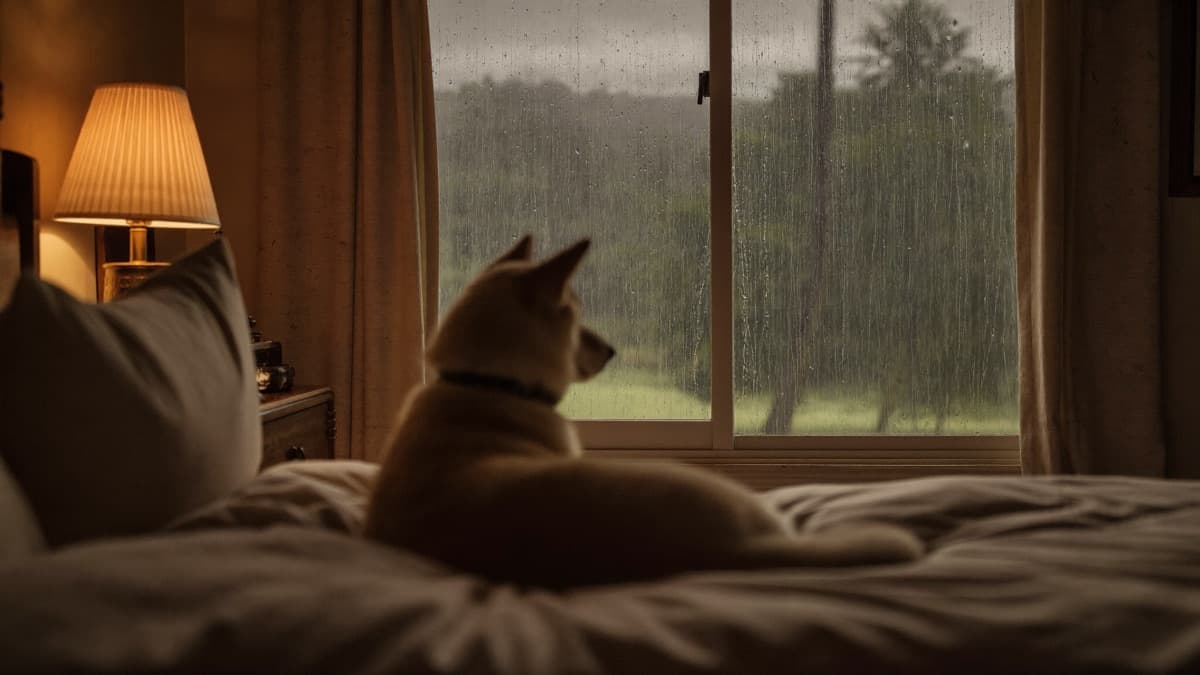
What it does not respond to is waiting. Noise phobias typically worsen with each season, so a mild startle this year is the cheapest time to act.
Why do thunderstorms terrify dogs?
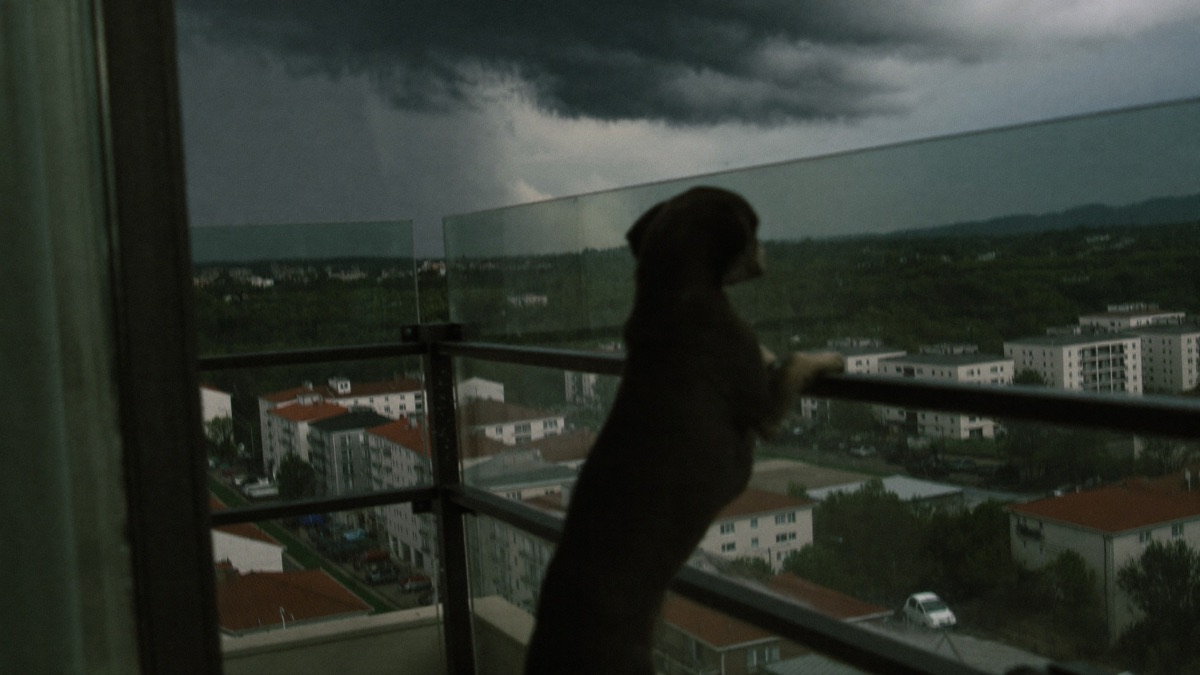
Three stacked reasons. Noise: thunder is loud, unpredictable, and rich in low frequencies dogs hear better than we do — and a dog can't connect the boom to anything it can control. Pressure and weather cues: dogs detect the pressure drop, wind shift, and distant rumble long before the storm breaks, which is why many start pacing and panting on a clear-looking afternoon; the anxiety starts at the forecast. Static: one working theory for why storm-phobic dogs cram themselves into bathrooms and behind toilets is static charge buildup in their coat — tiled, grounded spots may reduce the prickle, and many storm dogs choose them with striking consistency.
Storm fear also generalises: rain on windows, dark afternoon skies, or the fan of the air-con kicking in can become triggers by association. Trembling, panting, pacing, drooling, hiding, and door-scratching are the standard signature — see why is my dog shaking for the wider checklist.
How do I set up a storm-safe den?
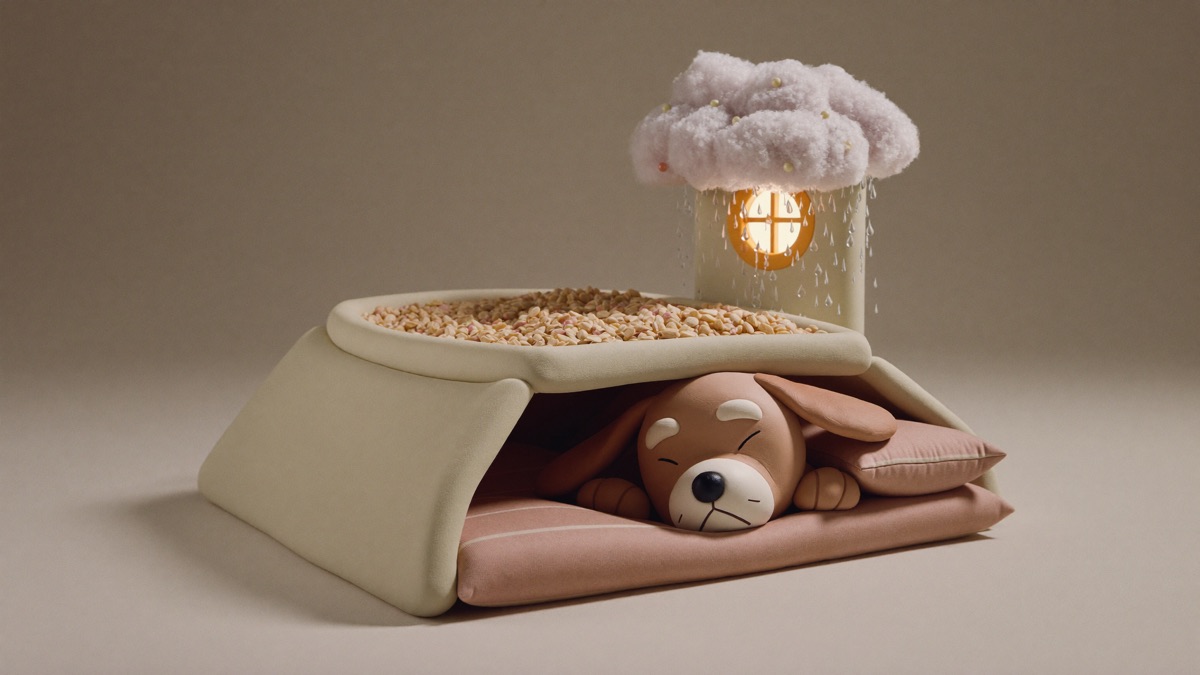
Give the dog what it's already asking for: a small, dark, sound-buffered cave it can choose freely.
- Location: the most interior spot in the flat — a wardrobe corner, a bathroom (many dogs pick it anyway), or a crate in the quietest room, ideally away from windows.
- Build: crate or table draped with thick blankets, familiar bedding inside, water nearby. Leave the door open permanently — a den is a refuge, never a trap, and shutting a panicking dog in a crate can cause injury.
- Sound and light: curtains closed, lights on (masks lightning flashes), and steady background sound — a fan, air-con, TV, or music. Constant broadband noise blunts the contrast of thunder cracks.
- Prime it in dry weather: feed chews and meals there so the den means good things before the first storm tests it.
During the storm itself, stay home if you can for a severe dog, act normal, and comfort freely if your dog seeks you out. The old advice that comforting "rewards fear" is a myth — fear is an emotional state, not an operant behaviour, and calm stroking and a steady voice help rather than harm. What does feed the fear is your own drama: fussing anxiously, or worse, punishing storm behaviour. Punishment adds pain and confusion to terror and reliably makes phobias worse. Never do it.
How does counterconditioning with storm recordings work?
Desensitisation and counterconditioning (DSCC) is the evidence-backed fix, and the SG/MY storm calendar means you should run it during a drier stretch, not mid-monsoon:
- Play a good thunderstorm recording at a volume so low your dog barely registers it — a flicked ear, nothing more.
- While it plays, run something wonderful: favourite treats raining down, a lick mat, a game. Sound on = jackpot on; sound off = jackpot off.
- Sessions of a few minutes, a few times a week. Raise the volume one small step at a time, only while the dog stays loose and happily eating.
- If the dog tenses, stops eating, or looks for the exit, you've jumped too far — drop back two steps and climb more slowly. Weeks, not days.
Recordings can't reproduce pressure changes and static, so DSCC usually shrinks the problem rather than deleting it — that's still a huge win, and it stacks with the den and medication.
Do Thundershirts and pheromones actually work?
Graded honestly: pressure wraps (Thundershirt and similar, around S$50-90 as of 2026) have modest, mixed evidence — some studies show reduced heart rate and calmer behaviour, others little effect. Low risk, worth a trial, fitted before the storm. Adaptil pheromone diffusers and collars have reasonable supporting studies for mild-to-moderate noise fear, again as an add-on rather than a cure. What neither does is treat severe phobia on its own — a panicking, drooling, escape-digging dog needs more than a snug shirt.
When does storm fear need the vet?
If your dog injures itself, destroys doors or window grilles, drools and trembles for hours, toilets indoors from fear, or you're managing storms more than enjoying your dog, that's a phobia — a medical-grade problem with medical-grade help. Vets can prescribe fast-acting event medications given as the sky darkens, or daily medication for the storm season in severe cases, and the drugs make behaviour work possible rather than replacing it. The pattern is the same as for separation anxiety: severe anxiety disorders are vet-and-behaviourist territory, and in Singapore the AVS-Accredited Certified Dog Trainer list is the right place to find qualified, force-free help.
Storms here are a fact of life. A den your dog trusts, a training plan run in the dry weeks, and a vet in the loop for the hard cases turn near-daily thunder from a crisis into background noise.