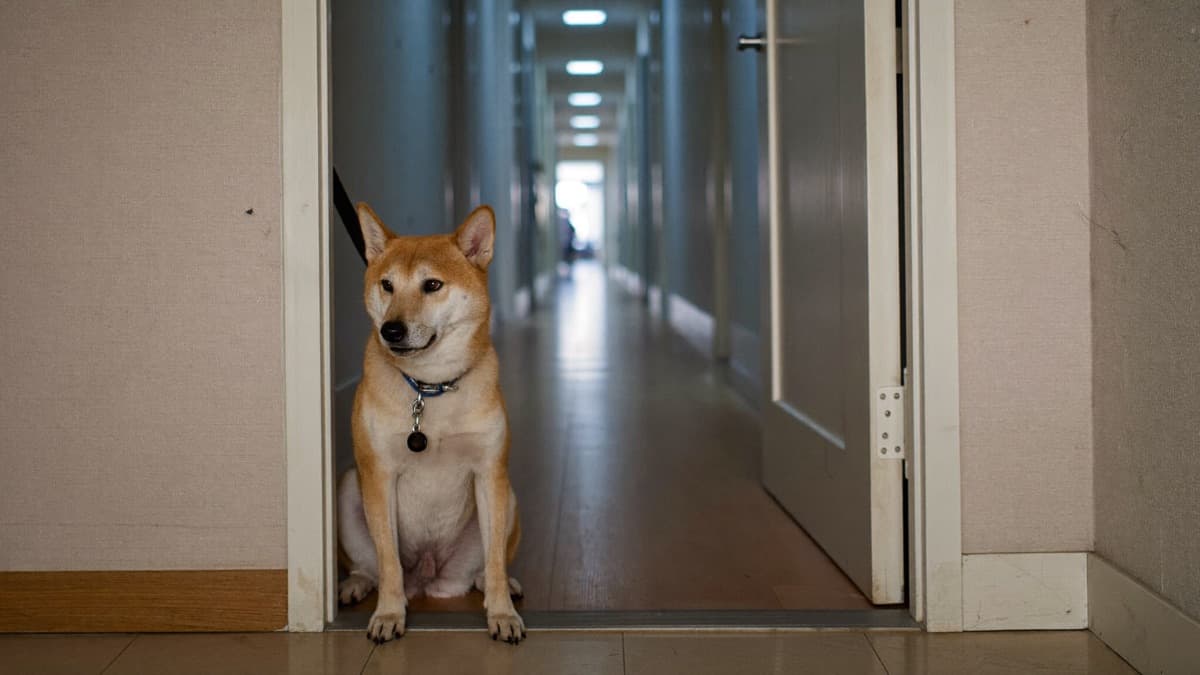
Why is door dashing so dangerous here?
Because our geography gives an escaped dog almost no margin. From an HDB flat, a dog that slips through the front door is in a corridor within a second, at the lift lobby or stairwell in five, and — if a lift door happens to be open or someone's coming up the stairs — at void deck level and heading for a road in under a minute. Condo lobbies funnel straight to driveways; landed homes open onto streets. There is no forgiving suburban front garden to buy you time. Add traffic, drains, other dogs and a dog running on pure adrenaline, and you understand why trainers class door dashing with recall failure as a life-safety issue, not an etiquette one.
The behaviour is also self-rewarding: every successful dash delivers freedom, novel smells and often a glorious game of being chased. Each escape makes the next one more likely. That's why the plan below leans on prevention first — a behaviour that never gets rehearsed never gets stronger.
What is the wait-at-thresholds protocol?
You're teaching one rule: an open door is not permission — my release word is.
- Start at a boring internal door. Ask for a sit, reach for the handle. If the dog's bottom lifts, the hand comes off the handle. Sit resumes, you try again.
- Open the door a few centimetres. Dog holds the sit → mark ("yes") and pay behind the threshold, tossing the treat away from the door. Dog breaks → door closes calmly. The door itself teaches: moving makes it shut, waiting makes it open.
- Build to a fully open door with you stepping through first, then release with your word ("okay", "free") — never with the door movement or your body language.
- Only then move to the front door, then the front door with a family member outside, then with the doorbell ringing, then with the lift dinging down the corridor. Raise one difficulty at a time.
- Pay the wait generously forever. This is one behaviour you never let go stale.
Practise both directions — dashing out matters most, but a dog that waits coming in keeps the habit symmetrical and strong.
What are airlock habits?
An airlock means two barriers between your dog and the outside world, never open at the same time. In practice:
- A baby gate or pet gate a couple of metres inside the front door. The front door only opens when the gate is shut; the gate only opens when the front door is shut.
- No gate space? Use a room door: the dog goes behind the bedroom or kitchen door before the front door opens for deliveries and visitors.
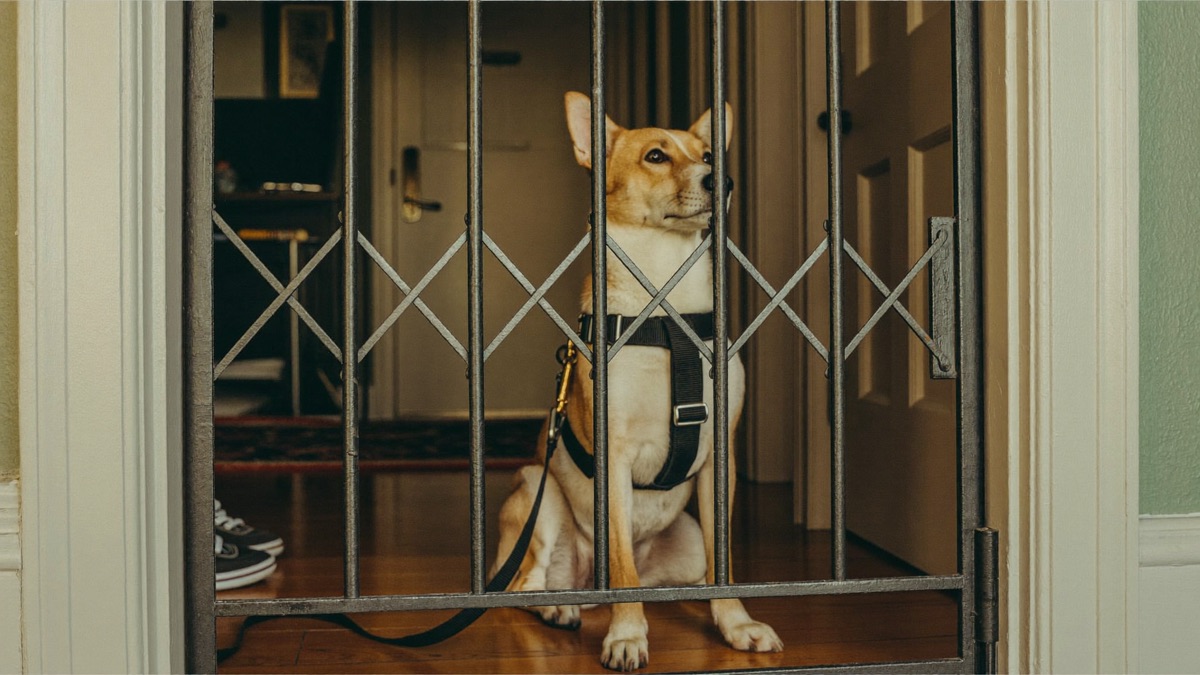
- Gates or grilles at the front door count as a barrier only when actually latched — a grille left ajar is a door, not an airlock.
- Brief the household and any helper: deliveries, gas checks and renovation visits are peak escape windows. The rule is dog secured first, then open.
Airlocks are what protect you on the days training fails — and every dog has those days.
What is the leash-on-before-door rule?
Exactly what it says: the leash clips to the collar or harness inside the flat, before the front door opens — every single walk, no exceptions. The excited pre-walk scramble at an open door is the single most common dash scenario, and this rule deletes it. Bonus: requiring a calm sit for the clip-on doubles as daily threshold practice. The same applies in reverse at the car — leash on before the car door or boot opens.
What's the recall backup?
If the layers ever fail, the thing that brings your dog back is a trained emergency recall — a word that has been paid with jackpot-level rewards hundreds of times in easy situations before it's ever needed in a hard one. Build it properly with our guide to recall training, and keep the emergency word separate from the everyday "come" you use for bath time.
What should I do mid-escape?
The counterintuitive bit that everyone gets wrong in the moment: never chase. A chased dog runs faster and further — you cannot outrun it, and pursuit turns escape into the best game of its life. Instead:
- Run away from the dog, calling its name in a happy, playful voice. Most dogs chase what flees.
- Crouch or sit down sideways and pretend to find something fascinating on the ground. Curiosity pulls many dogs back within reach.
- Use magic words with history: "treats!", the biscuit-tin shake, "car ride?" — whatever reliably works at home.
- When you get hold of the dog, celebrate. Whatever the panic cost you, the capture must be the best part of the dog's day, or next time it will dodge your hand.