Why does my dog pee when greeting people?
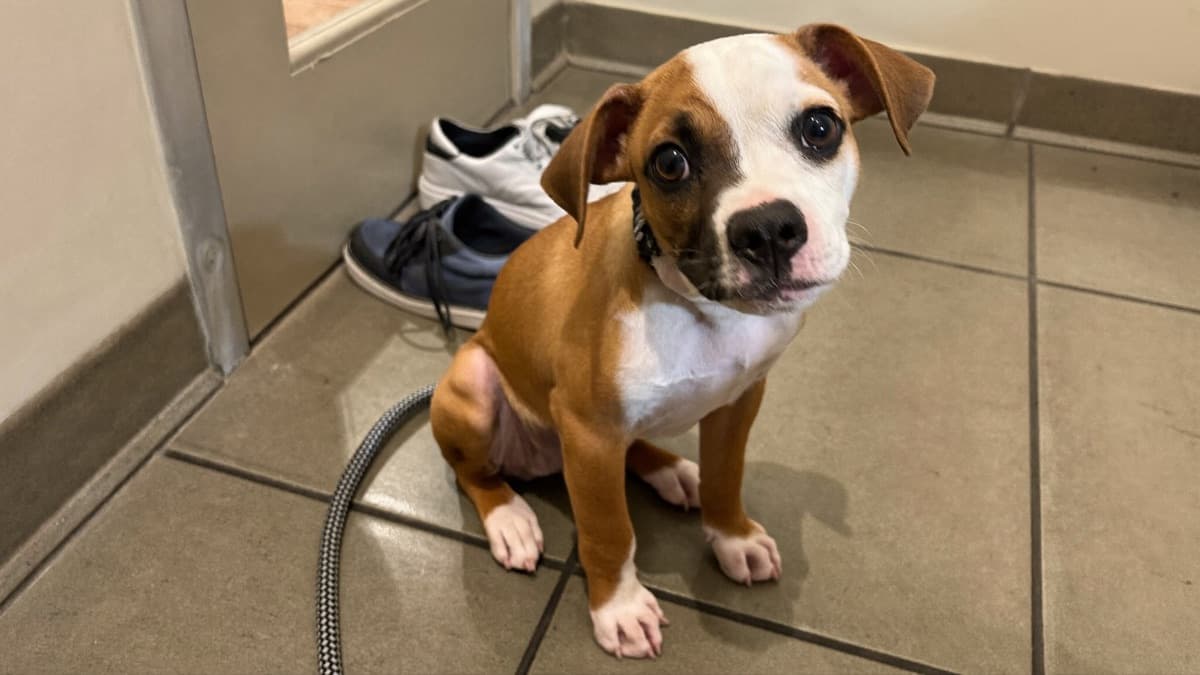
Because appeasement urination is hard-wired. Puppies urinate when their mother licks them; a young or soft-tempered dog meeting a big, exciting, towering human runs the same ancient subroutine: lower the body, tuck the tail, flatten the ears, sometimes roll over — and release a little urine. It's a social white flag, and it's involuntary in the truest sense: the dog is not choosing this any more than you choose to blush.
The classic triggers: you arriving home, visitors greeting the dog, leaning over the dog, direct eye contact, reaching over the head, and scolding in a stern voice. It's commonest in puppies, adolescent dogs, and gentle, sensitive types — and a close cousin, excitement urination, produces the same puddle from sheer arousal (jumping, wiggling, happy squealing) rather than appeasement. The protocol below fixes both.
What it is not: a house-training problem. A dog that piddles at greetings but toilets properly the rest of the day has learnt toilet training just fine — if the accidents happen at other times too, work through our apartment toilet-training guide instead, and if urine appears at random, read on to the medical section.
Why must I never scold the puddle?
Follow the logic from the dog's side. The puddle means "please don't be angry with me." If you respond with anger — a raised voice, a rush to grab the dog, nose-in-it nonsense — you have confirmed the dog's fear and increased the need to appease, which produces bigger and more frequent puddles. Punishment is not just unkind here; it is mechanically the exact wrong lever. Many "my dog pees more than ever" cases are simply this loop running for months.
Clean-up is admin, not discipline: silently, with an enzymatic cleaner, ideally after the dog has wandered off. No sighing theatrically at the dog. It genuinely notices.
What is the calm-entrances protocol?
The goal is to drain all the social voltage out of arrivals and greetings:
- Come in like it's boring. No eye contact, no greeting, no talking to the dog. Hang up your keys, put the shopping down, move slowly.
- Ignore the dog for the first few minutes — until the wiggling settles. Greeting a calm dog builds calm greetings; greeting a hysterical one builds hysteria.
- Greet low and sideways. Crouch down side-on to the dog, at a small distance, and let the dog come to you. Crouch, don't loom — bending over a dog from full height is the posture that triggers most puddles.
- No head pats, no direct stares. Stroke the chest or side, briefly, in a slow voice. Better still, greet outdoors or on a washable mat area while training is in progress.
- Brief guests like a bouncer. "Ignore her completely when you arrive; you can say hello after ten minutes, crouching sideways, no leaning over her." Excitable visitors are the biggest setback generators.
- Redirect the energy. Tossing a treat away from you, or asking for a sit before any attention, gives the dog a job that competes with the appeasement script.
Confidence work does the rest in the background: reward-based training, sniffy walks, and games the dog wins. A dog that feels safe doesn't need to fly white flags — the general approach in dog anxiety signs applies here in miniature.
Do puppies grow out of it?
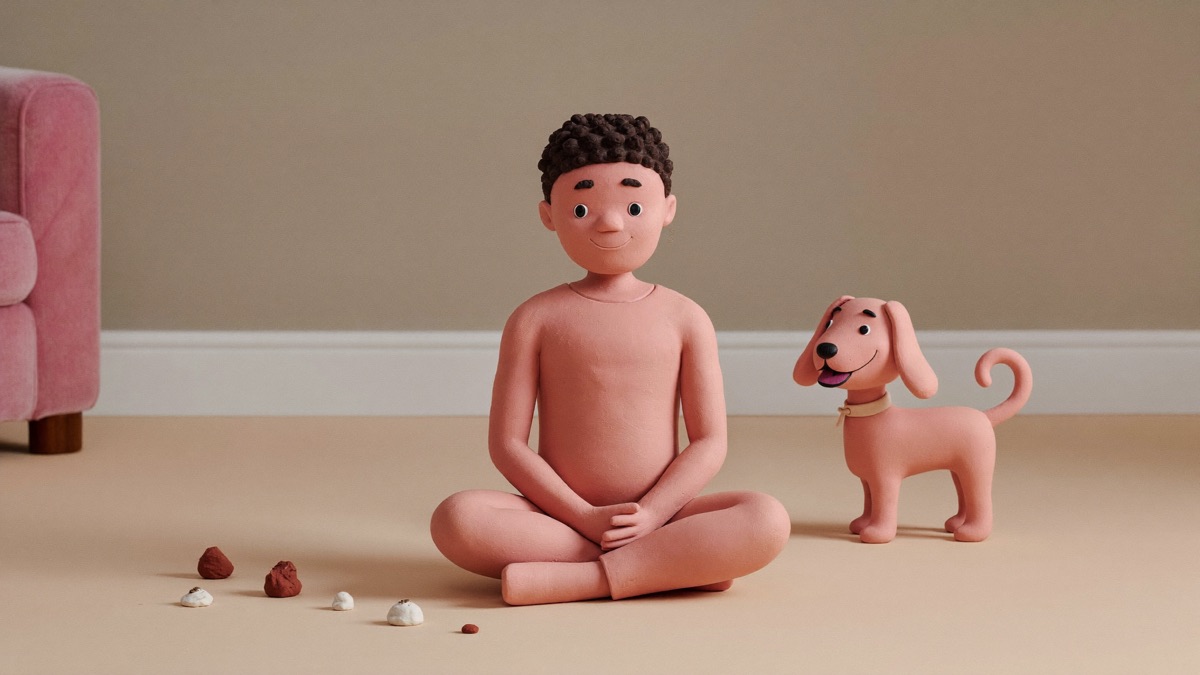
Mostly, yes — this is one of the few behaviour problems where "she'll grow out of it" is usually true. Submissive and excitement urination peak in puppyhood and adolescence, and as bladder control matures and confidence grows, the majority of dogs are dry-greeting by 12 to 18 months — provided greetings stayed calm and nobody punished the puddles along the way. In softer adult dogs it can persist at a low level around very tall, loud or leaning-over people; manage those greetings and it's a non-issue. Hard floors help morale in the meantime: in a typical tiled flat, a greeting piddle is a thirty-second mop job, not a catastrophe.
When is it a UTI instead?
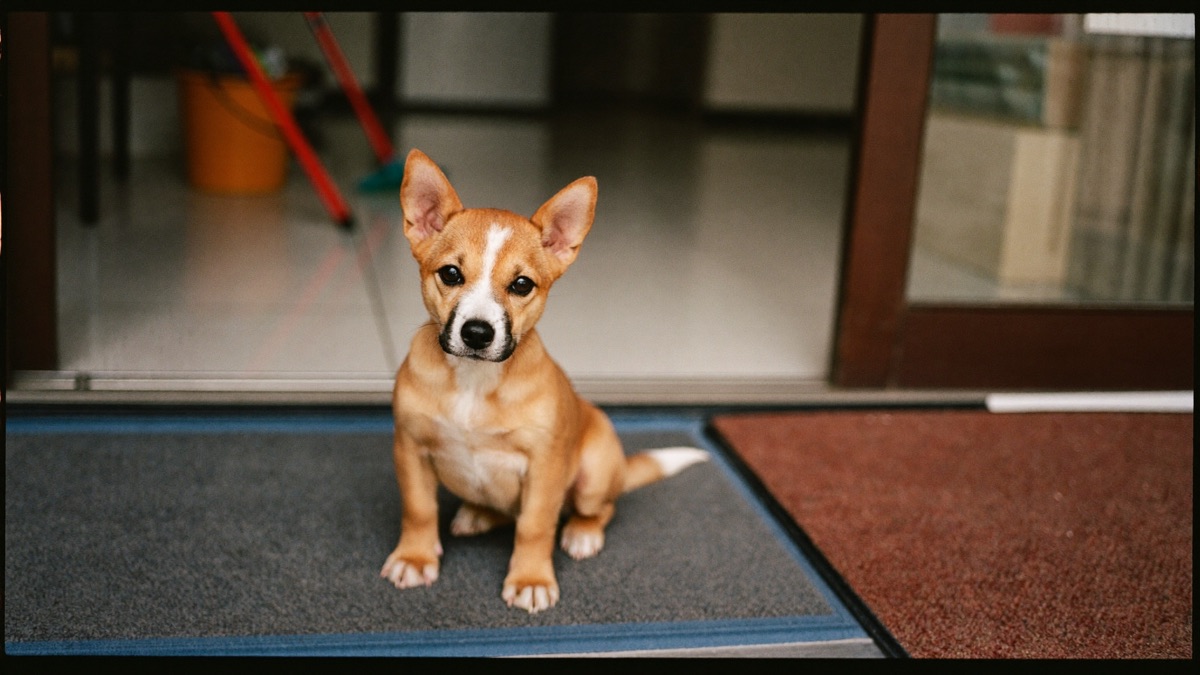
Rule out medicine whenever the pattern doesn't fit pure greetings. Book a vet check if you see: urine dribbling at rest or while walking around, more frequent small wees, straining or crying when urinating, excessive licking at the urinary opening, strong-smelling or cloudy urine, blood, or a previously dry adult dog starting to leak. Urinary tract infections are common — especially in females — and no amount of greeting protocol fixes an infected bladder; our guide to UTI signs in dogs covers the full picture. Spayed females can also develop hormone-responsive incontinence (classically a wet bed where she slept), which is very treatable with medication. The vet visit is cheap certainty: if the bladder is healthy, you can run the calm-entrances protocol knowing training is the whole answer.