| Quick facts | |
|---|---|
| Size | Small (30–33 cm at the shoulder) |
| Weight | 5.5–8 kg |
| Lifespan | 9–14 years — heavily dependent on heart health |
| Coat | Silky, medium-length single coat with feathering; moderate shedding |
| Exercise | Light-moderate — 40–60 minutes daily |
| HDB-approved | Yes — verify the current HDB/AVS list |
What is a Cavalier's temperament really like?
Almost without a catch. Cavaliers are sweet-natured, eager to please, gentle with children and other pets, and quiet by small-dog standards — no yappiness, no guarding, no drama. They were bred for centuries to be lap companions, and they are world-class at it. Training is easy, strangers are friends, and the breed adapts its energy to yours: happy to walk, happier to nap on you.
The only behavioural caveats are the flip side of all that devotion: Cavaliers attach hard and cope poorly with long daily absences, and their soft temperament means harsh handling shuts them down completely. A household where someone is around most of the day, using kind, reward-based training, gets the best dog in the building.
The heartbreak: mitral valve disease
Here is the truth every Cavalier buyer deserves before the deposit: mitral valve disease (MVD) is essentially a breed-wide condition. The heart's mitral valve degenerates early and fast in Cavaliers — murmurs commonly appear in middle age, and by later life the overwhelming majority of the breed is affected. MVD is the Cavalier's leading cause of death, typically progressing from a silent murmur to enlargement of the heart and, in many dogs, congestive heart failure.
It is not hopeless. Onset age is strongly heritable, which is why heart-testing schemes exist: breeding only from parents (ideally grandparents too) cleared by cardiologist examination at appropriate ages pushes disease onset years later. Modern medication, started at the right stage — which is why monitoring matters — meaningfully delays heart failure once the heart begins to enlarge.
So the rule is absolute: buy only from a breeder who shows you current cardiologist heart certificates for both parents, or adopt and go in with open eyes and a good vet. A cheap Cavalier from an untested litter is not a bargain; it is deferred heartbreak with interest. From age five, every Cavalier should have at least an annual heart check, and any cough, breathing change, or exercise flagging in a middle-aged Cavalier is a vet visit this week, not this month.
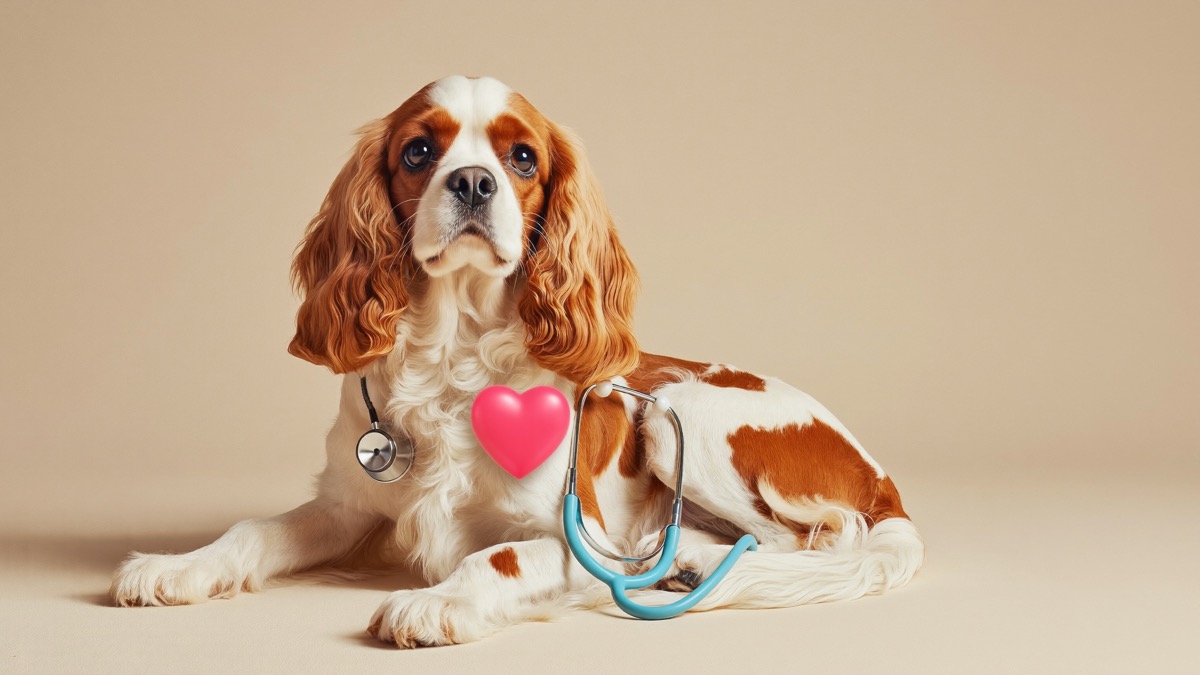
Syringomyelia and the rest of the health picture
The breed's second serious inherited problem is syringomyelia, where a skull malformation (Chiari-like malformation) disturbs fluid flow around the brain and fluid pockets form in the spinal cord. Signs range from nothing to chronic neuropathic pain: characteristic "air scratching" toward the neck or shoulder, spontaneous yelping, and dislike of collars or head touching. Severity varies enormously; MRI is the definitive test, and pain can usually be managed medically. Again, breeders who screen matter.
The smaller print: ear infections (heavy, feathered ears in tropical humidity need routine drying and cleaning), dry eye and other eye conditions, luxating patellas, and dental disease in a small mouth. Keep a Cavalier lean — extra weight loads a compromised heart.
Grooming in humidity
Manageable, but not zero. The silky coat needs brushing two or three times a week, with daily attention to the feathering behind the ears and legs where mats start. In Singapore or Malaysia's humidity, dry the dog thoroughly after rain and baths, keep ears dry and plucked or trimmed as your vet advises, and consider a modest trim of the feathering for comfort — Cavaliers are moderately heat-tolerant but not heat-proof, so walks belong in the cool hours. Many owners here keep the coat lightly tidied rather than clipped short; either is fine, the coat is not a double coat and clipping does no structural harm.

Can a Cavalier live happily in Singapore or Malaysia?
Yes — temperamentally and practically, this is one of the best matches available.
Apartment fit. HDB-approved (verify the current list), quiet, small, and content with modest exercise: the Cavalier was practically designed for high-rise living. Neighbours will barely know it exists.
Heat. A slightly flattened face and a silky coat mean sensible precautions: early and late walks, aircon or fans through midday, water always. Watch harder in overweight or heart-affected dogs, whose heat tolerance drops further.
The budget. Be honest with yourself: a Cavalier's ownership cost is back-loaded. Cardiology visits, echocardiograms, and daily heart medication in the senior years are the realistic price of the breed. Pet insurance taken out young, before murmurs appear, is close to essential.
Who should not get a Cavalier?
Skip the breed if you cannot verify heart-tested parents and will not adopt instead, if the flat is empty all day, or if late-life veterinary bills would break you. If you can meet those three conditions, no breed offers more uncomplicated affection per kilogram — which is exactly why the health story deserves to be told straight.