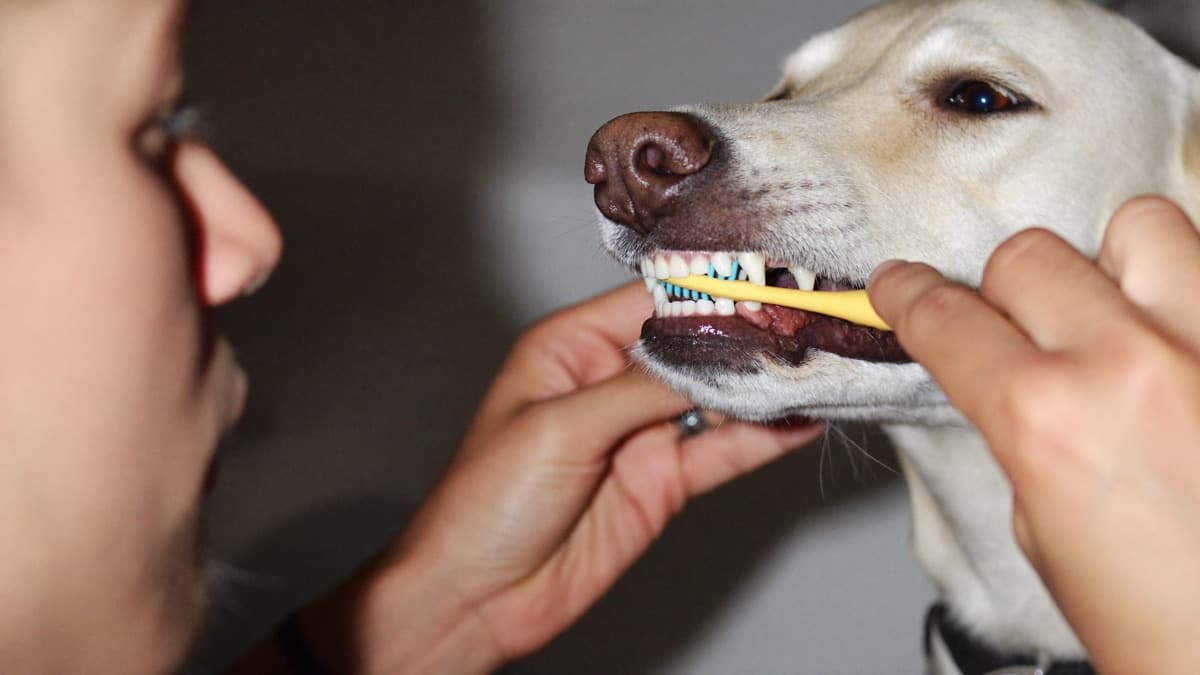
Why does dental disease matter beyond bad breath?
Plaque is a film of bacteria that forms on teeth within hours of eating. Left alone, it mineralises into tartar in about three days, creeps under the gumline, and sets off periodontal disease: inflamed gums, destroyed ligaments, dissolving jawbone, loose and abscessed teeth. Dogs hide dental pain remarkably well — most keep eating right up until the mouth is a disaster. By then the fixes are extractions, not cleanings, and the bacteria showering into the bloodstream from infected gums have been linked to heart, kidney, and liver changes.
How do I brush my dog's teeth?
Daily, ideally; three times a week at minimum. The routine takes under two minutes once trained:
- Use dog toothpaste only. Human toothpaste contains fluoride and often xylitol, both toxic when swallowed. Dog pastes come in poultry and malt flavours dogs treat as a snack.
- Start with your finger. For the first week, just rub a little paste along the outer teeth and gums so the dog learns the deal: mouth handling equals tasty reward.
- Graduate to a brush. A soft dog toothbrush or finger brush, angled 45 degrees to the gumline, small circles along the outside surfaces. The tongue keeps the inner surfaces comparatively clean, so don't fight to reach them.
- Focus on the back upper teeth. The big premolars and molars sit opposite the salivary duct openings and collect tartar fastest.
- Keep it short and end well. Thirty to sixty seconds a side, then praise or play. Stop before the dog wants to.
If your dog's gums bleed persistently or it flinches from the brush, stop and book a vet — you may be brushing a mouth that already needs treatment.
Do dental chews actually work?
Some do, most don't, and the label rarely helps you tell the difference. The shortcut is the Veterinary Oral Health Council (VOHC) seal: products carrying it have submitted trial data showing they genuinely reduce plaque or tartar. The accepted list includes certain daily chews, dental diets, and a small number of water additives — check the current list at vohc.org rather than trusting packaging claims.
Two cautions. Chews are an adjunct, not a substitute — a chew a day roughly equals brushing a couple of times a week, not seven. And avoid genuinely hard objects: antlers, hooves, bones, and hard nylon toys crack teeth. If you can't dent it with a thumbnail, it can break a carnassial tooth.
What happens during a professional dental cleaning?
A proper dental is a day procedure under general anaesthesia: pre-anaesthetic exam and usually bloodwork, then scaling above and below the gumline with an ultrasonic scaler, probing every tooth for pockets, dental X-rays where indicated, polishing, and extractions of any teeth beyond saving. Your dog goes home the same evening, usually eating dinner as if nothing happened.
Scroll sideways to compare all columns →
| Item (as of 2026) | Singapore | Malaysia |
|---|---|---|
| Routine scale and polish under GA | S$300-800 | RM400-1,200 |
| Dental X-rays | S$80-200 | RM100-300 |
| Extractions (each, simple to surgical) | S$50-300+ | RM50-400+ |
Anaesthesia is what makes owners hesitate, and what makes the procedure worthwhile. Modern protocols with pre-op bloodwork and monitoring make risk very low even for seniors — age alone is not a reason to skip a needed dental. If you're choosing a clinic, the Singapore Veterinary Association directory lists practices island-wide; in Malaysia, clinics operate under the oversight of the Department of Veterinary Services.
Why is anaesthesia-free cleaning a bad idea?
Because it treats the only part of the tooth that doesn't matter. Scraping visible tartar off an awake, restrained dog leaves the subgingival plaque — the part driving periodontal disease — completely untouched, allows no probing or X-rays, and roughens the enamel so plaque returns faster. You pay for a cosmetic result that actively hides disease. Veterinary dental bodies are blunt about this: it is not dentistry.
Do small breeds really need more dental care?
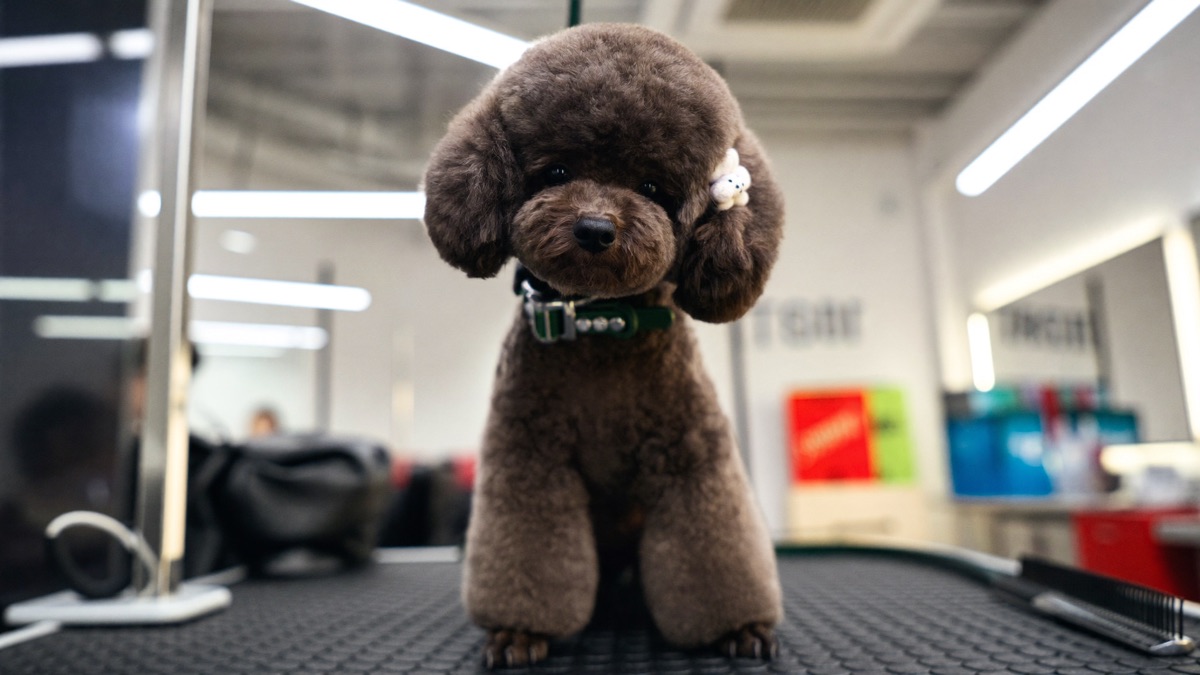
Yes, dramatically. Toy Poodles, Chihuahuas, Dachshunds, Yorkies, Malteses, and brachycephalic breeds pack full-sized dentition into miniature jaws — crowded, rotated teeth that trap plaque, and proportionally less jawbone to lose before teeth loosen. Many small-breed dogs need their first professional cleaning by age two or three and annual cleanings after that. If you own a small breed in this region, start brushing in puppyhood and treat the first whiff of bad breath as a booking prompt, not a quirk.