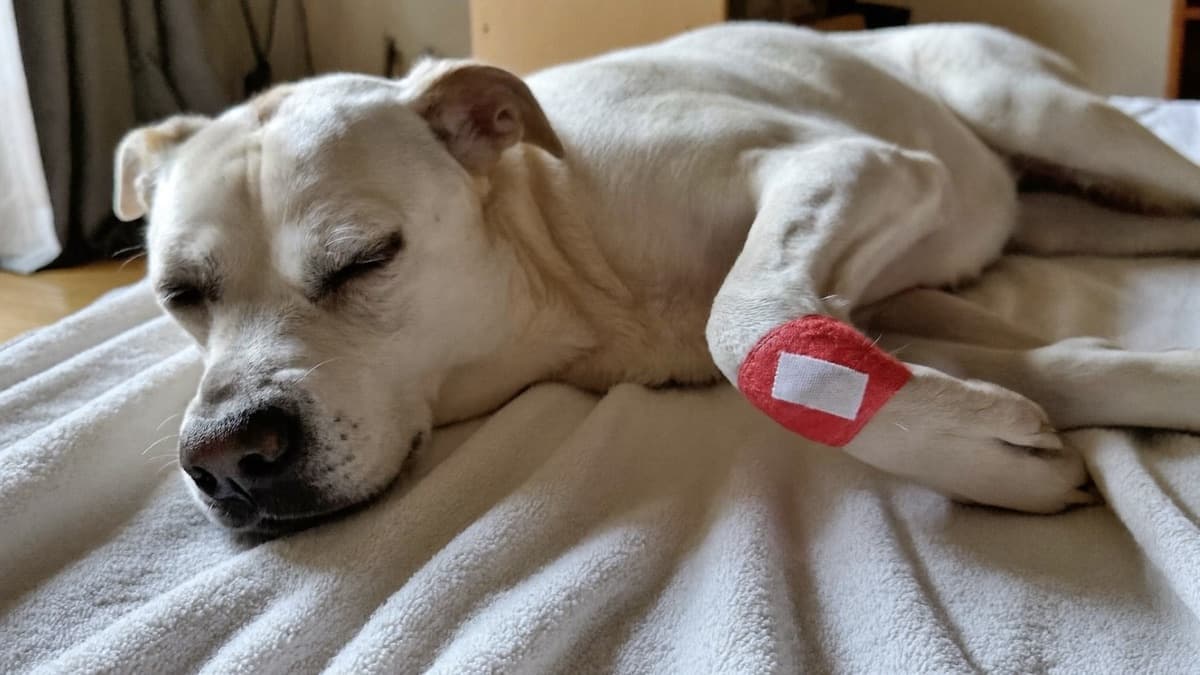
Which wounds can I treat at home?
Home-manageable, all boxes ticked:
- Shallow — a scrape or a cut that doesn't part to show the tissue beneath
- Clean edges, no flap of skin, nothing embedded in it
- Bleeding stops within five minutes of gentle, firm pressure with clean gauze
- On the body or upper leg — not the eye area, ear, joint, or paw pad
- Your dog lets you handle it without pain-driven snapping
Vet-required, any single box ticked:
- Gaping wounds you could fit a fingertip into, or skin flaps
- Punctures of any size — especially bite wounds from another dog or cat, which drive bacteria deep and are always worse than the surface suggests
- Bleeding that continues past five minutes, or that spurts
- Wounds on the paw pad, near the eye, through the ear, or over a joint
- Anything dirty you can't flush clean, or caused by rusty metal or unknown objects
- Any wound in a dog that is limping badly, lethargic, or clearly in pain
Stitches, staples, and surgical glue all work best on fresh wounds — vets generally want to close wounds within a few hours, before bacterial contamination makes closure unsafe. If in doubt at 9pm, go at 9pm; the SVA vet centres directory lists clinics including 24-hour centres.
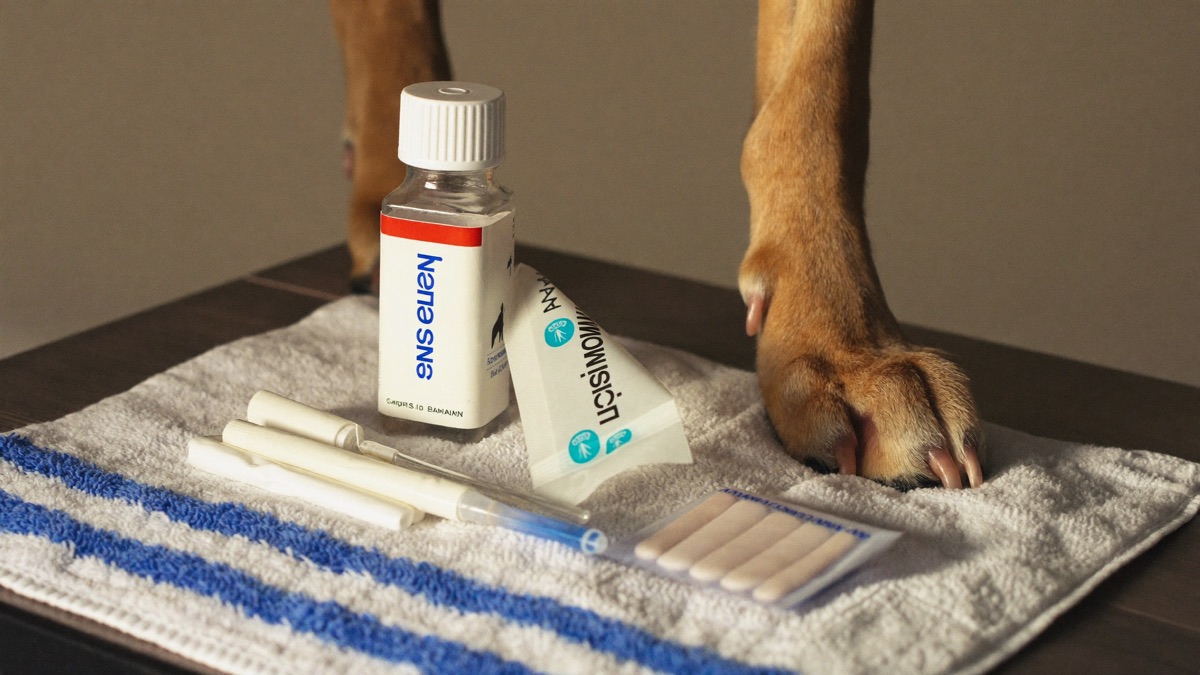
How do I clean a dog wound properly?
- Calm and restrain first. A second person, a towel wrap, and treats make everything safer. Even gentle dogs may snap at wound handling.
- Stop bleeding with firm, continuous pressure through clean gauze — hold for a full five minutes without peeking.
- Trim fur around the edges with blunt scissors if it's contaminating the wound (slide a finger between blade and skin).
- Flush generously with sterile saline or, failing that, clean running water. Volume is the point: flushing physically carries dirt and bacteria out. Pat dry with clean gauze.
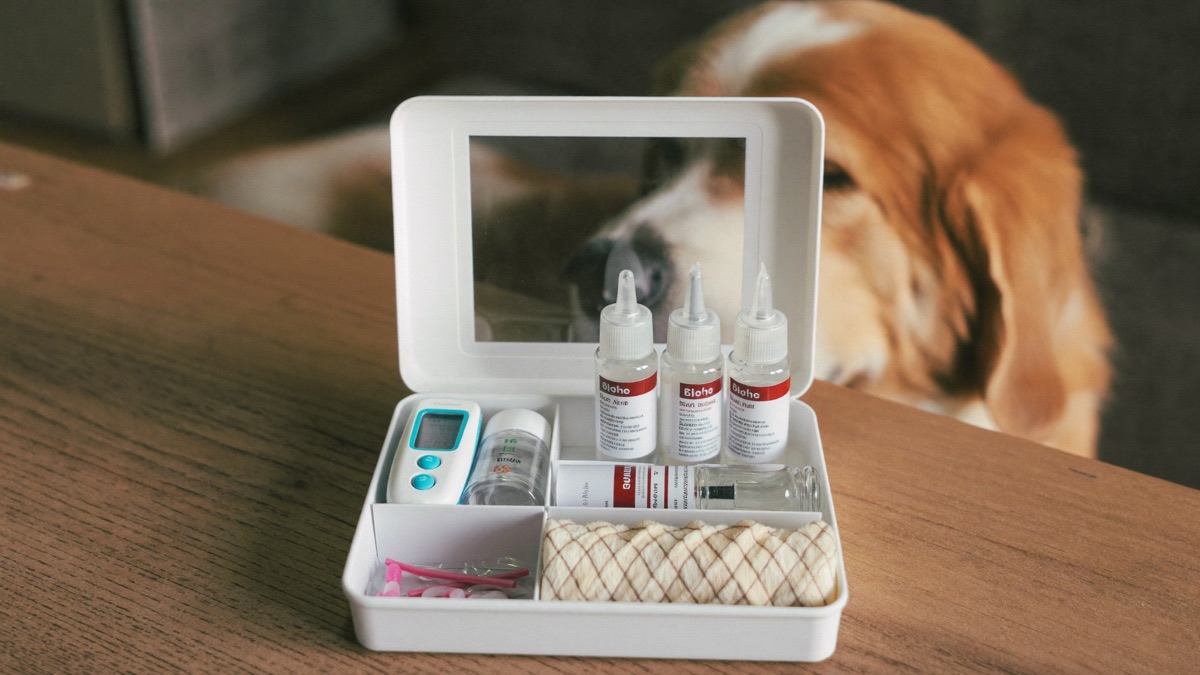
- Cover lightly with a non-stick pad and self-adhesive wrap if the location allows — snug enough to stay on, never tight.
- Fit the cone. More home-treated wounds are ruined by licking than by anything else. A dog's tongue is not antiseptic — licking introduces bacteria, breaks down new tissue, and can turn a scratch into a surgical case.
Check and re-dress daily, and photograph the wound each day — a camera roll is more honest than memory about whether it's improving.
Why should I never use Dettol or alcohol on a dog?
Because the two most common household antiseptics are actively harmful to dogs:
- Dettol and similar phenol-based disinfectants are toxic to dogs. Phenolic compounds burn on open tissue, and because dogs lick treated areas, they end up ingesting it — phenols can ulcerate the mouth and damage the liver and kidneys. (They are even more dangerous to cats.) No dilution on a dog wound is "safe enough" when saline exists.
- Rubbing alcohol stings severely and kills the healthy cells at the wound edge that are trying to close it.
- Hydrogen peroxide on wounds is the same story — it damages viable tissue and slows healing. Its only place in a dog home is inducing vomiting on a vet's direct phone instruction, as covered in our dog first aid kit guide.
If you want an antiseptic beyond saline, ask your vet for a dilute chlorhexidine solution made for animals and use it at the dilution they specify. Saline alone, used generously, handles the genuinely home-manageable wounds.
What does wound infection look like in our climate?
Warmth and humidity are ideal growing conditions for bacteria, so watch every home-managed wound daily. By day two or three, a healing wound should look calmer than day one. Escalate to a vet if you see:
- Redness that spreads outward, or increasing swelling and heat
- Any smell, or yellow-green discharge
- The wound reopening, or wet, sticky edges that won't dry
- Your dog becoming quiet, off food, or feverish
Dogs with skin folds, allergies, or existing skin disease infect faster — background reading in our humid-climate skin problems guide.
Are paw pad cuts different?
Yes — pads are a special case. They bleed dramatically, take weight with every step, can't be stitched the way ordinary skin can, and stay in constant contact with hot, dirty pavement. A superficial graze can be flushed, dressed, and booted at home, but anything that slices into the pad's thickness needs a vet, and healing takes weeks of protected walking. Full details, including hot-pavement burns, are in our dog paw care guide.