What home remedies actually help an itchy dog?
1. Flea prevention, restarted and done properly. Vet-grade monthly (or 12-weekly) products, dosed by current weight, for every dog and cat in the home — indoor cats included, because they maintain the household flea cycle. Wash bedding hot and vacuum soft furnishings. Give it 8–12 weeks before judging. If you do only one thing on this page, do this.
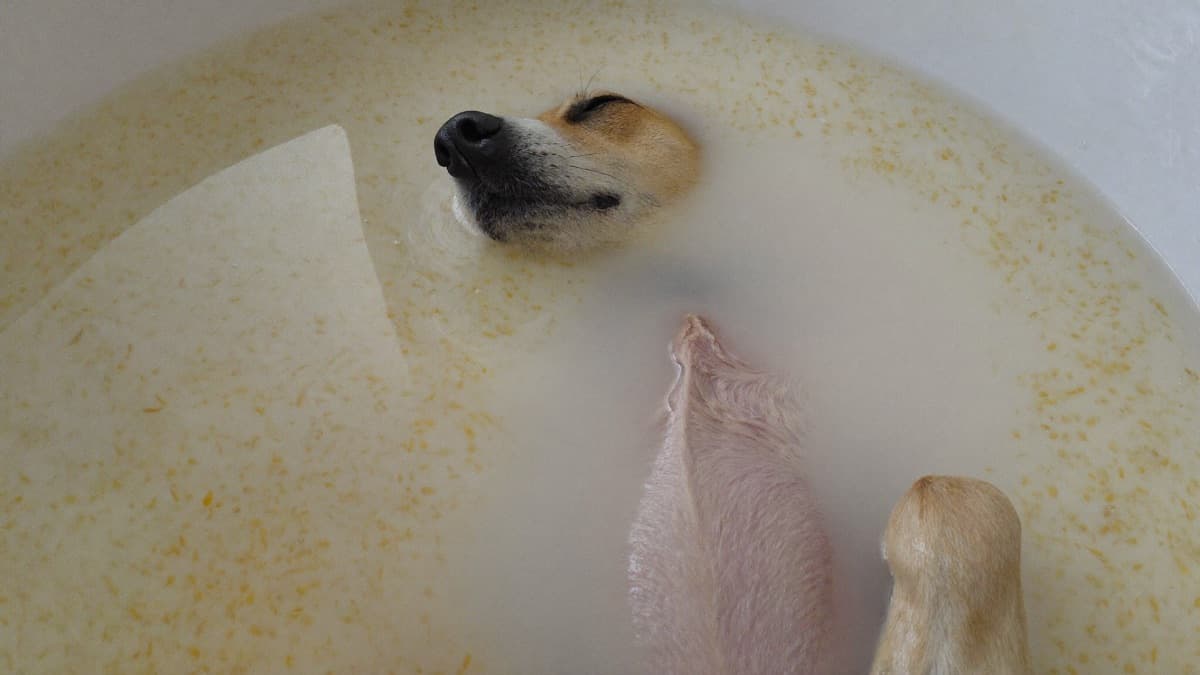
2. Cool oatmeal baths. Colloidal oatmeal shampoos genuinely soothe inflamed skin and rinse allergens (dust mite debris, pollen, yeast by-products) off the coat. Use cool-to-lukewarm water — hot water worsens itch — lather for 10 minutes, rinse thoroughly, and repeat once or twice weekly. In our humidity, towel and blow-dry on cool afterwards so damp skin folds don't feed yeast.
3. Omega-3 fatty acids (EPA/DHA). Fish oil has moderate evidence for reducing skin inflammation and improving the skin barrier. It is slow — expect 4–8 weeks before any visible change — and it supports other treatments rather than replacing them. Use a pet-specific product or plain human fish oil dosed by your vet; avoid cod liver oil (too much vitamin A/D).
4. Post-walk paw rinses and wipes. Thirty seconds with water or a damp cloth after grass contact reduces allergen load on the paws — the most-licked real estate on an atopic dog.
Scroll sideways to compare all columns →
| Remedy | Evidence | Verdict |
|---|---|---|
| Flea prevention (all pets, year-round) | Strong | Do first, always |
| Oatmeal/soothing baths weekly | Moderate | Helpful, safe |
| Omega-3 (EPA/DHA) daily | Moderate | Helpful but slow |
| Paw rinsing after walks | Low but logical | Cheap, harmless |
| Coconut oil (fed or applied) | None for itch | Skip |
| Human antihistamines, self-dosed | Weak, real risks | Vet guidance only |
What itching remedies don't work?
Coconut oil. The internet's favourite cure-all has no controlled evidence for canine itch. Applied to the coat it traps heat and grime in a tropical climate and attracts licking; fed in quantity it adds calories and can loosen stools. There are better uses for your money — fish oil beats it on evidence at the same price point.
Self-dosed human antihistamines. Two separate problems. First, effectiveness: antihistamines help only a minority of itchy dogs, because canine itch is driven by different pathways than human hay fever. Second, safety: combination products are the danger — "flu" or "sinus" formulas containing pseudoephedrine or phenylephrine are toxic to dogs, and some syrups are sweetened with xylitol, which can be fatal. If you want to trial an antihistamine, get the specific drug, product and weight-based dose from your vet.
Essential oils and tea tree. Concentrated tea tree oil is toxic to dogs, absorbed through the skin and worse when licked off. Avoid entirely.

When does an itchy dog need a vet?
Home care buys comfort; it doesn't diagnose. See a vet promptly when any of these apply:
- Broken skin — raw patches, bleeding, scabs, oozing or smelly areas. These are usually infected and need medication, not shampoo.
- Ears involved — head shaking, scratching at ears, odour or discharge. Ear disease is painful and rarely resolves alone.
- Itching beyond 1–2 weeks despite up-to-date flea prevention on all pets.
- Hair loss, darkening or thickening skin — signs of a chronic process.
- A dog losing sleep or obsessively licking one spot — the itch is severe enough to need prescription relief (Apoquel or Cytopoint work within days).
Persistent itch nearly always traces back to one of a shortlist of causes — fleas, infection, environmental or food allergy — and each has a specific fix. Our dog allergies guide explains how vets work through them, and dog skin problems in a humid climate covers the yeast and bacterial infections that our weather makes so common. If you need a clinic, the Singapore Veterinary Association directory is a good starting point.
The honest summary: restart flea prevention today, add oatmeal baths and fish oil for comfort, skip the coconut oil, and let a vet look at anything that is broken, smelly, in the ears, or still itching in two weeks.