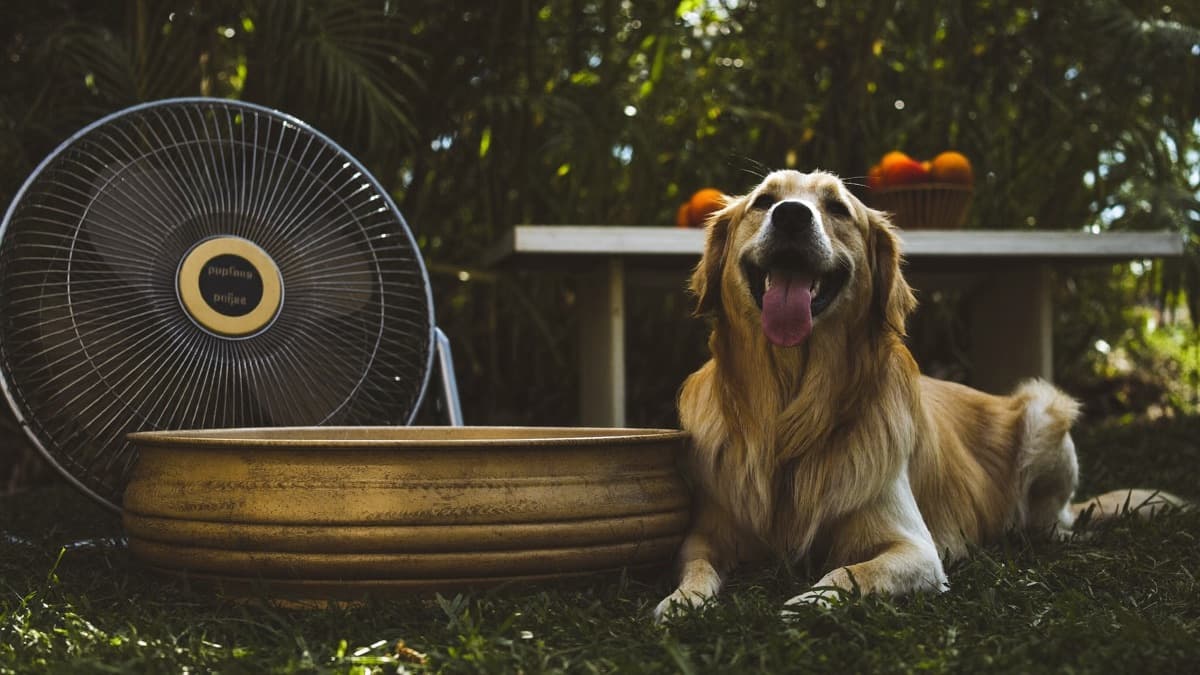
What are the early warning signs of heatstroke in dogs?
Catch it at stage one and you have a hot, tired dog. Catch it at stage three and you have an emergency with a real risk of death.
Scroll sideways to compare all columns →
| Stage | Signs | What to do |
|---|---|---|
| Early (heat stress) | Heavy panting, seeking shade, slowing down, wide tongue, drooling more than usual | Stop the walk, get indoors, offer water, cool down |
| Moderate (heat exhaustion) | Loud raspy panting, bright red gums and tongue, thick ropey saliva, wobbliness, refusing to move | Start cooling now and call your vet |
| Severe (heatstroke) | Vomiting or diarrhoea (sometimes bloody), pale or bluish gums, confusion, collapse, tremors, seizures, unconsciousness | Cool and go to an emergency vet immediately |
A dog that stops panting while still hot is not recovering — that can be a sign of collapse. Treat it as severe.
Which dogs are most at risk?
- Flat-faced (brachycephalic) breeds — French Bulldogs, Pugs, English and American Bulldogs, Shih Tzus, Boston Terriers, Pekingese. Their narrowed airways make panting far less effective; several are at risk on a walk that a Labrador would find unremarkable.
- Double-coated and cold-climate breeds — Huskies, Samoyeds, Chow Chows, Pomeranians, German Shepherds, Golden Retrievers. Do not shave them to the skin (the coat also insulates against heat and protects from sun); brush out dead undercoat instead.
- Overweight dogs, senior dogs, and puppies.
- Dogs with heart disease, airway disease, or laryngeal paralysis.
- Any dog left in a parked car — interior temperatures climb dangerously within minutes, even in shade with windows cracked. There is no safe version of this. If you see a dog trapped in a hot car, act: alert the driver or building security, and report it to SPCA Singapore or, in Malaysia, SPCA Selangor — both handle animal-welfare emergencies and cruelty reports.
Emergency first aid for heatstroke
Cooling starts where you are, then you travel. Do not spend twenty minutes cooling instead of driving — do both.
- Move the dog out of the heat — into an air-conditioned room or car with the aircon on full.
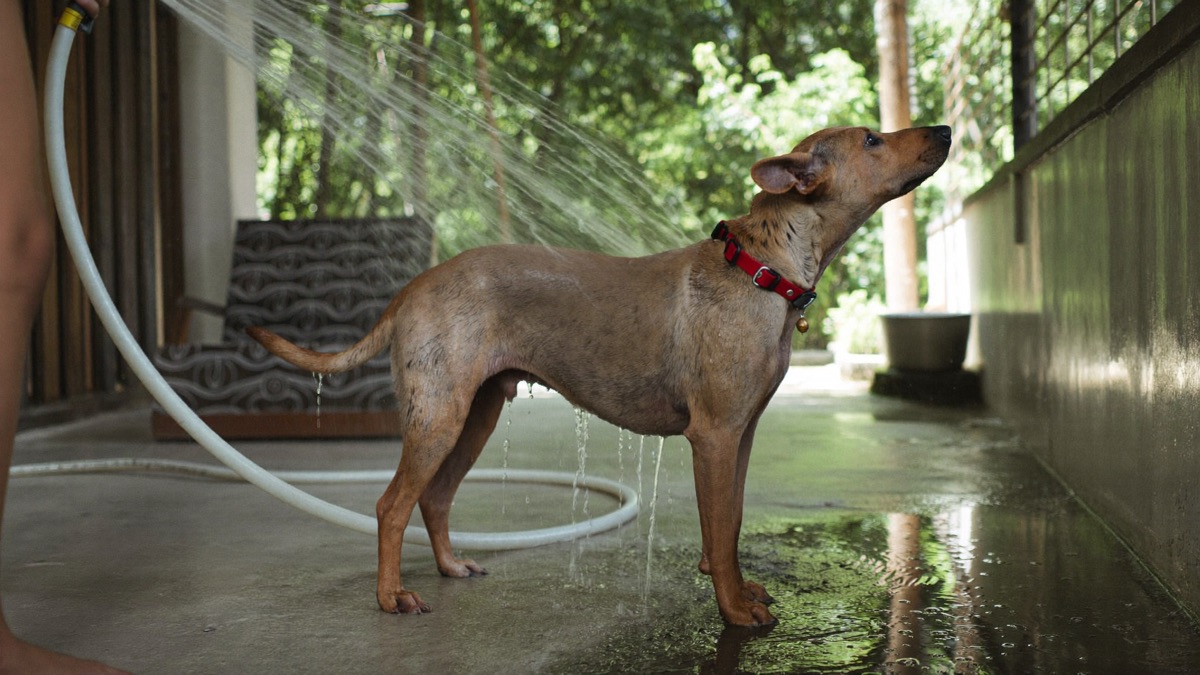
- Pour or hose tepid-to-cool water continuously over the whole body, concentrating on the neck, chest, armpits, belly and groin. Running water is better than a soak.
- Add air movement — a fan or the car's aircon vents. Evaporation is what actually removes heat.
- Never use ice, ice packs, or an ice bath. Never wrap the dog in wet towels and leave them there — a warm towel becomes an insulating blanket.
- Offer small amounts of cool water to drink only if the dog is fully alert and swallowing normally. Never pour water into the mouth of a groggy or unconscious dog.
- Go to the vet now, cooling en route. In Singapore or Malaysia, call your nearest 24-hour emergency vet immediately and tell them you're coming — the Singapore Veterinary Association's vet centre directory can locate one fast if you're away from your usual clinic.
- If you have a rectal thermometer, stop active cooling at about 39.4°C (103°F) — dogs can overshoot into dangerous hypothermia.
- Do not give human medication. Paracetamol, ibuprofen and aspirin are toxic to dogs and will not help here.
Every suspected heatstroke needs veterinary assessment. Dogs who look bright after cooling can still develop kidney injury, gut damage, brain swelling or clotting failure over the next one to three days.
When should I walk my dog in Singapore or Malaysia?
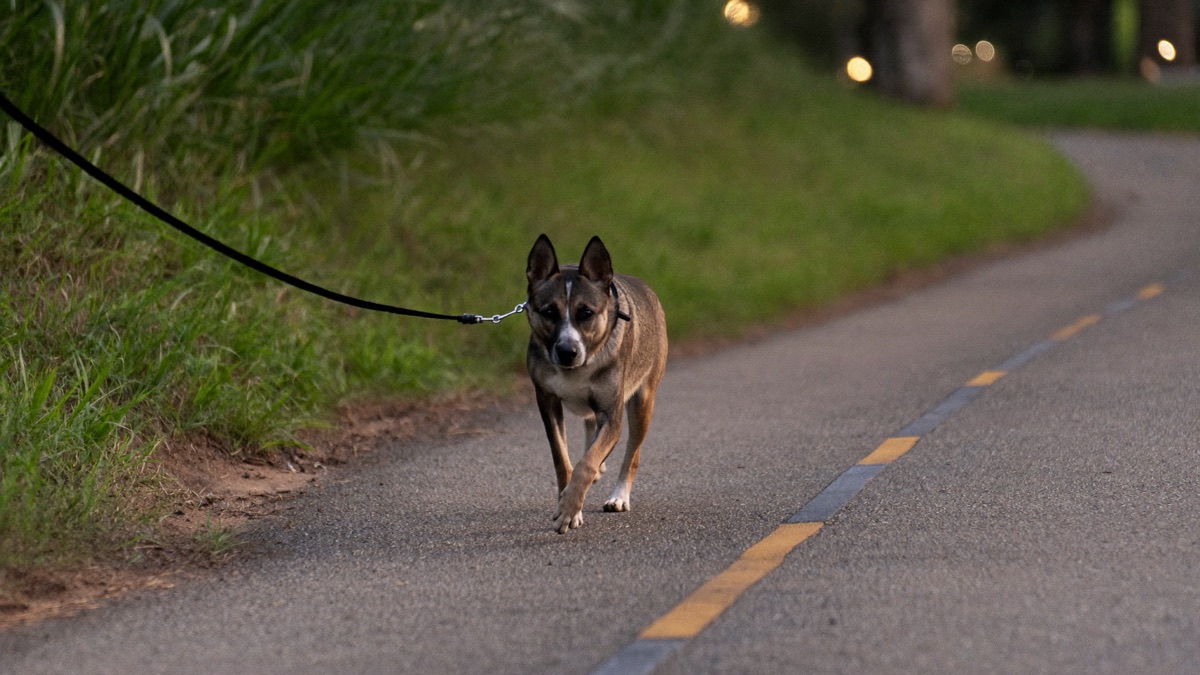
Aim for before 8am and after 8pm. Midday and afternoon walks are the single biggest avoidable cause of heatstroke here. Practical adjustments that work locally:
- Keep walks short and shaded; grass and covered walkways beat open concrete and car parks.
- Carry water on every outing, even a 15-minute one.
- Let the dog set the pace — no jogging, cycling alongside, or fetch in the sun.
- Use aircon or a fan during the hottest hours, and give access to a cool tiled floor. Singapore's Animal & Veterinary Service publishes general pet-care guidance for local conditions.
- For flat-faced breeds, use a harness rather than a neck collar to avoid pressure on the airway.
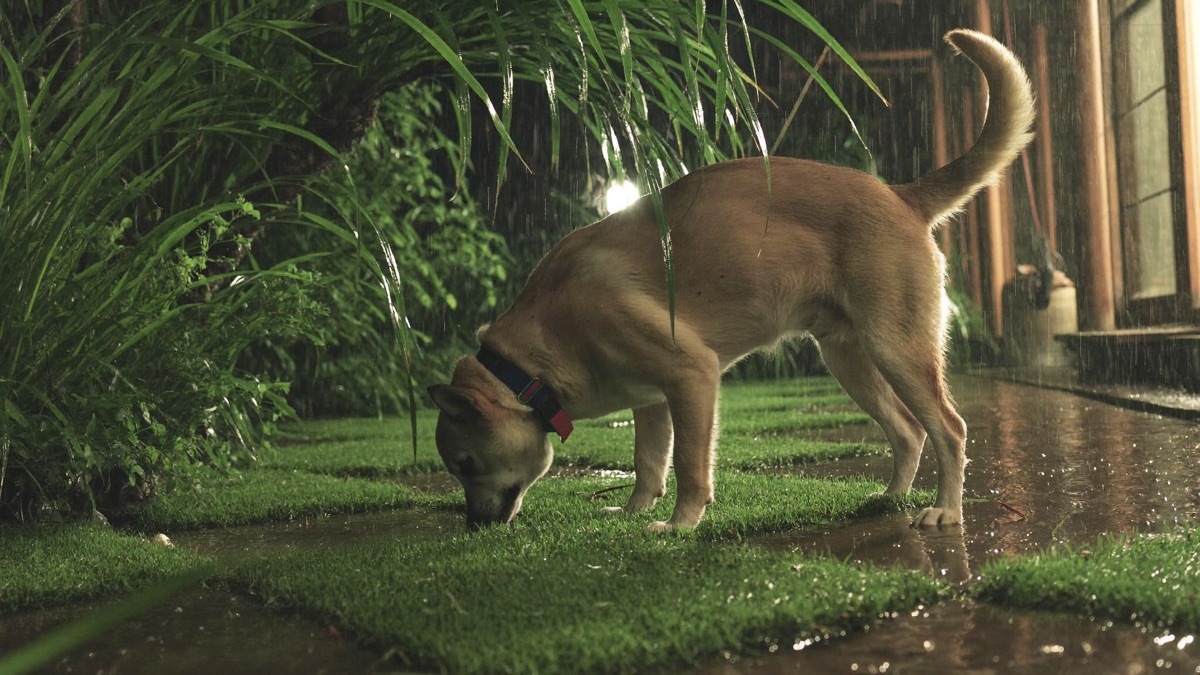
- After rain, the air is often more humid, not less. Cooler-feeling does not mean safer.
The pavement heat test
Press the back of your hand flat against the pavement and hold it for seven seconds. If you can't keep it there comfortably, it is too hot for paw pads — asphalt and dark tiles can reach 50–60°C under tropical sun and hold that heat well into the evening. Burned pads show up as red, blistered, or peeling pads and limping, and they hurt for days. If in doubt, walk on grass, wait for dark, or skip the walk and do indoor enrichment instead.