How does parvo spread?
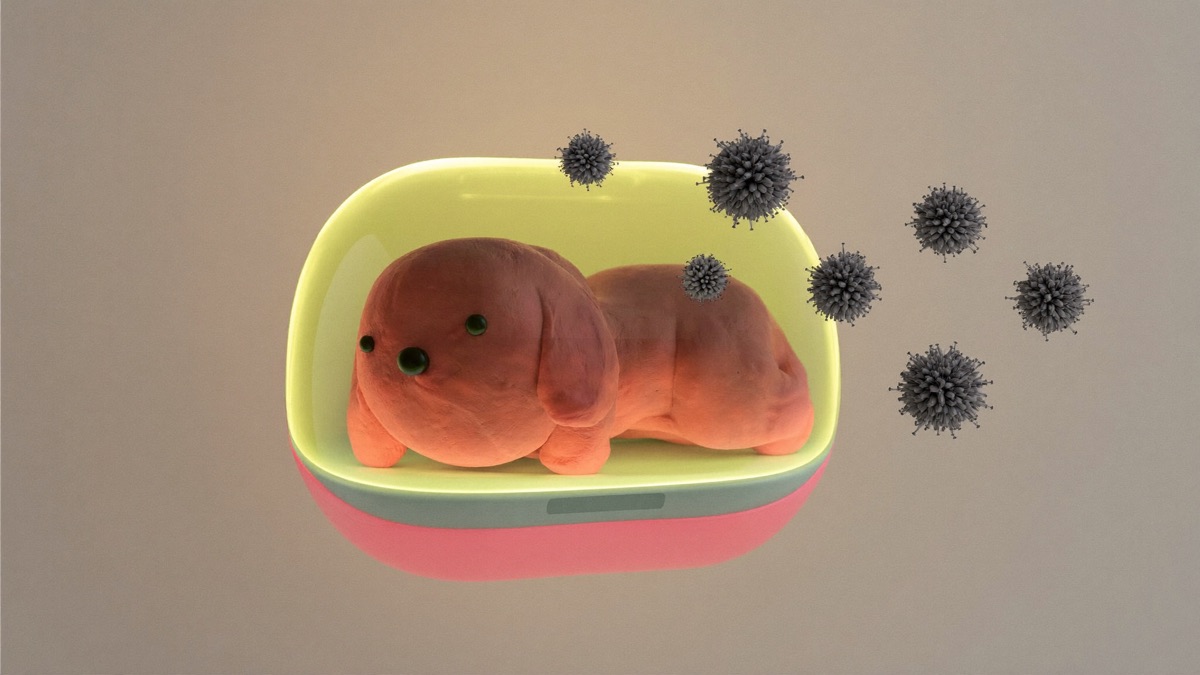
Canine parvovirus travels in the faeces of infected dogs — but "avoid sick dogs" badly understates the problem, because the virus itself is nearly indestructible:
- It survives a year or more in soil and shade, shrugging off tropical heat, rain and humidity.
- It rides indoors on shoes, paws, tyres, hands and clothing — a puppy that has "never been outside" can meet parvo in its own living room.
- An infected dog sheds billions of viral particles per gram of stool, starting before symptoms show and continuing for days after recovery.
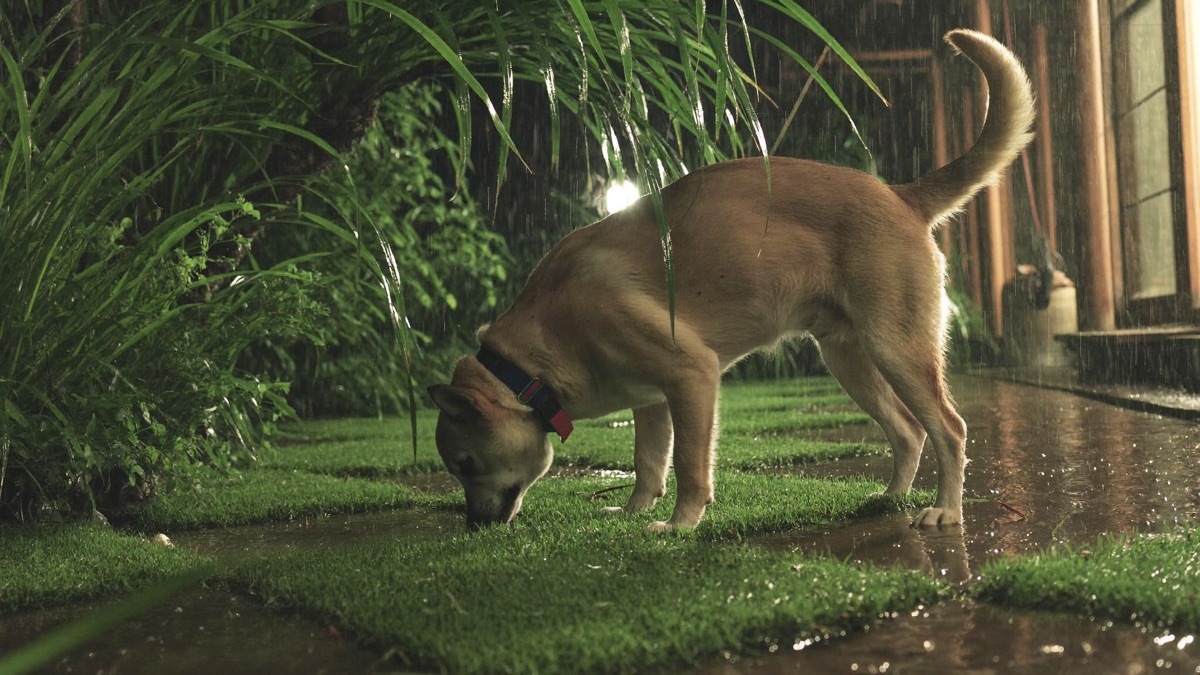
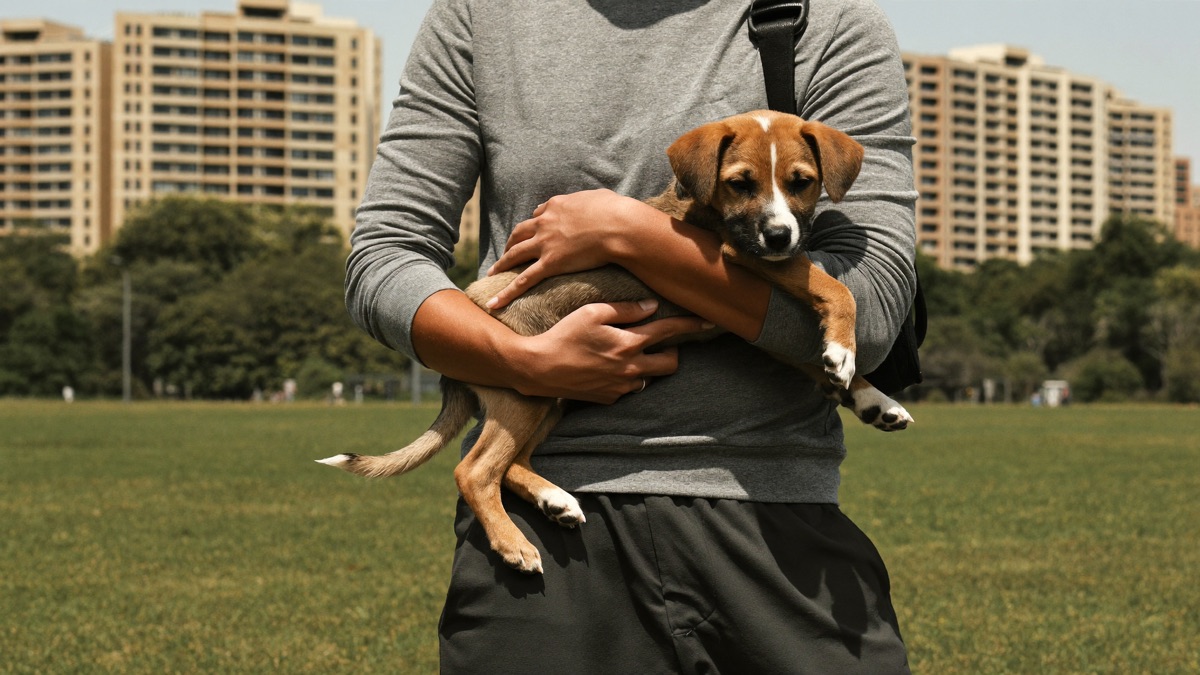
A sniff of contaminated grass, a lick of a shoe sole — that's a full infectious dose for an unprotected puppy. This is why vets in Singapore and Malaysia tell you to carry your puppy in public until the vaccine series is done, and why parvo cases cluster around void decks, parks and any ground with dog traffic.
What are the symptoms — and how fast do they move?
Fast is the defining feature. From infection, incubation runs about 3–7 days, then:
| Stage | What you see |
|---|---|
| Day 1 | Lethargy, loss of appetite, fever — easy to dismiss as "an off day" |
| Days 1–2 | Vomiting begins, dog refuses all food and water |
| Days 2–4 | Profuse, foul-smelling, often bloody diarrhoea; rapid dehydration |
| Days 3–7 | Collapse from dehydration, septic shock as gut bacteria enter the bloodstream |
A puppy can go from playful to critical in under 48 hours. Any unvaccinated or partly vaccinated puppy that vomits and turns lethargic is a same-day emergency — call ahead so the clinic can isolate you from their waiting room, and expect a quick in-house test from a stool swab.
Why is parvo treatment so expensive?
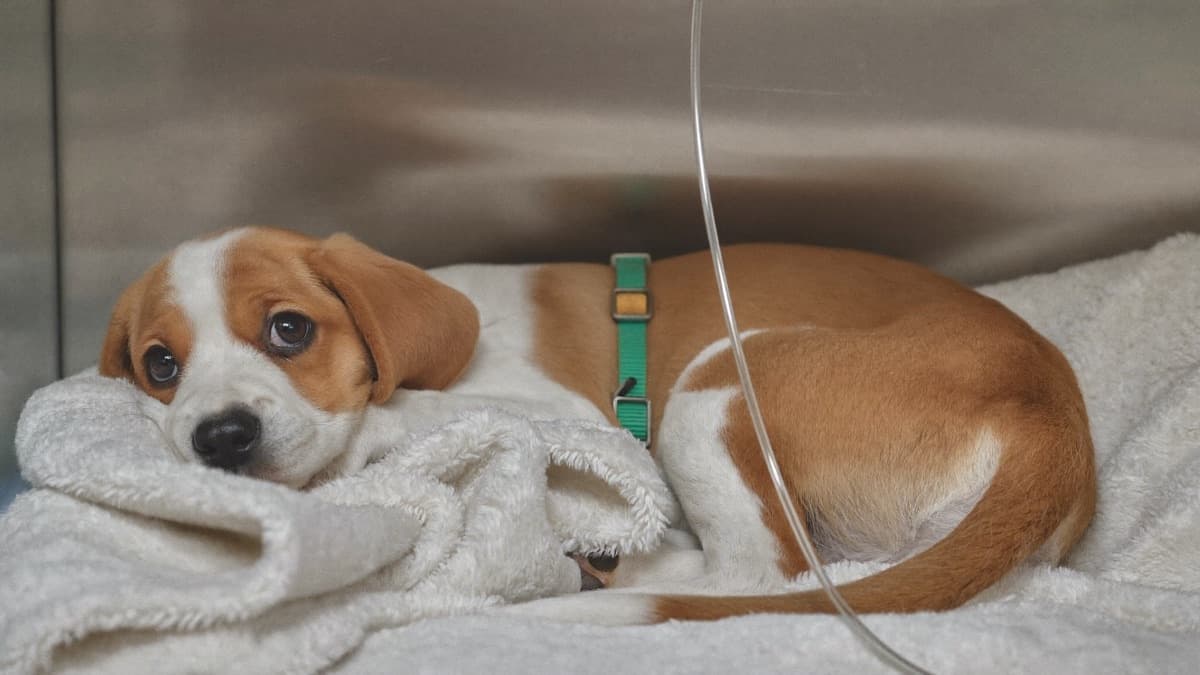
There is no drug that kills parvovirus. Treatment is intensive care that keeps the puppy alive long enough for its own immune system to win — which takes days of round-the-clock support in an isolation ward: IV fluids running continuously against catastrophic diarrhoea losses, anti-nausea injections, antibiotics to hold off sepsis from the shredded gut wall, glucose and potassium corrections, sometimes plasma transfusions or a feeding tube, with barrier nursing the whole way because everything the puppy touches becomes infectious.
That is why a parvo hospitalisation in a private hospital commonly runs S$2,000–5,000 in Singapore and RM2,000–8,000 in Malaysia as of 2026, with severe cases exceeding it. A newer monoclonal antibody treatment exists in some markets but adds cost rather than replacing the ICU. Set against a full puppy vaccine series at roughly S$150–250 or RM150–360, parvo is the most brutally lopsided cost-benefit calculation in dog ownership.
What are the survival odds?
- With prompt, aggressive hospital treatment: roughly 80–90% of puppies survive. Early treatment is the single biggest factor — the "wait and see if he's better tomorrow" day is the one that kills.
- Without treatment: around 90% die. Outpatient protocols (injections and subcutaneous fluids at home under vet direction) sit in between and save many puppies when hospitalisation is genuinely unaffordable — ask your vet rather than walking away.
Survivors usually recover fully within a few weeks and carry solid immunity afterwards.
How do I prevent parvo?
One answer: finish the vaccine series. Parvo is a core component of the DHPP shots given every 3–4 weeks from 6–8 weeks of age, and the dose at 16 weeks or later is the critical one — earlier doses can be neutralised by maternal antibodies. The full timetable, and the do's and don'ts of socialising a half-vaccinated puppy, are in our puppy vaccination schedule. Adult boosters keep protection topped up, and mother dogs with current vaccines pass better early protection to litters.
Until the series is complete: carry the puppy in public, host only vaccinated adult dogs at home, and stay off ground where unknown dogs toilet.
How do I disinfect after parvo?
Most household cleaners — including many "kills 99.9%" sprays — do not touch parvovirus. What works:
- Household bleach diluted 1:30 with water (about half a cup per 2 litres), applied to pre-cleaned surfaces with 10 minutes of wet contact time, then rinsed.
- Wash bedding and toys in hot water and bleach where possible; discard what can't be properly disinfected.
- Accept that soil and grass can't be reliably decontaminated — sunlight and time are the only cure outdoors, and that means keeping unvaccinated dogs off the area for months.
If parvo has been in your home, tell your vet before any new puppy arrives. The right answer is usually a fully vaccinated adult now, or a new puppy only after the waiting period and with its series strictly on schedule.