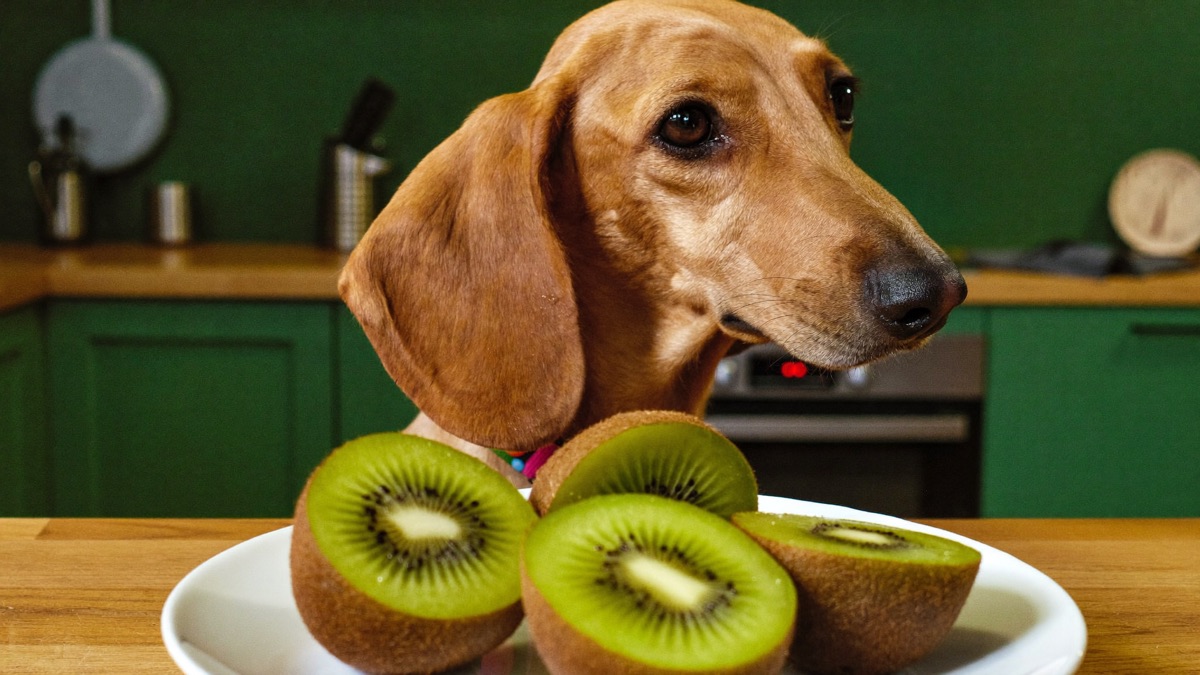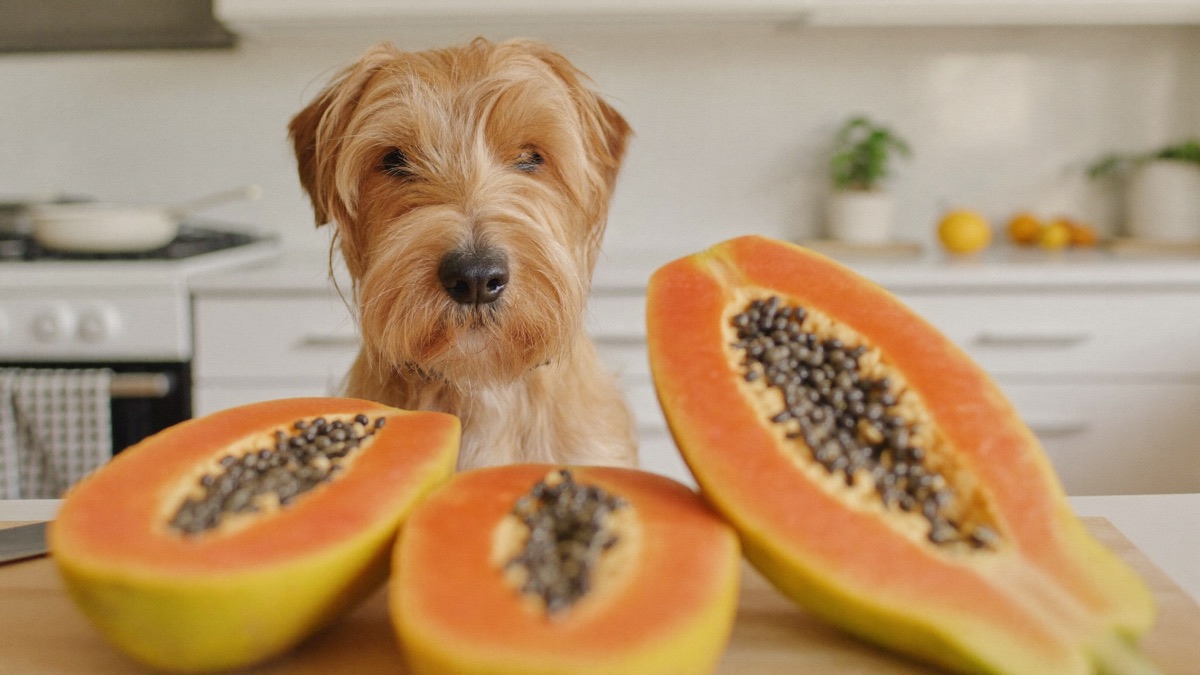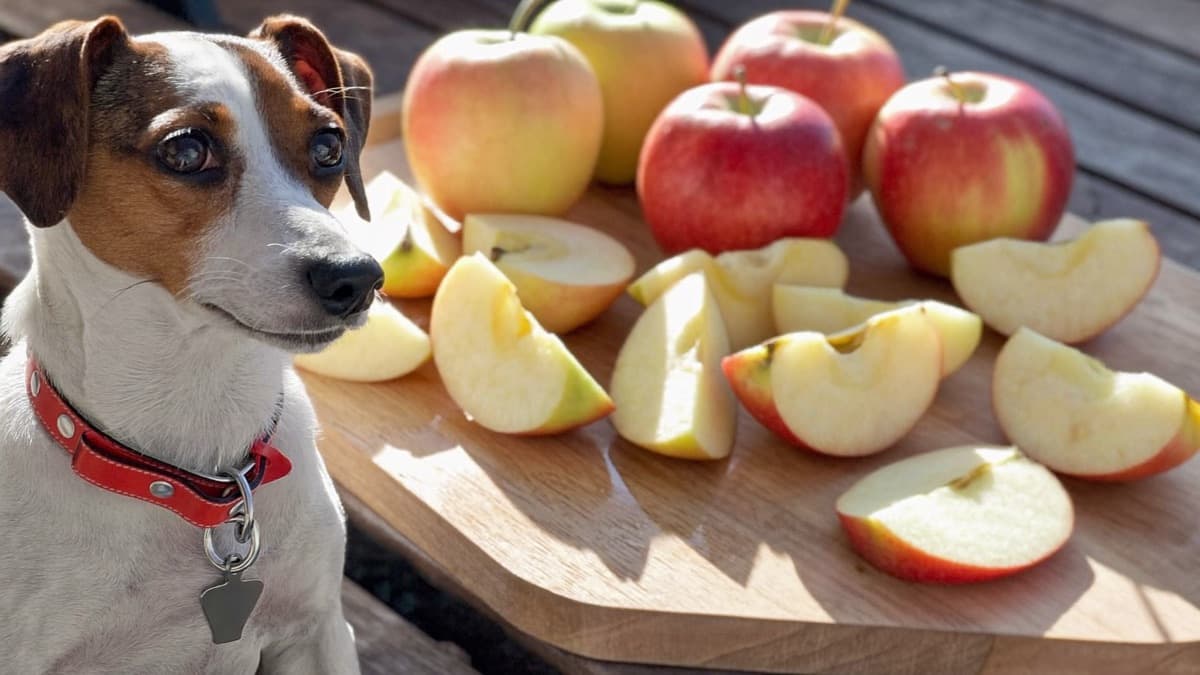
The two things owners worry about — cyanide in the seeds and choking on the core — are worth understanding properly, because one is mostly myth and the other is a genuine hazard.
Are apple seeds poisonous to dogs?
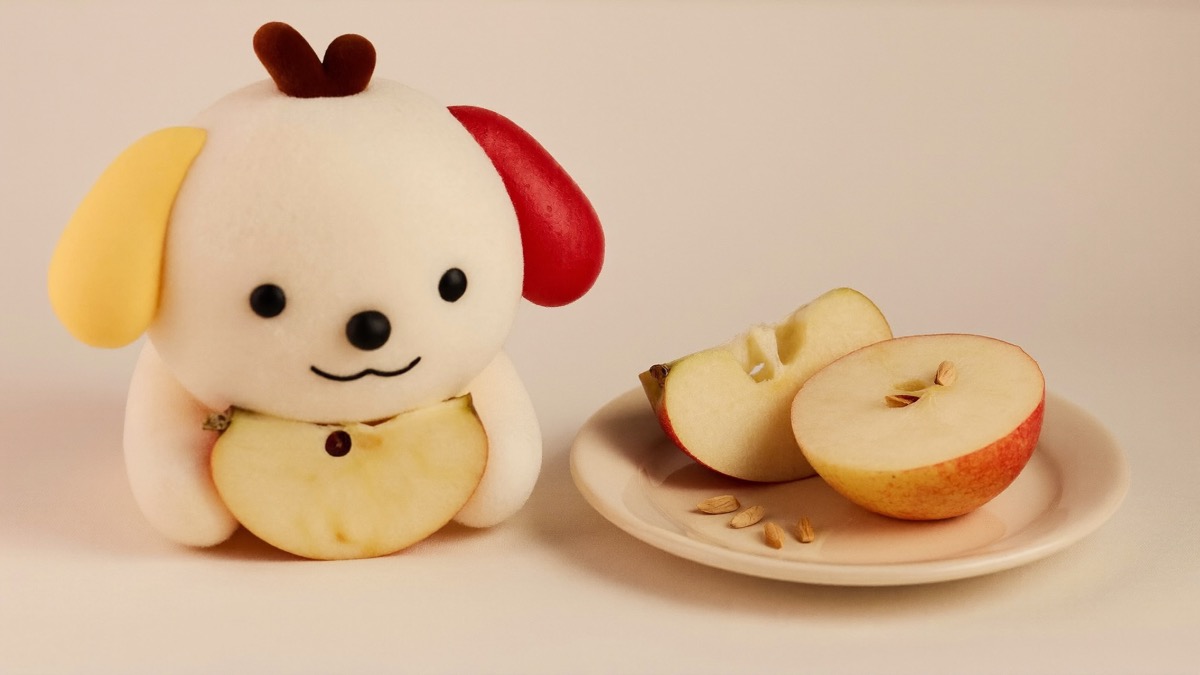
Apple seeds contain amygdalin, a compound that releases small amounts of cyanide when the seeds are chewed and digested. That sounds alarming, but the dose matters. A dog would need to thoroughly chew a large quantity of seeds — far more than one apple holds — before cyanide became a realistic concern. If your dog swallowed a seed or two whole, there is no need to panic; seeds that pass through intact release almost nothing.
So why do vets still say to remove them? Because there is no benefit to leaving them in, small dogs have smaller margins, and habits matter. A dog that regularly polishes off whole apples, cores and all, is taking an unnecessary risk for zero reward. Core the apple and the question disappears.
Is the apple core dangerous?
This is the real hazard. The core is tough and roughly gullet-shaped, and dogs do not chew the way we do. In small breeds and enthusiastic gulpers, a core can lodge in the throat or cause a blockage further down the digestive tract. The stem is also firm enough to irritate the mouth and gut.
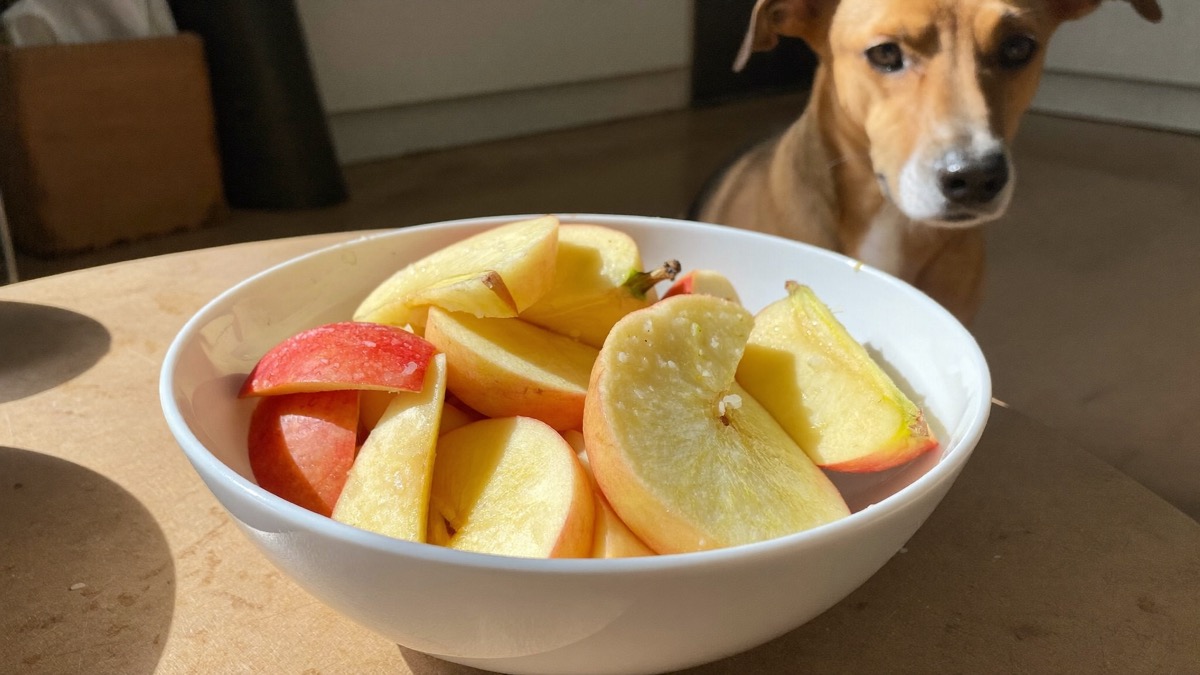
Slice the flesh off the core, discard the core, stem, and seeds, and serve only the slices.
How much apple is safe for my dog?
Treats of any kind — fruit included — should stay under about 10% of your dog's daily calories. Apples are low in calories but do contain natural sugar, so portion by size:
Scroll sideways to compare all columns →
| Dog size | Example breeds | Safe portion |
|---|---|---|
| Small (under 10 kg) | Chihuahua, Toy Poodle, Shih Tzu | 1–2 thin slices |
| Medium (10–25 kg) | Beagle, Singapore Special, Border Collie | 2–4 slices, or about a quarter apple |
| Large (over 25 kg) | Labrador, Golden Retriever, GSD | Up to half an apple |
A few times a week is plenty. Dogs with diabetes or weight problems should get smaller portions, and only after a word with your vet, because of the sugar content.
How should I prepare apple for a dog?
Wash the apple thoroughly to remove wax and pesticide residue, then core it and cut the flesh into bite-sized pieces suited to your dog's mouth. The skin is safe and adds fibre, but peel it for dogs with sensitive stomachs. In hot weather, frozen apple chunks make a cooling chew — a welcome trick on a humid Singapore or KL afternoon.
Skip applesauce with added sugar, apple pie, and apple juice. The fruit itself is the treat; the sugar, spices, and pastry around it are not. Anything sweetened with xylitol (also labelled "birch sugar") is strictly off-limits — xylitol is highly toxic to dogs even in tiny amounts.
When should I call the vet?
Apple flesh rarely causes problems, but call your vet if:
- Your dog swallowed a whole apple or a large chunk of core and is gagging, retching, drooling, or pawing at the mouth
- Vomiting, diarrhoea, or loss of appetite lasts more than a day after eating apple
- Your dog ate a large number of chewed seeds (unusual, but worth a call for small dogs)
- Your dog ate apple pie, applesauce, or any product that may contain xylitol — treat this as urgent
If in doubt, ring your regular clinic or a 24-hour emergency vet and describe exactly what was eaten. If you don't have a regular vet yet, the Singapore Veterinary Association's clinic directory is a good place to find one near you.
Which fruits are safe like apples — and which are not?
It is worth keeping the mental list sharp, because "fruit is healthy" does not generalise across species. Apples, blueberries, bananas, and seedless watermelon are all dog-safe in moderation. Grapes and raisins are the dangerous lookalikes: even a small amount can cause kidney failure in some dogs, with no known safe dose. Onions and garlic — sometimes hiding in fruit salads or chutneys — damage red blood cells. And anything "sugar-free" may contain xylitol.
Plain, cored, sliced apple sits firmly on the safe list. Share a slice, keep the core, and you both win.