The xylitol check: do this before anything else
Xylitol is a sugar substitute that is harmless to humans and severely toxic to dogs. Even a small lick of a xylitol-sweetened product can trigger a rapid insulin release that crashes a dog's blood sugar; larger amounts can cause acute liver failure. Signs — vomiting, weakness, wobbling, collapse, seizures — can appear within 30 minutes.
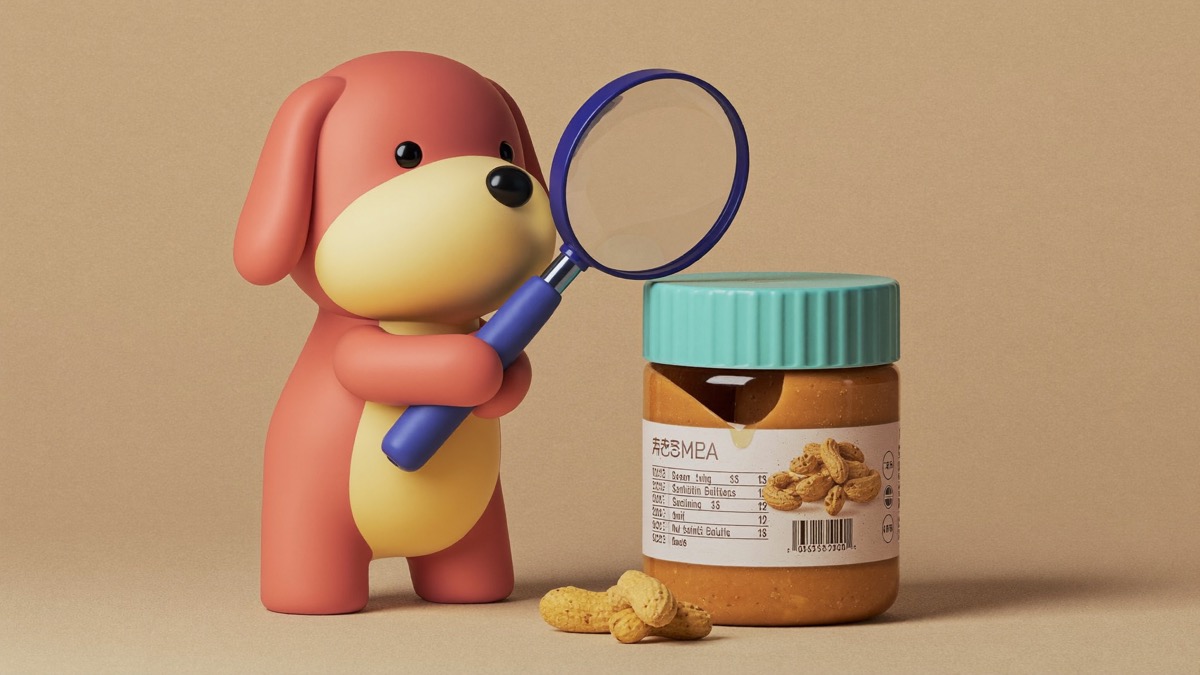
It is turning up in more products as sugar-free and keto eating grows, including some peanut and nut butters. Before any jar goes near your dog, scan the full ingredient list for:
- Xylitol
- Birch sugar or birch sap — the same chemical wearing a friendlier name
- E967 — its European additive code
- Vague phrases like "sugar alcohols" or "naturally sweetened" on sugar-free products — treat these as a no until confirmed
Imported "health food" and keto brands on Singapore and Malaysia shelves deserve extra suspicion. When in doubt, choose a peanut butter whose ingredient list reads simply "peanuts" — or just don't share.
Is peanut butter good for dogs?
Once the xylitol box is ticked, plain peanut butter is a reasonable occasional treat: protein, vitamin B and E, niacin and healthy fats, plus an aroma most dogs would trade their dignity for. The best choice is unsalted, unsweetened, xylitol-free peanut butter — ideally the natural kind with peanuts as the only ingredient.
The downside is density. Peanut butter is roughly 90–100 calories per tablespoon and high in fat, which means weight gain with regular overuse and, in susceptible dogs, a pancreatitis risk. Dogs with a pancreatitis history, and overweight dogs, should get little or none.
How much peanut butter is safe for my dog?
Think teaspoons, not spoonfuls, and no more than a few times a week.
Scroll sideways to compare all columns →
| Dog size | Example weight | Safe amount per serving |
|---|---|---|
| Small (Chihuahua, toy poodle, shih tzu) | Under 10 kg | Up to 1/2 teaspoon |
| Medium (beagle, Singapore Special, border collie) | 10–25 kg | Up to 1 teaspoon |
| Large (golden retriever, GSD, labrador) | Over 25 kg | Up to 1 tablespoon |
What is the best way to serve peanut butter?
Peanut butter's real talent is not nutrition — it is distraction:
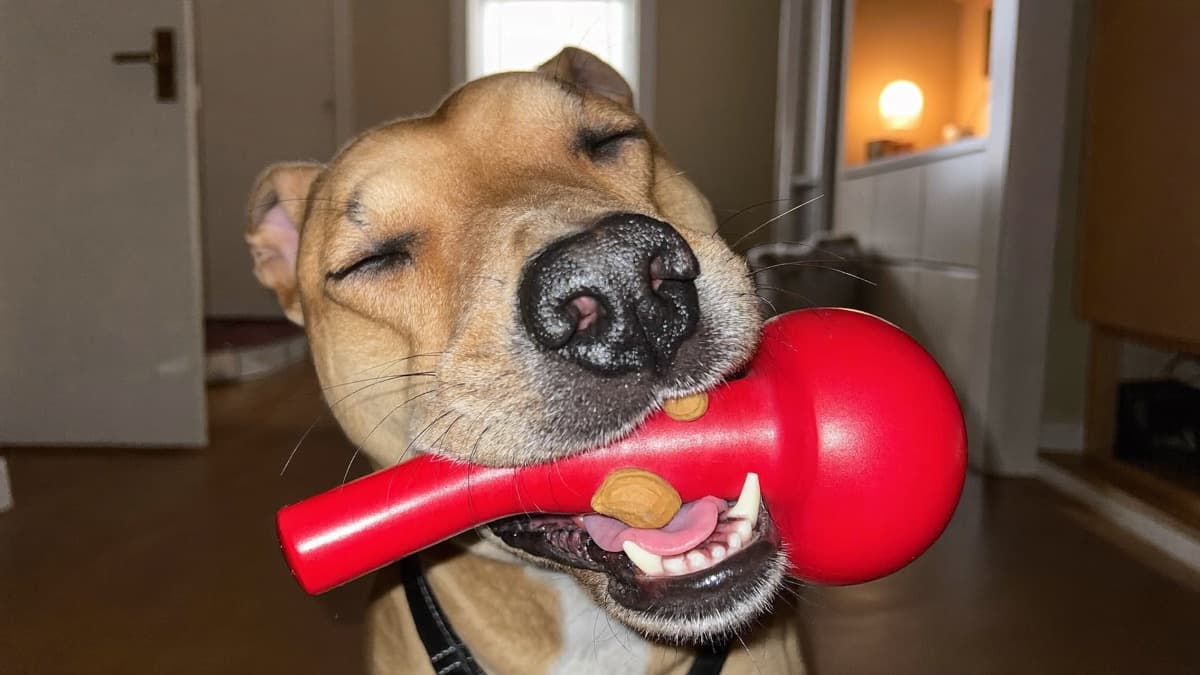
- Stuffed in a Kong or treat toy — a thin smear inside keeps a dog occupied for ages; freeze it for a longer-lasting version that doubles as a cool-down in our heat.
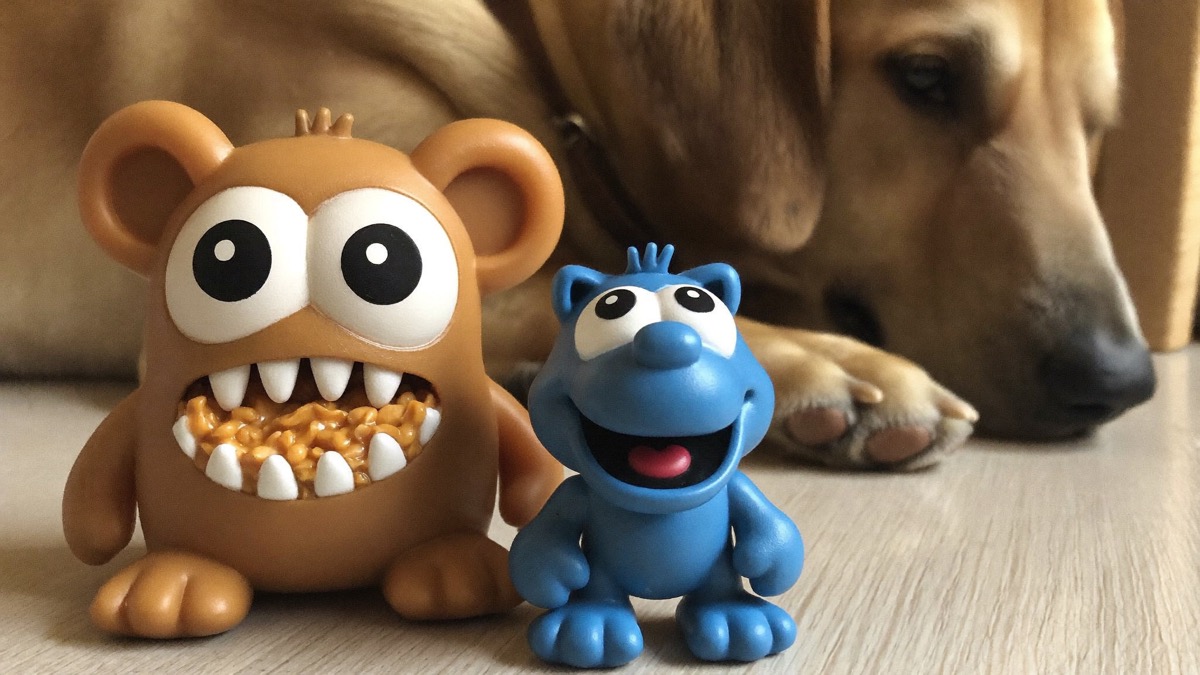
- On a lick mat — brilliant during nail trims, baths or grooming.
- As a pill wrapper — a small dab hides most medications convincingly.
A thin smear achieves everything a thick glob does, at a fraction of the calories.
When should I call the vet?
Go immediately — do not wait for symptoms — if:
- Your dog ate any amount of peanut butter, gum, sweets or baked goods containing xylitol or birch sugar. Bring the packaging with you.
- Your dog shows vomiting, weakness, trembling, wobbliness, collapse or seizures after eating any sweetened product.
Call promptly if your dog got into a large amount of any peanut butter (fat overload — watch for vomiting, diarrhoea and a painful belly, which can signal pancreatitis), or if any tummy upset lasts more than 24 hours. In Malaysia, the Department of Veterinary Services is the national animal-health authority, but for suspected xylitol ingestion your nearest 24-hour emergency clinic is the only right call.
Which similar treats are actually toxic to dogs?
Peanut butter's danger hides in the ingredient list, and it has company:
- Xylitol — beyond peanut butter, it lurks in sugar-free gum, mints, some supplements and baked goods; a single pack of gum can be lethal to a small dog.
- Chocolate — chocolate-peanut butter spreads and cups combine two problems; chocolate is toxic at surprisingly small doses.
- Grapes and raisins — often alongside peanut butter in trail mixes; they can cause acute kidney failure.
If your dog eats any of these, contact your vet or an emergency animal clinic straight away rather than waiting for symptoms.