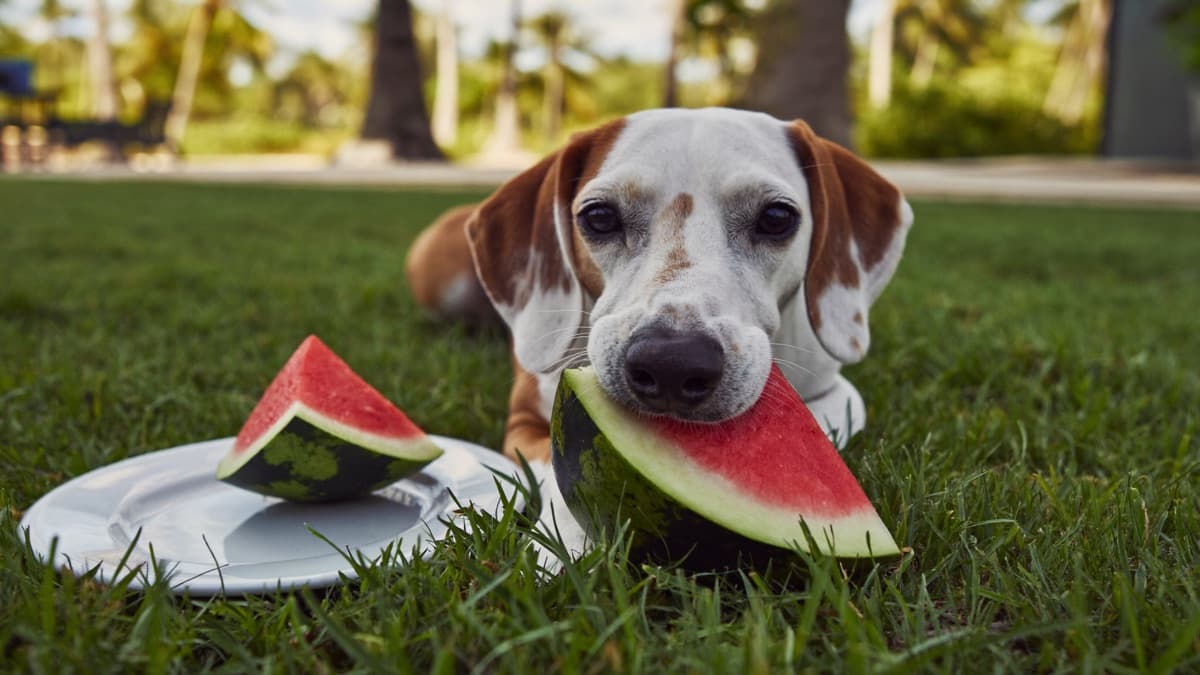
The fruit itself is the easy part. The seeds and rind are where owners need to pay attention.
Is watermelon good for dogs?
Genuinely, yes — in the modest way that fruit can be. The high water content supports hydration on hot days, and the low calorie count means you can treat generously without adding much to the daily total. The natural sugars are real, though: watermelon is sweeter than cucumber or green beans, so it belongs in the occasional-treat category rather than the every-day one, and dogs with diabetes should only get it with a vet's blessing.
Dogs cool themselves mainly by panting, which costs water quickly in tropical humidity. A hydrating treat is not a substitute for a water bowl, but it is a pleasant supplement — and most dogs act like frozen watermelon is the best thing ever invented.
Are watermelon seeds dangerous for dogs?
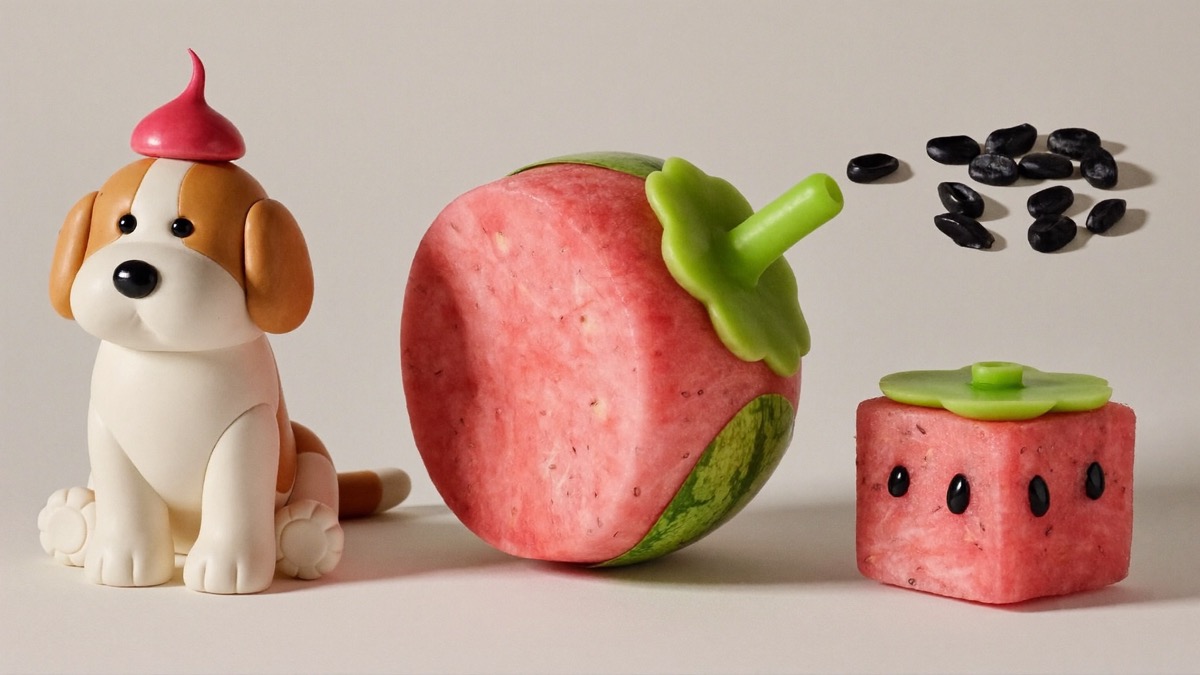
The mature black seeds are the concern, and the problem is mechanical rather than toxic. One or two swallowed seeds will almost certainly pass without incident. The trouble comes when a dog eats a wedge full of them: enough seeds can accumulate and cause an intestinal blockage, and the smaller the dog, the fewer it takes.
The soft white seed coats found in "seedless" watermelons are immature and not a meaningful risk. The simple fix: buy seedless where you can — the norm at most supermarkets and fruit stalls — or flick the black seeds out as you cube the flesh.
Can dogs eat watermelon rind?
No. The pale green rind is tough and fibrous, and dogs cannot digest it well. Dogs that are allowed to gnaw on a rind "chew toy" often swallow chunks, which can cause vomiting, diarrhoea, or a genuine gastrointestinal blockage needing veterinary attention. Cut the pink flesh off the rind and dispose of the rest somewhere a determined scavenger cannot reach — bins have been raided for less.
How much watermelon is safe for my dog?
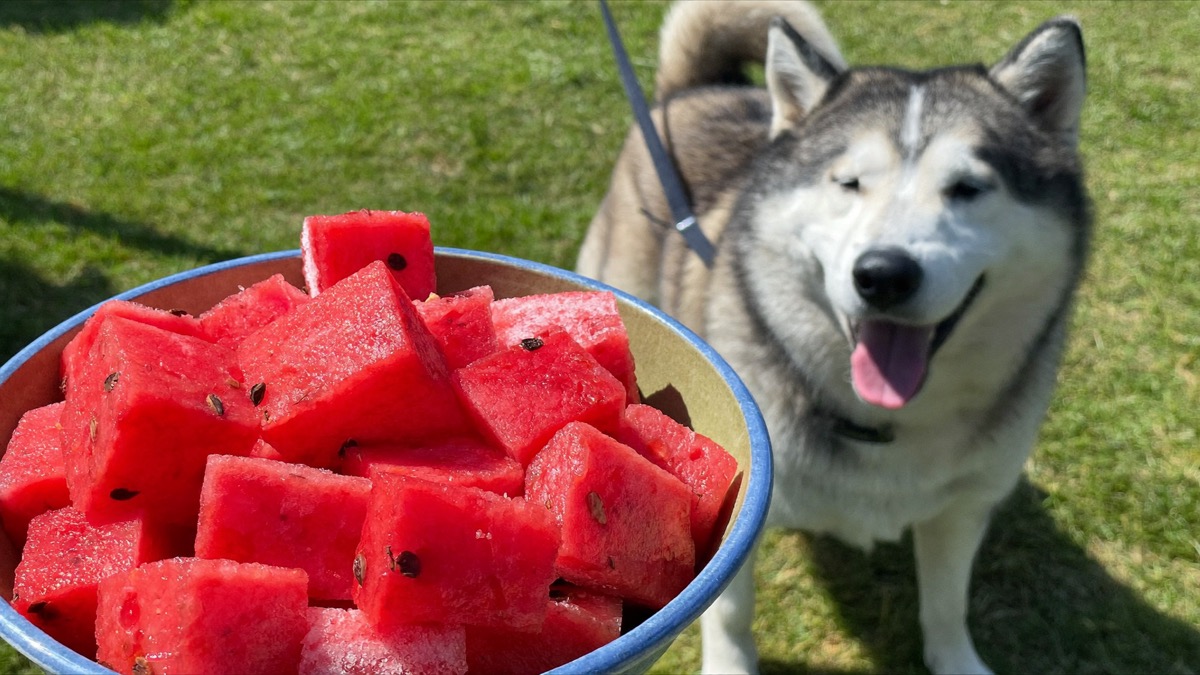
Treats of all kinds should stay under about 10% of daily calories. Because of the sugar content, portion watermelon by size and keep it occasional:
Scroll sideways to compare all columns →
| Dog size | Example breeds | Safe portion |
|---|---|---|
| Small (under 10 kg) | Chihuahua, Toy Poodle, Shih Tzu | 2–3 small chunks |
| Medium (10–25 kg) | Beagle, Singapore Special, Border Collie | Around half a cup, cubed |
| Large (over 25 kg) | Labrador, Golden Retriever, GSD | Up to 1 cup, cubed |
Serve it deseeded, rind-free, and cut into pieces suited to your dog's mouth. Chilled cubes or frozen chunks work beautifully in the heat; you can also blend flesh with a little plain water and freeze it in an ice tray. Skip watermelon-flavoured sweets, syrups, and juices — added sugar at best, and anything sugar-free may contain xylitol, which is severely toxic to dogs.
When should I call the vet?
Problems are uncommon with properly prepared watermelon, but call your vet if:
- Your dog ate a large amount of rind or many black seeds — watch for vomiting, straining, constipation, lethargy, or a painful belly over the next 24–48 hours, and call sooner rather than later in small breeds
- Vomiting or diarrhoea lasts more than 24 hours after eating watermelon
- Your dog is diabetic and got into a significant quantity of fruit
- Any sugar-free "watermelon" product was involved — treat possible xylitol exposure as an emergency
Which fruits are safe like watermelon — and which are emergencies?
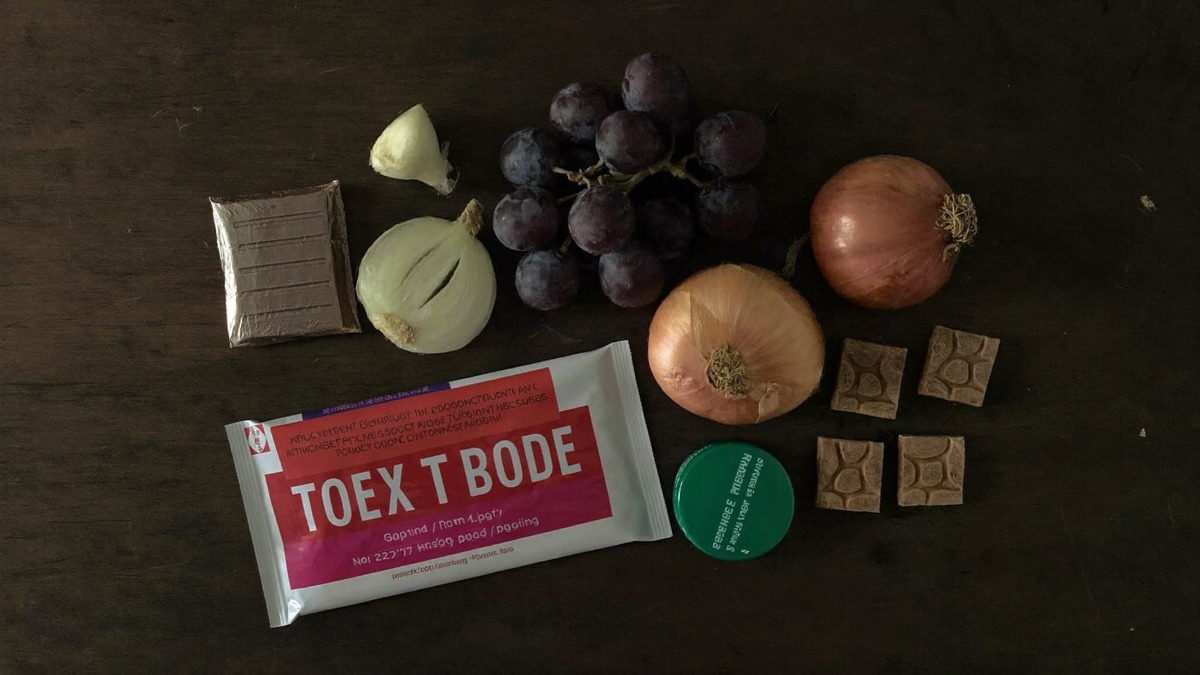
Watermelon flesh sits comfortably on the safe list with apple, blueberries, and cucumber. The fruit bowl's dangerous residents are grapes and raisins: they can cause kidney failure in dogs, no safe dose is known, and eating them is a call-the-vet-now event, not a wait-and-see one. Onion and garlic in savoury scraps, and xylitol in sugar-free products, round out the big three to keep locked away. Get those out of reach, and sharing a few cold cubes of watermelon on a hot evening is one of the easiest wins in dog ownership — whether yours is a pedigree or a Singapore Special adopted through a shelter like SPCA Singapore.