Why are most online recipes deficient?
Because balancing a dog's diet is genuinely hard, and most recipe authors never checked. The landmark evidence is a UC Davis study that analysed 200 home-prepared dog food recipes from websites, pet books, and even veterinary textbooks: around 95% were short of at least one essential nutrient, and most were short of several. The usual gaps are calcium, vitamin D, vitamin E, zinc, copper, and the right calcium-to-phosphorus ratio.
The cruel part is the timeline. A dog on a deficient diet looks fine for months. Calcium deficiency demineralises bone before anything shows; vitamin E and zinc shortfalls surface as vague skin and immune problems long after anyone connects them to the food bowl. Puppies are the highest-stakes case — growth on an unbalanced diet can cause permanent skeletal deformity — which is why home cooking for puppies should only ever happen under a nutritionist's supervision.
"My grandmother's dogs ate table scraps and lived to fifteen" proves only that survivors get remembered. The evidence base says: formulate properly or feed commercial.
What is the non-negotiable part of home cooking?
One of these two paths:
Path 1 — a board-certified veterinary nutritionist formulates for your dog. Diplomates of veterinary nutrition colleges offer remote consultations and custom recipes matched to your dog's weight, life stage, and any medical conditions. This is the right path for puppies and for dogs with kidney disease, allergies, or other diagnoses.
Path 2 — a formulation service with its own balancing supplement. Several reputable services (typically founded or staffed by veterinary nutritionists) generate a recipe and sell the matching vitamin-mineral powder that completes it. You cook the listed ingredients in the listed amounts and add the measured supplement. Generic "dog multivitamins" are not a substitute — they are not dosed to complete any particular recipe, and calcium in particular must match the recipe's maths.
What is never acceptable long-term: a recipe with no calcium source and no supplement. That is the single fastest way home cooking goes wrong — as our supplements guide puts it, home-cooked diets are the one clear case where supplementation is not optional.
What does a safe base template look like?
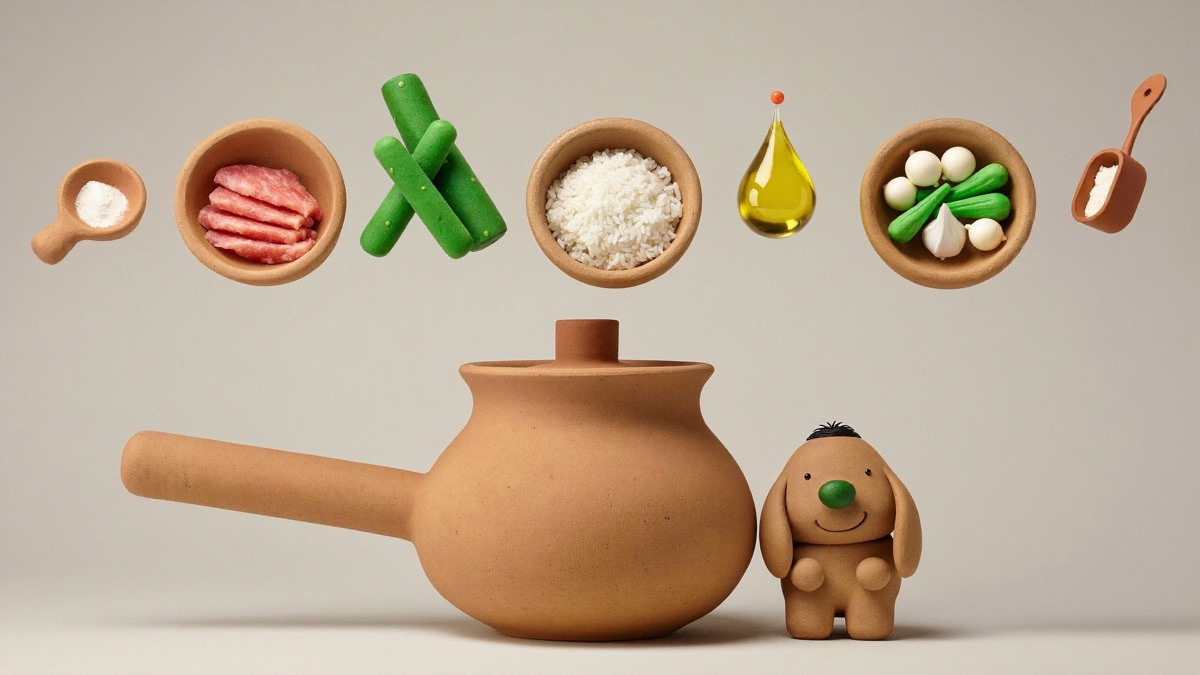
The proportions and amounts must come from your formulated recipe, but nearly all complete home-cooked diets are built from five blocks:
Scroll sideways to compare all columns →
| Block | Role | Typical examples |
|---|---|---|
| Cooked protein | Amino acids | Chicken thigh, lean beef, pork, fish, eggs |
| Cooked carbohydrate | Energy, fibre | White or brown rice, potato, oats, pasta |
| Vegetables | Fibre, micronutrients | Carrot, green beans, pumpkin, leafy greens |
| Measured oil | Essential fatty acids | Vegetable/canola oil, fish oil as directed |
| Calcium + vitamin-mineral supplement | Everything the food blocks can't supply | Per the recipe — never estimated |
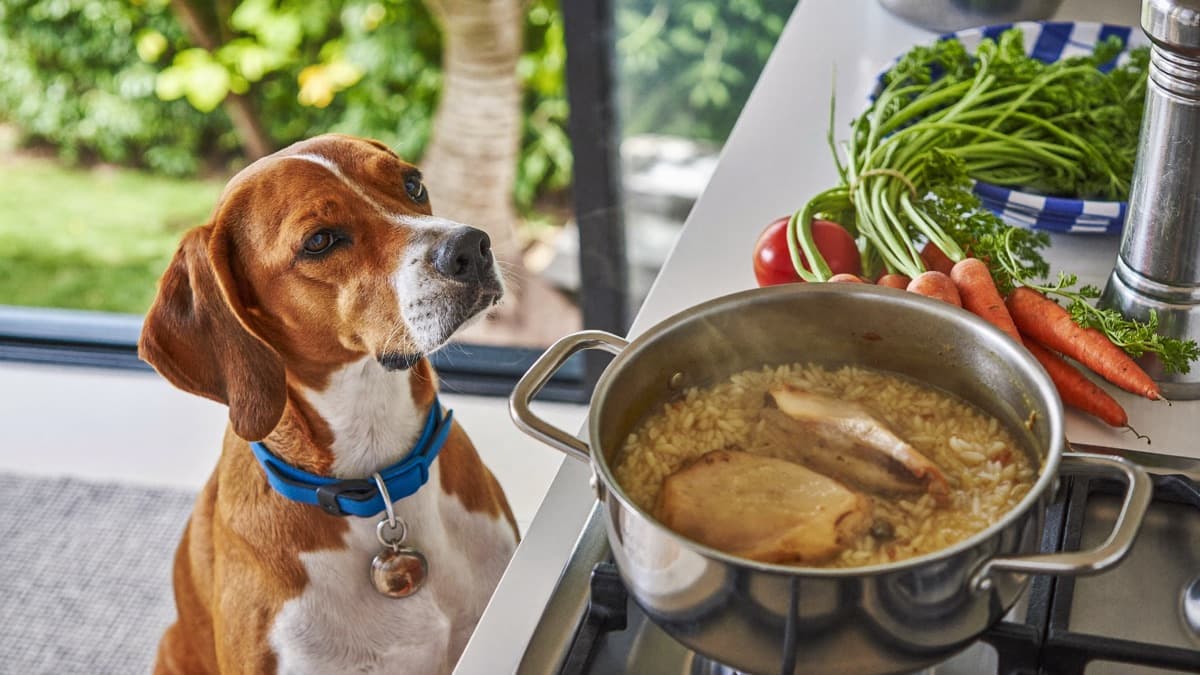
Cook everything plainly: no onion, garlic, excess salt, or seasoning. Weigh ingredients with a kitchen scale rather than measuring by cup — recipe drift, where owners gradually substitute and eyeball, is a documented way balanced diets become unbalanced within months. Keep portions matched to your dog's calorie needs using our feeding amounts guide.
How do I batch cook safely in SG/MY heat?
Home-cooked food is perishable food, and our kitchens sit at bacteria-friendly temperatures all year:
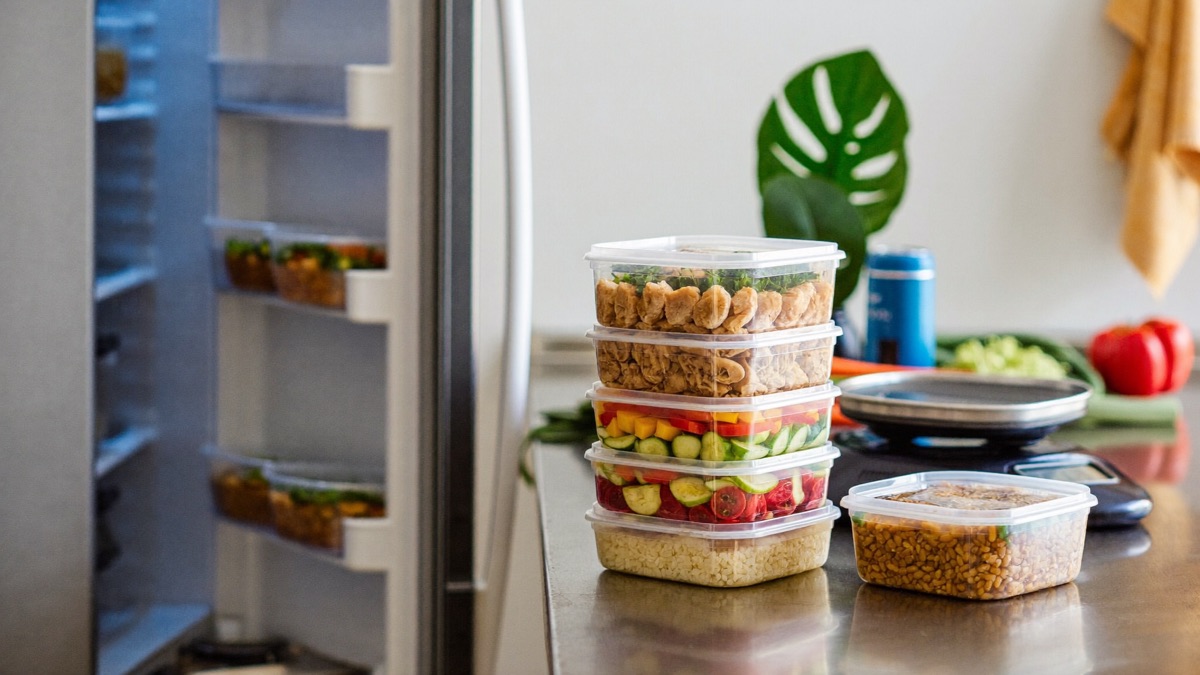
- Portion and refrigerate within 30–60 minutes of cooking — don't leave the pot to cool on the stove all afternoon. Shallow containers chill faster.
- Refrigerated portions keep 3–4 days; freeze anything beyond that in meal-sized containers and thaw in the fridge overnight.
- Serve at room temperature or briefly warmed, and clear uneaten food within 30 minutes.
- Wash the bowl after every meal — cooked food residue grows bacteria far faster than kibble dust.
What does home cooking cost compared with kibble?
More — in money and in time. As of 2026, a balanced home-cooked diet for a 10 kg dog typically runs S$150–300 / RM450–900 per month for ingredients plus the balancing supplement, against roughly S$30–120 / RM90–400 for complete commercial kibble, and add a nutritionist consultation upfront if you take Path 1. Wet-market chicken and rice look cheap until the supplement, the oil, the electricity, and two hours of weekly cooking join the bill.
So who should do it? Owners of dogs with medical conditions needing custom diets, owners of extremely picky dogs, and people who simply want to cook and are willing to do it properly. If the appeal is "fresh and less processed" rather than cooking itself, a commercial fresh-cooked diet with a complete-and-balanced statement gets you there with zero formulation risk — our guide on how to choose dog food shows what to check on the label. And if you were weighing raw instead, read our honest assessment of raw feeding first.