Why does my puppy cry at night?
For eight weeks your puppy slept in a pile of warm bodies. Night one at your place, they are alone, in the dark, in a new-smelling space, often for the first time in their life. Crying is the evolved response — in the wild, a separated puppy who vocalises gets found. It is not defiance, and it is not a habit you create by responding. The "don't go to them or you'll reward the crying" advice confuses a distressed infant with a trained behaviour; comfort and food-based reinforcement are not the same mechanism. Puppies whose distress is answered settle faster and are more confident about being alone later, which is exactly what our crate training guide builds on.
The other reason puppies cry at night is simpler: they need to toilet. A young puppy's bladder cannot hold 7–8 hours, so some night crying is accurate reporting, not distress at all.
What is the crate-near-bed setup?
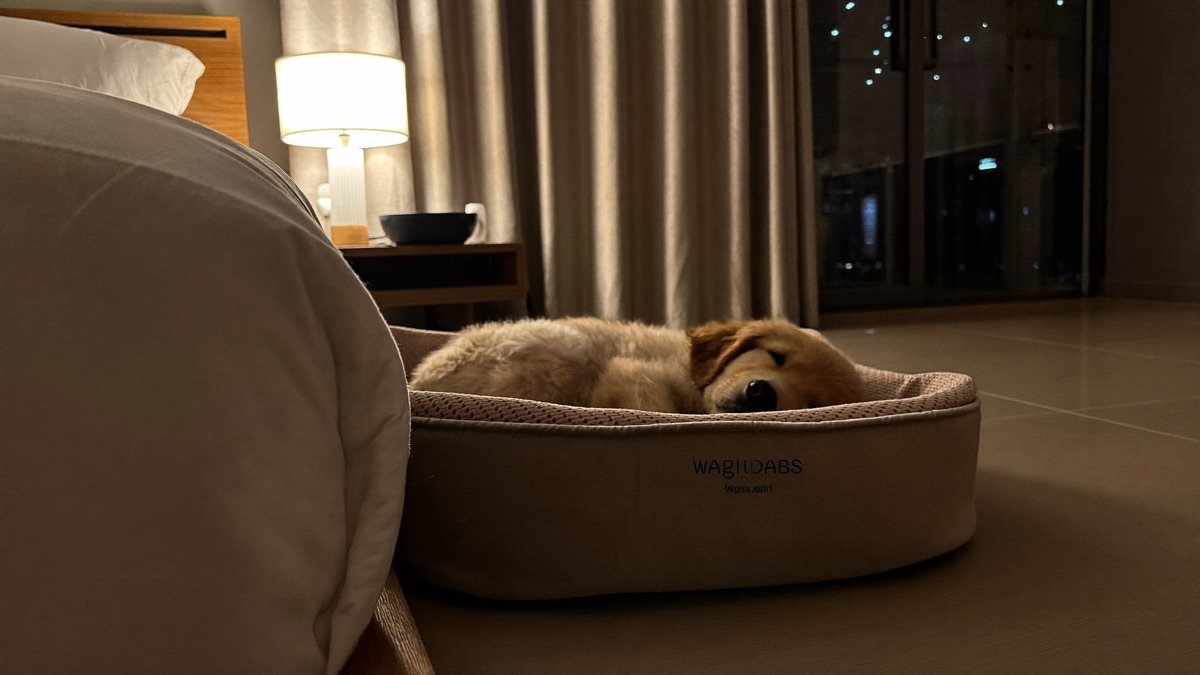
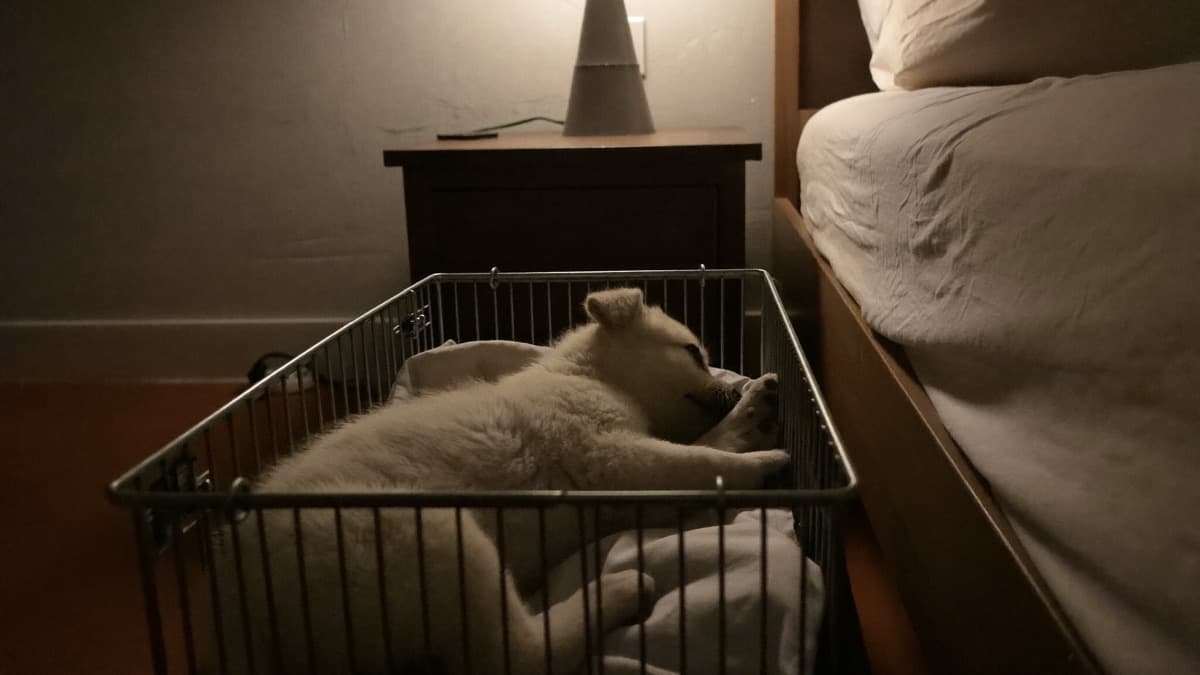
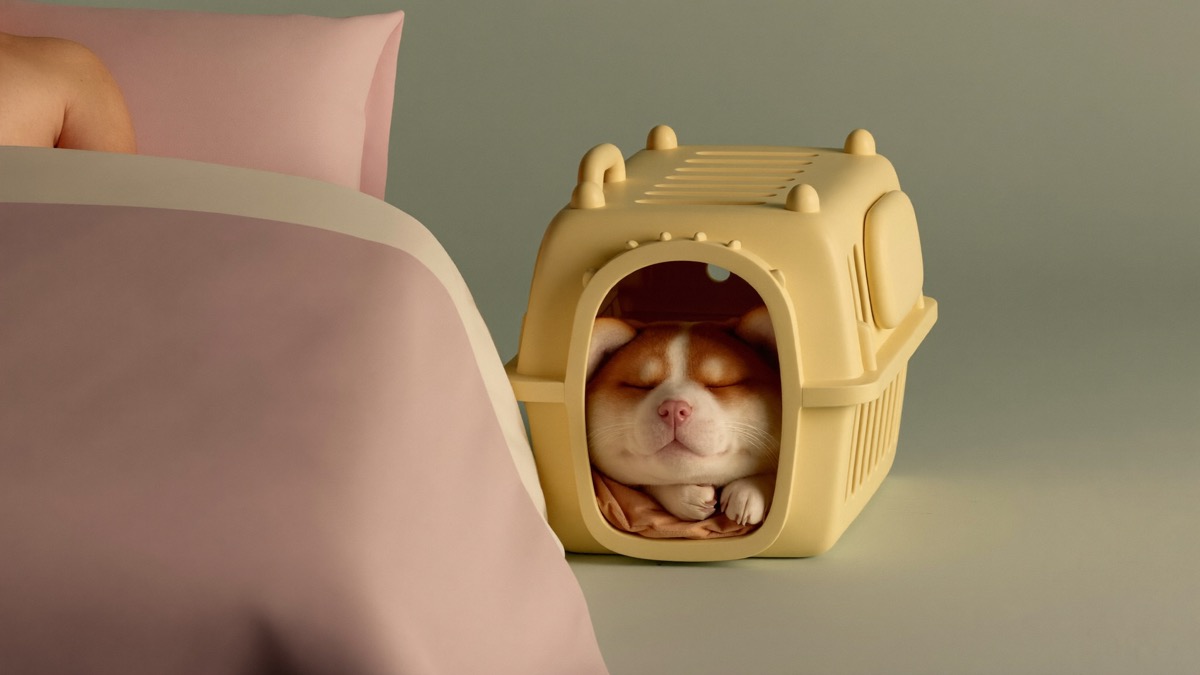
For the first one to two weeks, put the crate (or a small pen) directly beside your bed — close enough that your puppy can smell you and you can drop a hand near the door.
- Make it a nest. Soft bedding, an item that smells of the litter if the breeder provided one, and a safe chew for settling. A snuggle toy or a wrapped, warm (not hot) water bottle mimics littermate warmth.
- Run a wind-down hour. Last meal 2–3 hours before bed, water up until about an hour before, calm play only, final toilet trip immediately before lights out.
- Darkness and quiet. Aircon hum or a fan makes decent white noise — and a puppy settles faster in a room kept comfortably cool than in a stuffy one. In an HDB flat (check HDB's rules on keeping dogs before the puppy arrives, not after), the white noise also masks corridor sounds that can set off a light-sleeping puppy.
- Move gradually later. Once your puppy sleeps through (usually 2–4 weeks in), shift the crate half a metre every few nights toward its long-term location. No drama, no setbacks.
Should I take my puppy out to toilet at night?
Yes — scheduled, not on demand. For an 8–10-week-old, set an alarm for roughly 3–4 hours after bedtime rather than waiting for crying, so toilet trips never become contingent on vocalising. The trip itself should be gloriously boring: minimal lights, no talking beyond a quiet toilet cue, carry them to the spot, praise softly, straight back into the crate. If they toilet and then fuss, that's your cue to sit quietly nearby until they settle — not to start a 2am play session. As the weeks pass, push the alarm later until it falls off the end of the night, typically by 12–16 weeks.

When should I respond and when is protest OK?
Learn to read the two sounds. Settling protest — intermittent grumbles, a few half-hearted whines, sighing, repositioning — is a puppy negotiating with sleep. Wait it out; most puppies settle within a few minutes. Distress — escalating, continuous, urgent crying, scrabbling at the crate door, panting — deserves a response. Check for toilet needs first. If it's not that, respond minimally: a calm voice, fingers at the crate door, your presence. You are not letting them out to party; you are proving that they haven't been abandoned. With the crate beside your bed, most of these episodes end with a hand near the door and thirty seconds of patience.
What you should never do is let a young puppy scream alone in another room for hours. Beyond being miserable for everyone, it teaches the puppy that the crate predicts abandonment — the exact opposite of what crate training is supposed to build.
How long until my puppy sleeps through the night?
Realistic timeline: nights one to three are the hardest, with crying at bedtime and one or two wake-ups. By nights four to seven, most puppies settle within minutes and wake only for the scheduled toilet trip. By weeks two to four, expect solid sleep with the crate still nearby, and from around 12–16 weeks, no toilet break and a crate that can live anywhere in the flat. If your puppy is past four months and still panicking at night despite this setup, talk to your vet — the Singapore Veterinary Association lists local clinics if you haven't settled on one — because pain, urinary issues and genuine separation-related problems are worth ruling out early.