What is the standard puppy deworming schedule?
| Age | What happens |
|---|---|
| 2 weeks | First dose (usually given by the breeder or shelter) |
| 4 weeks | Second dose |
| 6 weeks | Third dose — often the first one you'll handle as the new owner |
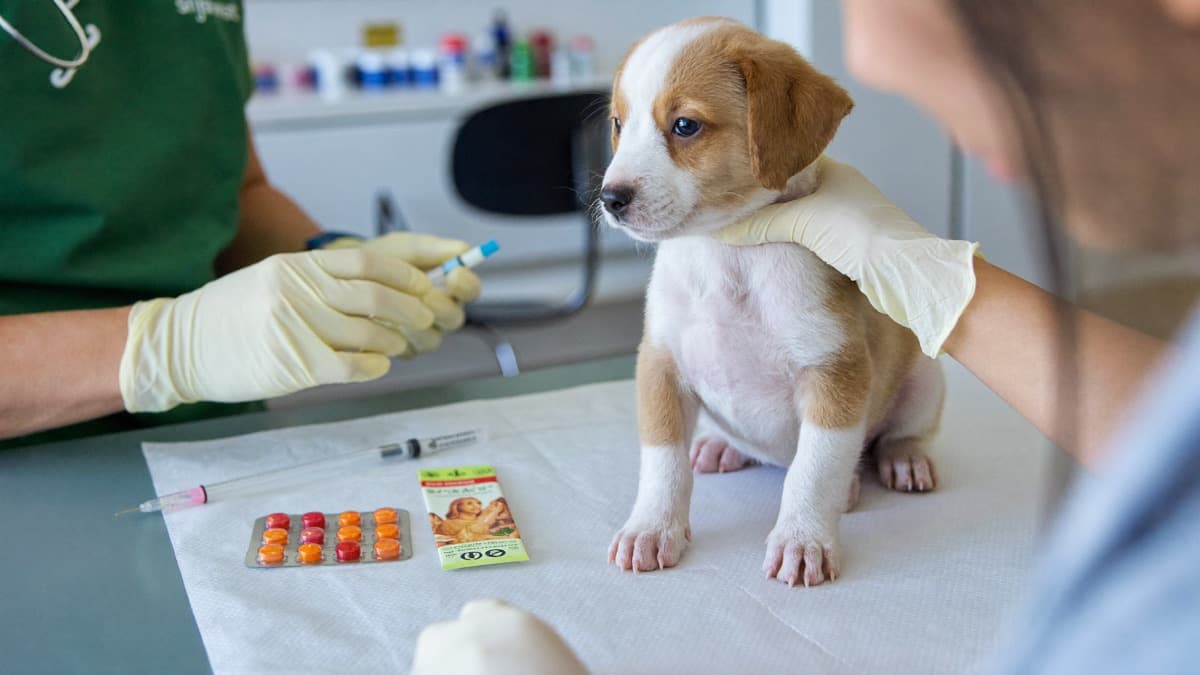
| 8 weeks | Fourth dose, typically alongside the first vet visit and vaccinations |
| 10 weeks | Fifth dose |
| 12 weeks | Sixth dose |
| 3–6 months | Monthly dosing |
| 6 months onward | Monthly broad-spectrum prevention, usually combined with heartworm protection |
The every-two-weeks rhythm exists because no dewormer kills migrating larvae — it only clears the worms present in the gut on the day it's given. Two weeks later, larvae that were still travelling through the body have arrived in the intestine and are vulnerable to the next dose. Skip a round and you leave a cohort of worms in place, laying thousands of eggs a day.
Deworming slots neatly alongside the puppy vaccination schedule — most vets simply do both at the same visits from 8 weeks.
Why do puppies come pre-loaded with worms?
Because they're usually infected before they've ever stepped on the ground. Roundworm larvae lie dormant in a mother dog's tissues for years, wake up during pregnancy, and cross the placenta into the puppies. Hookworm larvae pass through the milk during nursing. That's why a puppy from the cleanest home — or the most reputable shelter — is still assumed wormy, and why "my puppy has never been outside" is not a reason to skip doses.
Which worms are common in Singapore and Malaysia?
The tropics are generous to parasites. Warm soil and year-round humidity mean eggs stay infective for months, and the region's community dogs keep the environment topped up.
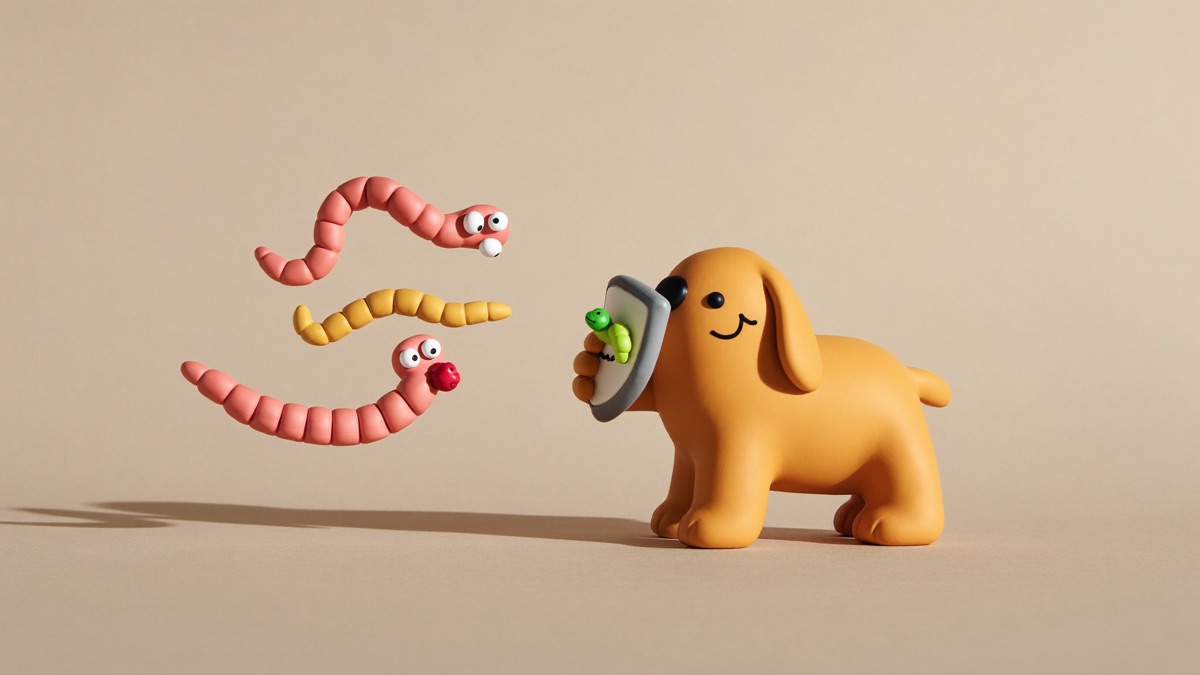
- Roundworms (Toxocara canis) — the spaghetti-like worms behind the classic pot belly. The most common puppy worm, and zoonotic.
- Hookworms — blood-feeders that can cause life-threatening anaemia in small puppies; larvae in damp soil can also penetrate human skin.
- Whipworms — hardy eggs that persist in soil and cause chronic diarrhoea.
- Tapeworms — caught by swallowing infected fleas, which never take a season off here; you may see rice-grain segments around the tail.
Heartworm is the other regional parasite, but it's transmitted by mosquitoes and prevented differently — our heartworm guide covers it.
What dewormer will the vet use?
Scroll sideways to compare all columns →
| Active ingredient | Covers | Notes |
|---|---|---|
| Pyrantel | Roundworm, hookworm | Gentle, standard for very young puppies |
| Fenbendazole | Round-, hook-, whipworm, some tapeworm | Often a 3-day course |
| Praziquantel | Tapeworm | Usually combined with pyrantel in one tablet |
| Milbemycin / moxidectin combos | Intestinal worms + heartworm | The usual monthly preventive from 6 months |
All are dosed by weight, and a growing puppy can double its weight between visits — one more reason the early rounds belong at the clinic, where the scale is accurate.

How much does puppy deworming cost?
As of 2026, expect roughly S$10–30 per dose at a Singapore clinic (often bundled into the vaccination visit) and about RM10–20 per tablet in Malaysia, plus the consultation fee if it's a standalone visit. The full puppy course is one of the cheapest pieces of preventive care you'll ever buy — a fraction of the cost of treating a hookworm-anaemic puppy that needs a transfusion.
What happens after six months?
You don't stop — you consolidate. Most monthly heartworm preventives (milbemycin or moxidectin based) also clear roundworm and hookworm with every dose, so one monthly chew or spot-on covers both jobs for life. If your dog's heartworm product doesn't include intestinal cover, or your dog hunts lizards and swallows fleas, your vet may add a quarterly all-wormer with praziquantel for tapeworm. Annual stool checks catch anything the routine misses.
Put the dates in your phone the day you bring the puppy home. Worms are the one puppy problem that's almost entirely preventable by calendar.