What is the puppy teething timeline?
| Age | What's happening |
|---|---|
| 3–4 weeks | Baby (deciduous) incisors erupt — usually at the breeder's |
| 3–5 weeks | Baby canines erupt |
| 4–6 weeks | Baby premolars erupt |
| ~8 weeks | Full set of 28 baby teeth — the needle-sharp ones you meet at pickup |
| 12–16 weeks | Baby incisors fall out; adult incisors erupt. Teething discomfort ramps up |
| 16–24 weeks | Adult canines and premolars come through; baby teeth drop steadily |
| 5–7 months | Adult molars erupt (they have no baby predecessors) |
| ~6 months | All 42 adult teeth typically in place |
Two waves means two rounds of sore mouth: a mild one before you even bring the puppy home, and the real one from roughly 12 weeks to 6 months. If your 4-month-old has suddenly become a chewing machine, this table is why.
What's normal during teething — and what isn't?
Normal: increased chewing, drooling, tiny spots of blood on toys, mildly red or puffy gums, slightly picky eating for a day or two when a tooth is loose, and finding miniature teeth on the floor. Mostly you won't find them — puppies swallow the majority of their baby teeth, and that's harmless.
Not normal: a tooth dangling at an angle for days, continuous bleeding, breath that smells genuinely foul, a swollen muzzle or face, refusing food outright, or obvious pain when the mouth is touched. Any of those is a vet visit, not a wait-and-see. And a broken or discoloured tooth at any age needs attention — cracked teeth hurt and abscess quietly.
How do I manage all the chewing?
The goal is management, not suppression — a teething puppy who chews is doing exactly what biology demands:
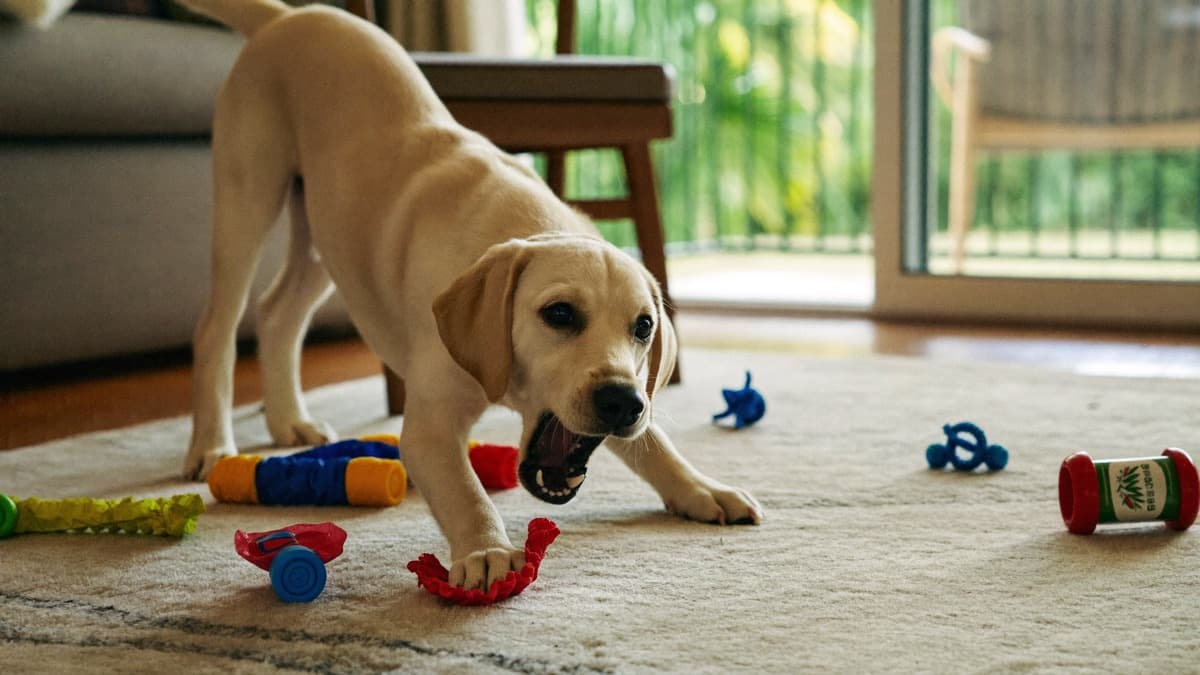
- Legal targets everywhere. Keep 4–6 chew toys in rotation across the rooms the puppy uses, so a legal option is always closer than the table leg. Rotate them so they stay interesting.
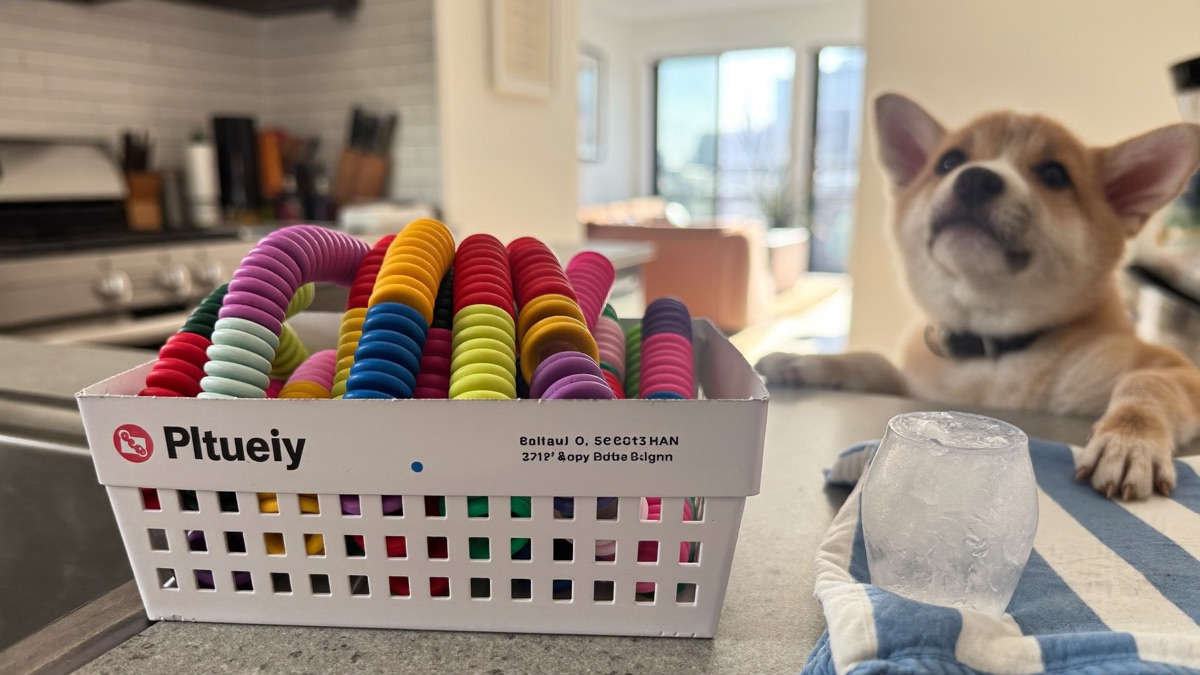
- The frozen washcloth trick. Soak a clean washcloth, wring it, twist it into a rope and freeze it. Cold numbs sore gums, the texture satisfies the gnaw, and it costs nothing. A stuffed frozen Kong or frozen carrot stick (supervised) does the same job.
- Choose soft over hard. If you can't dent it with a thumbnail, it can crack a tooth. Skip antlers, hooves, cooked bones and rock-hard nylon.
- Trade, don't chase. When teeth land on a shoe, swap it for a toy and put the shoe away. A puppy chased around the sofa learns that stealing shoes starts a great game.
- Manage the environment. During peak teething, cables get covered, shoes live in cupboards, and unsupervised time happens in a pen. Prevention beats correction every time.
What are retained baby teeth?
Sometimes an adult tooth erupts but the baby tooth refuses to leave, leaving two teeth jammed in one socket — most often the canines, and most often in small breeds like toy poodles, chihuahuas and malteses. Food packs into the gap, and the adult tooth can be pushed permanently out of alignment. If you can see a double row of teeth after about 5–6 months, book the vet: retained baby teeth are usually extracted, commonly at the same time as sterilisation while the puppy is already under anaesthesia. This is also a good moment to start the tooth-brushing habit — our dog dental care guide covers how.
Should I punish teething chewing?
No — and it backfires. Chewing during teething is a physical need, like scratching an itch; punishing it doesn't remove the need, it just teaches your puppy to chew where you can't see, and to distrust your hands near their mouth. The same redirect-and-manage logic applies to teeth on human skin: swap in a legal target, end the game if teeth keep landing on you, and keep every response boring and consistent. That protocol is laid out step by step in our puppy biting guide — teething is one of the three drivers behind it, and the fix is the same calm system, not louder corrections.