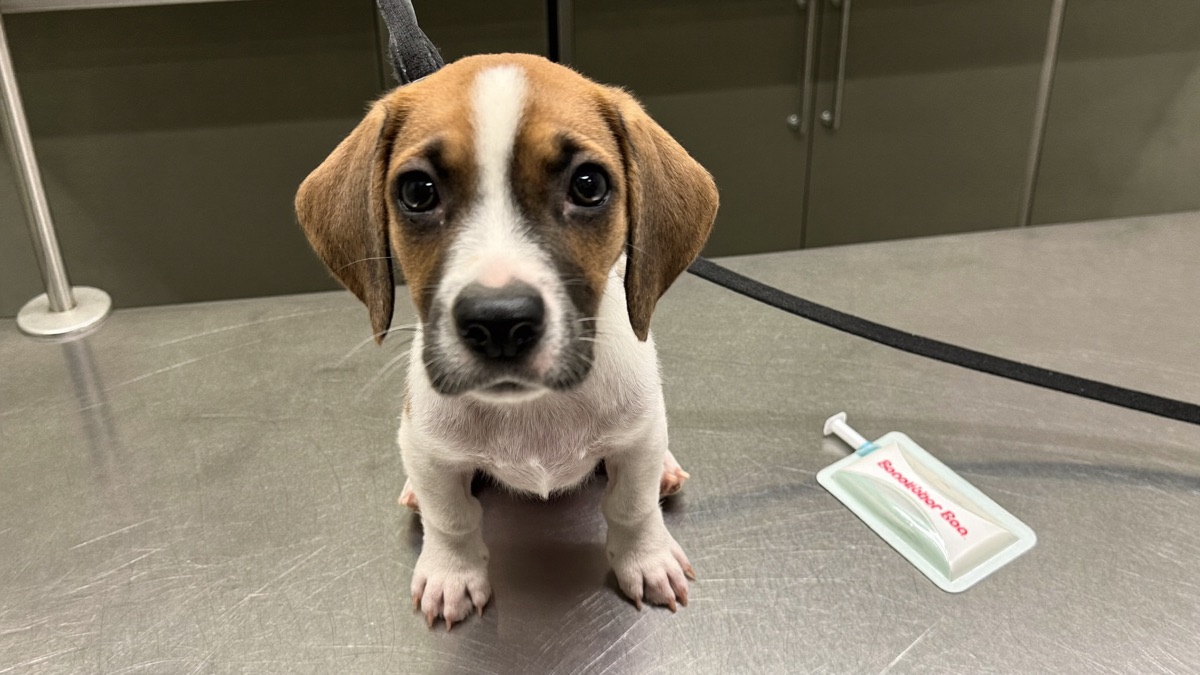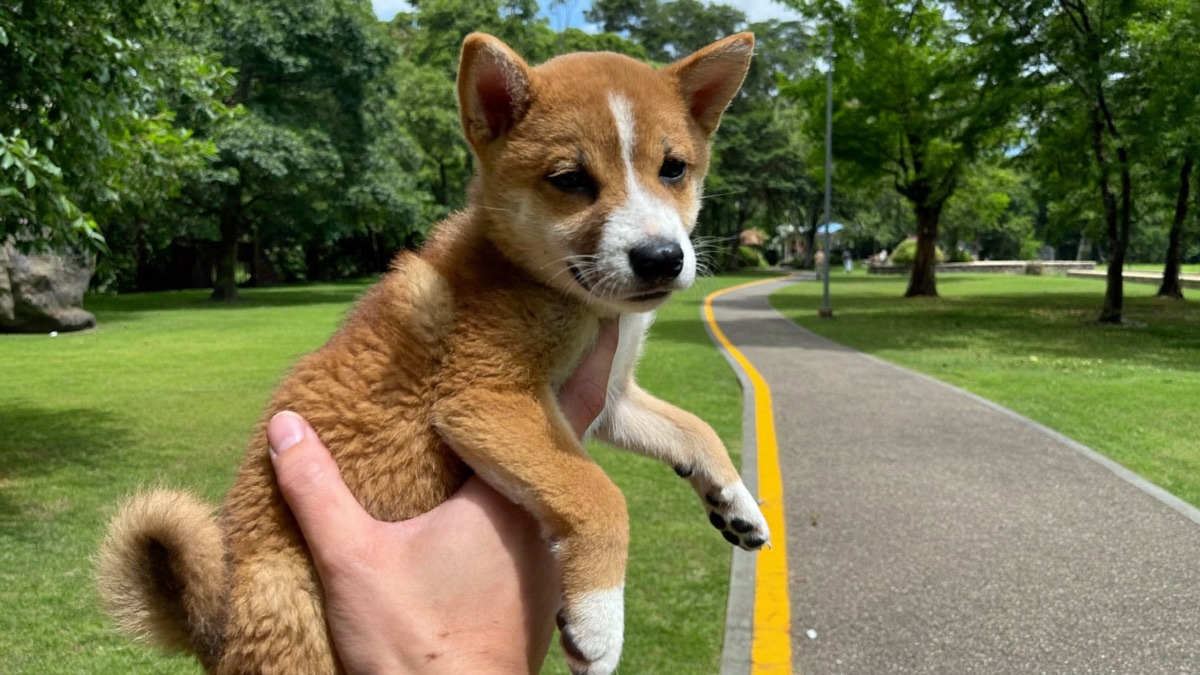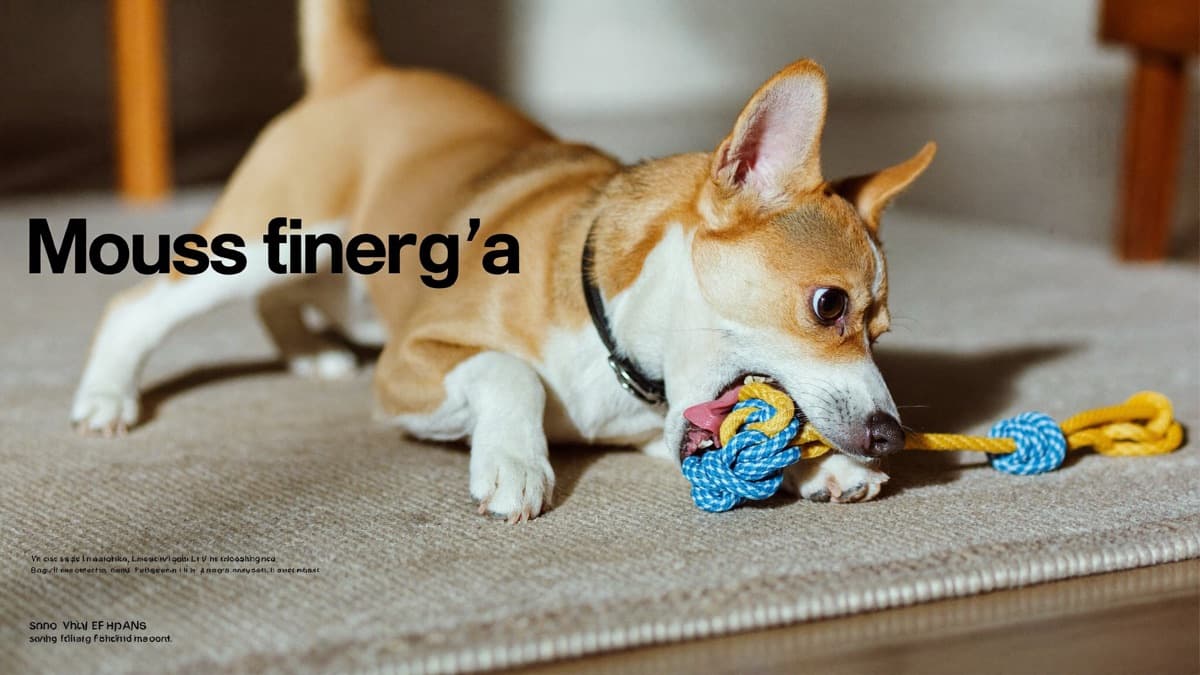
Why do puppies bite so much?
Three drivers overlap in the first six months:
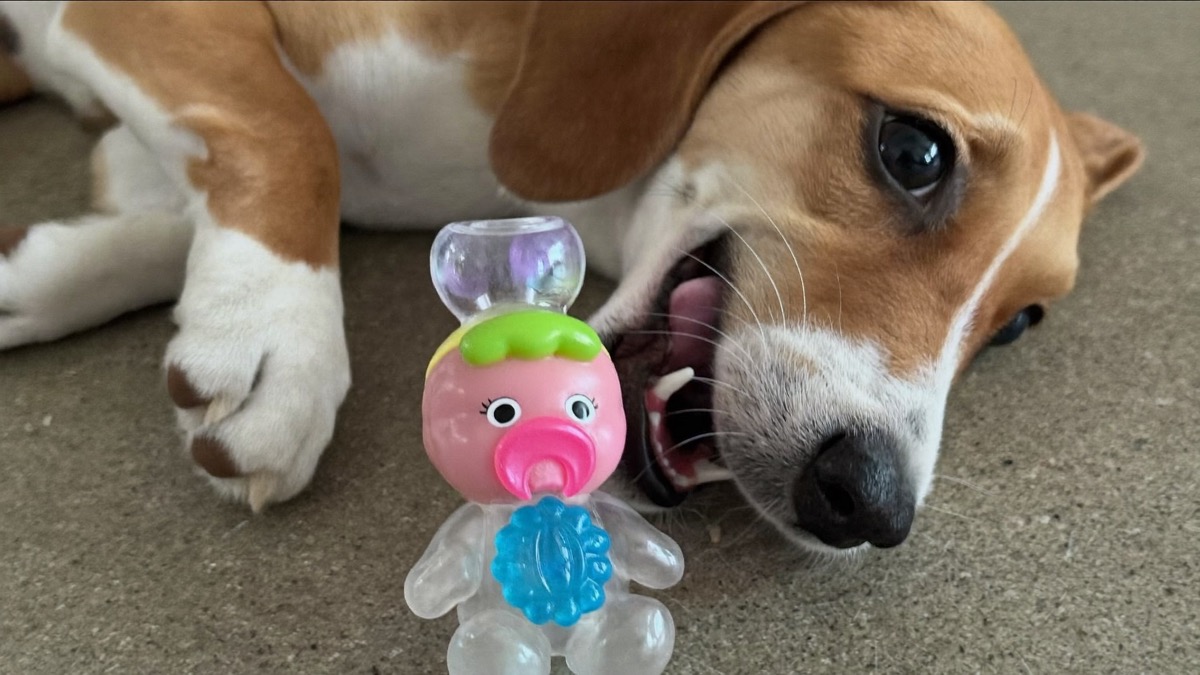
- Teething. Deciduous teeth fall out and adult teeth erupt between roughly 12 and 24 weeks. Sore gums make chewing genuinely soothing, so your puppy seeks pressure — on toys if you provide them, on your forearm if you don't.
- Play. Puppies play with their mouths because that is how dogs play. In the litter, biting a sibling too hard ended the game. Your job is to continue that education, because human skin is far thinner than puppy fur.
- Overstimulation. The frantic, shark-like biting that peaks around 5–7pm is usually an overtired puppy, not a naughty one. Puppies need 18–20 hours of sleep a day; a puppy who has been awake and busy for three hours is running on fumes and biting is how it leaks out.
Identifying which driver is active matters, because the answer to teething is a frozen chew — a wet-food-stuffed rubber toy straight from the freezer is doubly welcome in our tropical heat — the answer to play biting is training, and the answer to overstimulation is a nap, ideally in the coolest, quietest corner of the flat.
How do I teach bite inhibition?
Bite inhibition is a puppy learning to control jaw pressure before learning not to mouth at all. It is arguably the most valuable thing a puppy learns before 5 months, because a dog with a soft mouth who is one day startled or injured will grab rather than puncture.
Work in stages. Early on, tolerate gentle mouthing during play but end the interaction the instant pressure becomes uncomfortable: mark the moment with a calm "too bad", stand up, and disengage for 10–20 seconds. Bite pressure ends the fun; soft mouths keep the game going. Over two to three weeks, lower the threshold — first only hard bites end play, then moderate ones, then any tooth contact. You are shaping pressure downward, not banning the mouth overnight.
What is a redirect protocol?
Redirection means teeth always have a legal destination. Run it like this:
- Pre-empt. Before play or handling, have a tug toy, soft chew or braided fleece within arm's reach — any pet store, from a neighbourhood shop to a Pet Lovers Centre outlet, stocks cheap options, and rotating two or three keeps them interesting. If you have to go looking for a toy, you've already lost the rep.
- Redirect at first contact. The moment teeth touch skin or clothing, go still (movement is the reward), then animate the toy and let your puppy grab that instead.
- Reinforce the toy choice. Play enthusiastically when teeth are on the toy. Your puppy learns that toys make hands come alive and skin makes everything stop.
- End the session if biting escalates. Two or three redirects that don't stick means your puppy is over threshold. Calmly place them in their pen with a chew. This is management, not punishment — you're removing the opportunity to rehearse the wrong behaviour.
Does yelping when a puppy bites work?
Sometimes — and it's worth knowing which camp your puppy is in. A short, soft "ouch" followed by immediately disengaging mimics how littermates respond, and for many puppies it produces a startled pause and a gentler mouth. But for a significant number of puppies, squealing is thrilling. If your yelp makes your puppy re-bite with more excitement, drop the sound entirely: go silent and still, remove your hands, and step away for a few seconds. The disengagement is the part that teaches; the yelp is optional seasoning that some puppies find delicious for the wrong reasons.
Is biting after 6 months still normal?
By 6–7 months, adult teeth are in and teething is over. Persistent hard mouthing after this age is not a phase your dog will outgrow — it is a training gap, usually because biting still occasionally works (it gets attention, restarts play, or makes hands move). The protocol doesn't change: consistent redirection, arousal management and reinforcing calm behaviour. What changes is urgency — an adolescent dog is bigger, stronger and rehearsed. If mouthing is intense, accompanied by stiffness or growling, or directed at visitors, book a positive-reinforcement trainer or a veterinary behaviourist rather than waiting it out — the Singapore Veterinary Association maintains a directory of local clinics, and welfare groups like SPCA Singapore and SPCA Selangor can point you toward force-free trainers in your area.
Why not just punish the biting?
Because it backfires. The American Veterinary Society of Animal Behavior's position is clear: aversive methods — smacking, pinning, muzzle grabs, shaker cans — increase fear and aggression risk and are less effective than reward-based training. A puppy punished for mouthing doesn't learn "mouths are for toys"; it learns hands are unpredictable. Teach the alternative, manage the environment, and let the teething clock do the rest.