What are calming signals?
Dogs are conflict-avoiders by design. Long before a growl, a socially fluent dog runs through an appeasement vocabulary meant to say "I'm no threat" and "this is getting a bit much" — to other dogs and to us. The term was popularised by Norwegian trainer Turid Rugaas, and while researchers debate how deliberate each signal is, the practical reading holds up: these behaviours cluster around mild stress and social friction, and they appear well before the warnings owners actually notice.
The vocabulary sits at the polite end of a ladder that runs from lip lick, through stiffening and growling, up to snapping. Most "sudden" bites are simply the top of a ladder whose bottom rungs were ignored — or trained out. Our dog body language guide covers the whole ladder; this article is about the bottom rungs, where all the good communication happens.
Which calming signals should I know?
Scroll sideways to compare all columns →
| Signal | What it looks like | What it usually means |
|---|---|---|
| Look-away | Head or eyes turn deliberately aside | "I'm not challenging you" / "ease off" |
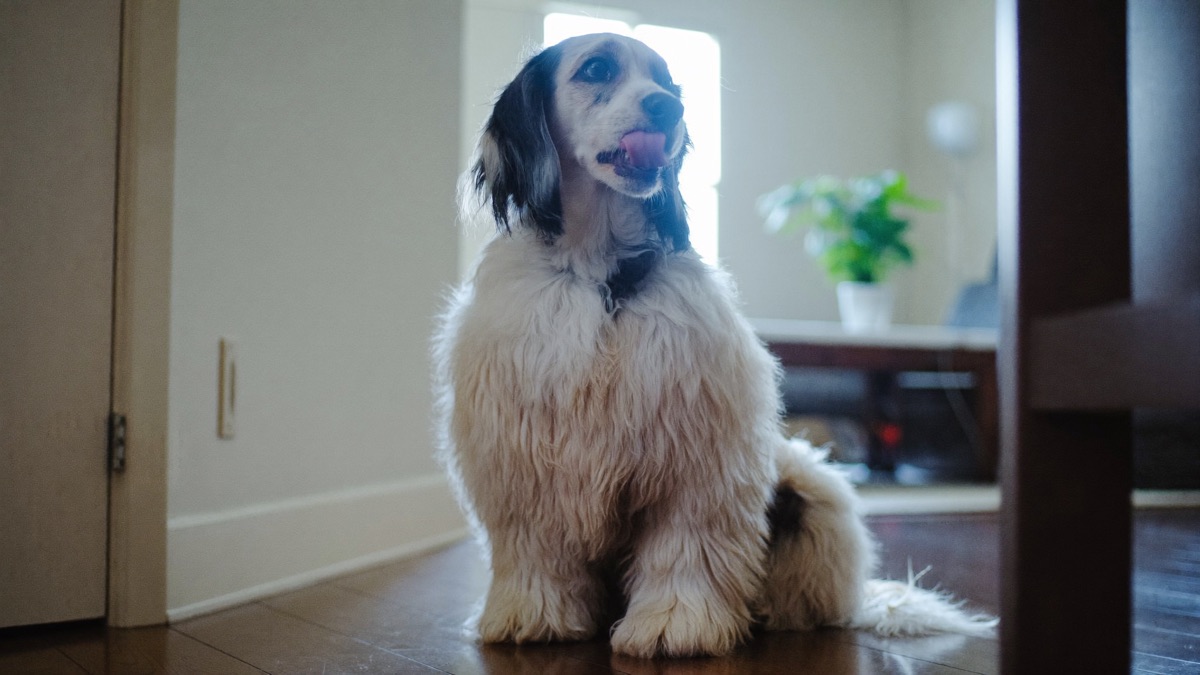
| Lip lick | Quick tongue flick with no food around | Mild unease; often the very first sign |
| Ground sniffing | Sudden intense sniffing mid-play or mid-approach | Pressing pause on rising tension |
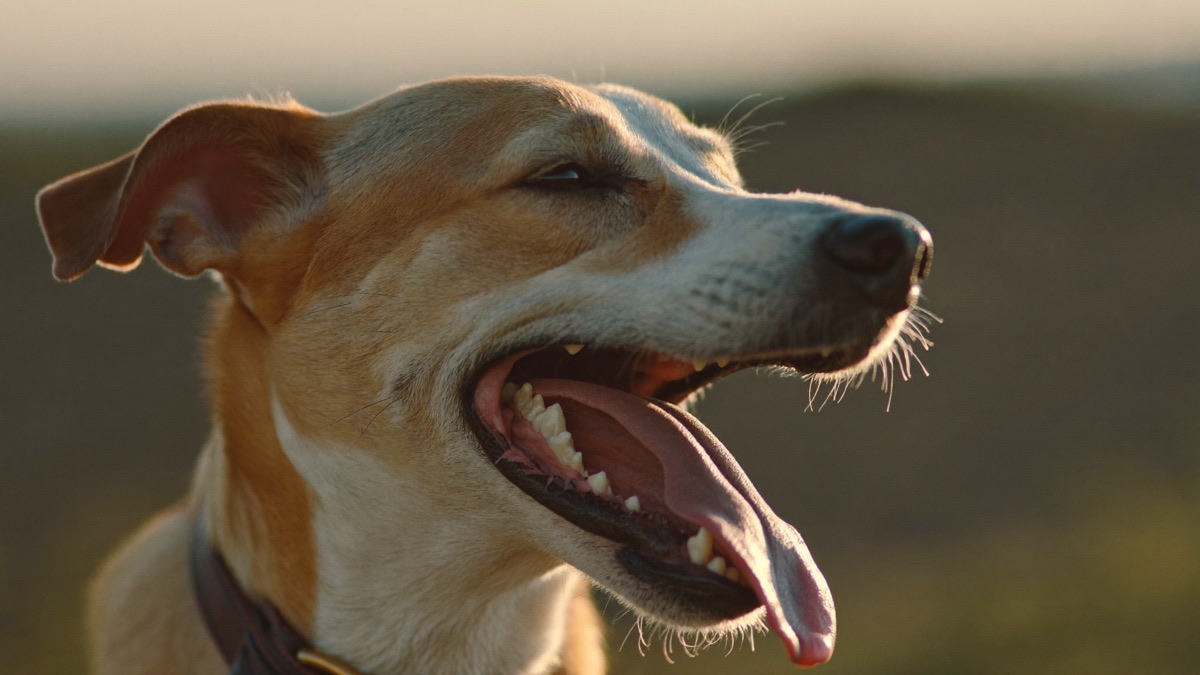
| Yawn | Out-of-context yawn, often exaggerated | Self-soothing under stress |
| Shake-off | Full-body shake, dry coat | Rebooting after tension passes |
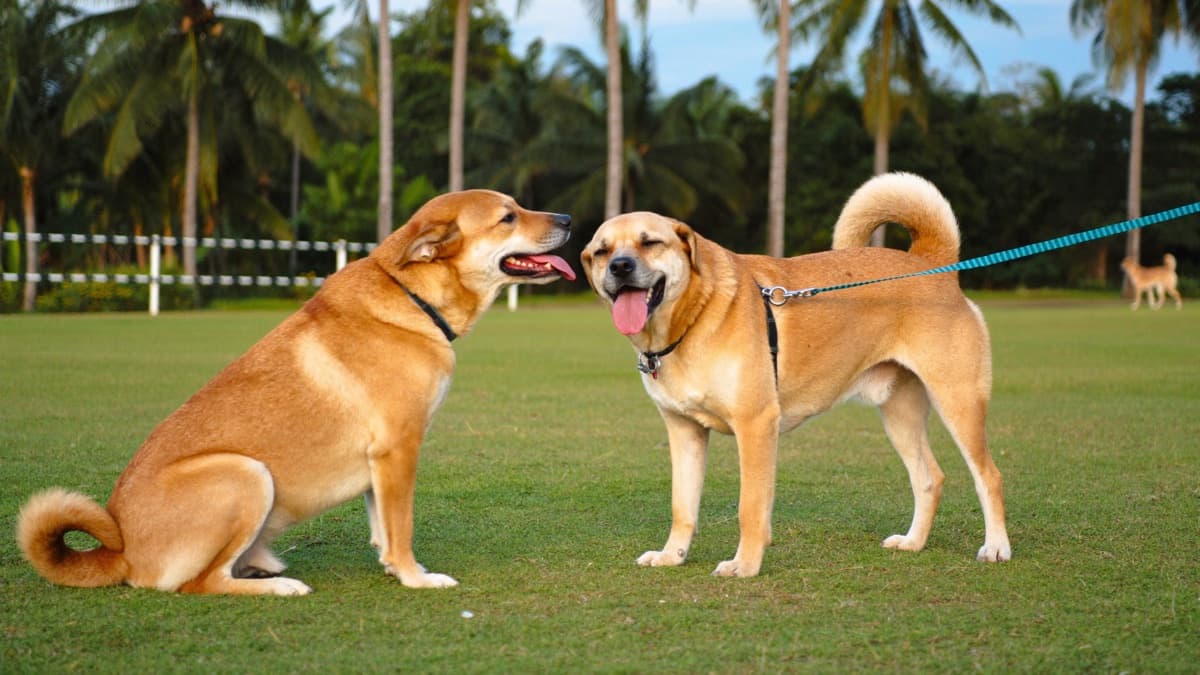
| Curved approach | Arcing towards a dog or person, never head-on | Polite, low-threat greeting |
| Slow motion | Deliberately slowed walking as another dog nears | De-escalation |
| Sitting or turning back on | Presents flank or rear, sits facing away | Maximum non-threat posture |
Context is everything: a yawn at bedtime is sleep, a shake-off after a swim is water. What you're looking for is signals out of context — a yawn at the clinic, sniffing mid-recall, a lip lick as a toddler approaches — and especially clusters of two or three at once. Watch the tail too, but read it properly: height and stiffness matter more than movement, as our tail wagging guide explains.
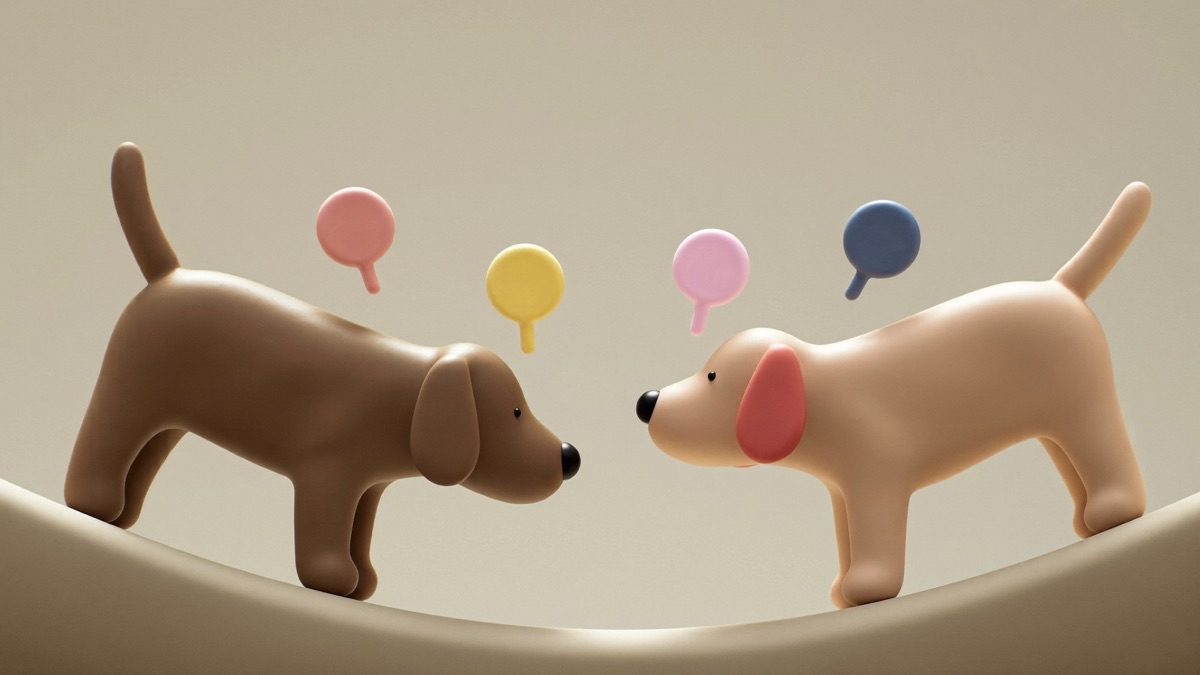
The head-on rule surprises many owners. Dogs consider direct, frontal, eye-locked approaches rude at best and threatening at worst; polite dogs greet in arcs. Humans do everything wrong in one move — approach straight on, loom over, stare, reach over the head — which is exactly why so many "friendly" greetings go badly.
How should I respond to calming signals?
Answer them. Every time you notice a signal and respond by reducing pressure, you make a trust deposit: the dog learns its whispers work on you, so it never needs to shout.
- Give space. Dog lip-licks and look-aways while being petted by a visitor? Call the dog to you and let it opt out. Signals during a handling session? Pause, let the dog walk away, restart softer.
- Slow the greeting. Meeting a new dog or person, let your dog set the arc. Never drag a dog straight up to another face-to-face on a tight leash.
- Lower the training pressure. Sniffing mid-session or scratching between reps usually means the difficulty jumped too fast. Make the next rep easier and the "distraction" evaporates.
- Speak dog back. You can borrow the vocabulary: yawn, turn side-on, avoid direct staring, crouch sideways for nervous dogs. It's remarkably effective with worried dogs.
- Watch the drains and fills. A dog throwing constant signals across a day is a dog with a filling stress bucket — see our trigger stacking guide for why that matters.
How do humans accidentally punish calming signals out of dogs?
Two ways, one blunt and one subtle. The blunt way: the dog growls at a child climbing on it and gets scolded. The growl goes quiet — but the discomfort doesn't. Keep pruning warnings and you engineer the infamous "bit without warning" dog, which is really a dog whose warnings were systematically deleted.
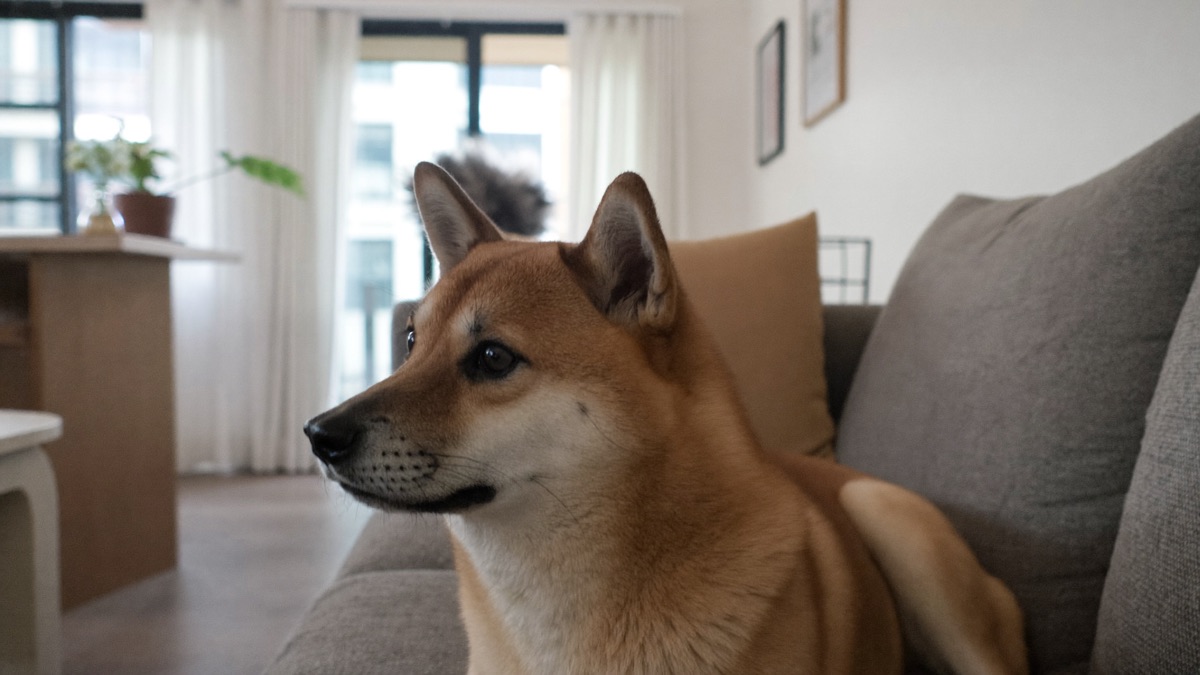
The subtle way: we ignore the polite signals so consistently that dogs stop bothering. The dog that looked away, lip-licked and turned its back during hugs — and was hugged anyway, every time — learns that whispering is useless. Some shut down and endure (often mislabelled "so tolerant"); others skip straight to the loud end of the ladder. Photos are a classic trap: many "smiling" dogs being cuddled for the camera are showing whale eye, pinned ears and lip licks in the frame itself.
The fix costs nothing: notice the whisper, honour it, and let the politest version of your dog be the one that works. If your dog is signalling constantly around a specific trigger, that's a fear to treat properly — start with our desensitisation and counterconditioning guide, which changes the emotion driving the signals rather than silencing the signals themselves.