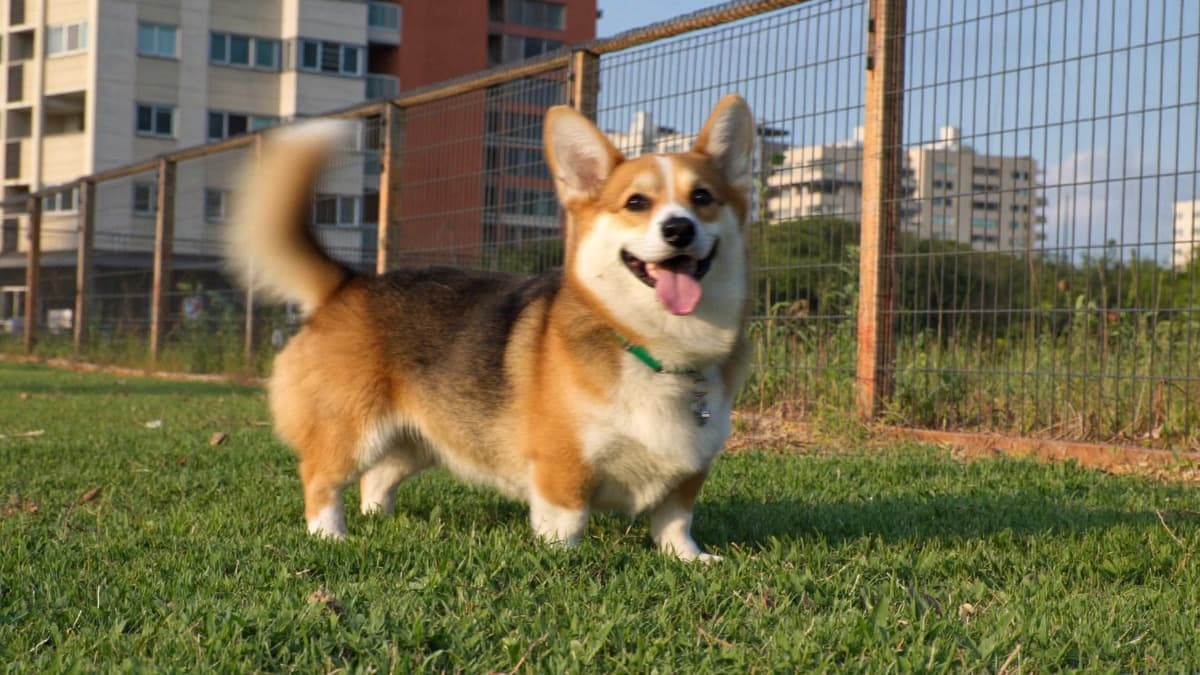
"He was wagging his tail right before he snapped" is one of the most common things people say after a bite. Both halves of that sentence are usually true, because the wag was never the friendly kind.
What do the different types of tail wag mean?
Scroll sideways to compare all columns →
| Wag type | What it looks like | What it usually means |
|---|---|---|
| Loose sweep | Mid-height, relaxed side-to-side, wiggly hips | Friendly, comfortable — the classic greeting |
| Helicopter | Full circles, whole rear end involved | Delight, usually reserved for favourite people |
| Flag wag | Tail high and stiff, short fast strokes, body still | High arousal and possible warning — do not approach |
| Slow, low wag | Below back level, hesitant strokes | Uncertainty, appeasement, "I'm not sure about this" |
| Tucked with tip flicker | Tail under the body, tip trembling | Fear — the dog wants out of the situation |
| High natural carry, slow wave | Tail up but supple, body loose | Confident interest — watching something engaging |
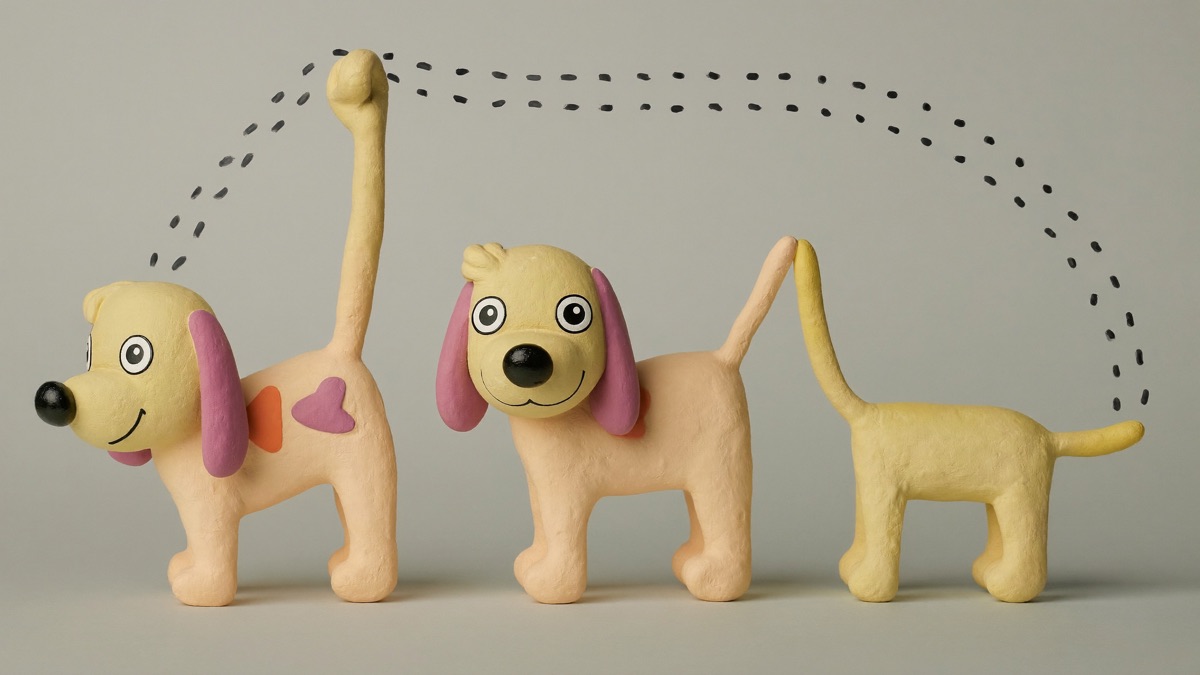
Speed maps roughly to intensity and height maps roughly to confidence: high = assertive or aroused, neutral = relaxed, low or tucked = worried. Stiffness is the tiebreaker. A fast wag on a loose, curvy body is excitement; the same speed on a rigid body is a threat display.
Is the right-wag vs left-wag research real?
Yes, and it's one of the better-replicated findings in dog cognition. Neuroscientist Giorgio Vallortigara and colleagues in Italy showed that dogs wag with a right-side bias when viewing things they feel good about (their owner most of all) and a left-side bias toward stimuli that make them wary, such as an unfamiliar, assertive dog. A follow-up study in Current Biology in 2013 found dogs watching other dogs responded too: left-biased wags raised the observers' heart rates and anxiety behaviours, while right-biased wags left them relaxed.
The bias reflects how the brain's hemispheres divide emotional processing — left hemisphere (driving the right side) handles approach emotions, right hemisphere handles withdrawal. In practice the asymmetry is subtle and you're rarely standing conveniently behind the dog, so treat it as fascinating confirmation that wags carry real emotional data — and read the obvious signals first.
Why is a stiff, high, fast wag a warning?
Because it's arousal without friendliness. The flag wag — tail vertical, strokes short and rapid, body frozen, mouth closed — is common in dogs guarding a resource, squaring up to another dog, or being approached when they'd rather not be. People see "wag" and reach in; the dog has actually been signalling "back off" the whole time.
The flag wag rarely arrives alone. It sits partway up the same escalation ladder as freezing, whale eye, and the hard stare — our dog body language pillar guide walks the full ladder — and it deserves the same response: stop, give space, don't loom, don't reach. This is also the wag to point out to children, who are taught almost universally that wagging equals friendly.
How do you read a docked or curly tail?
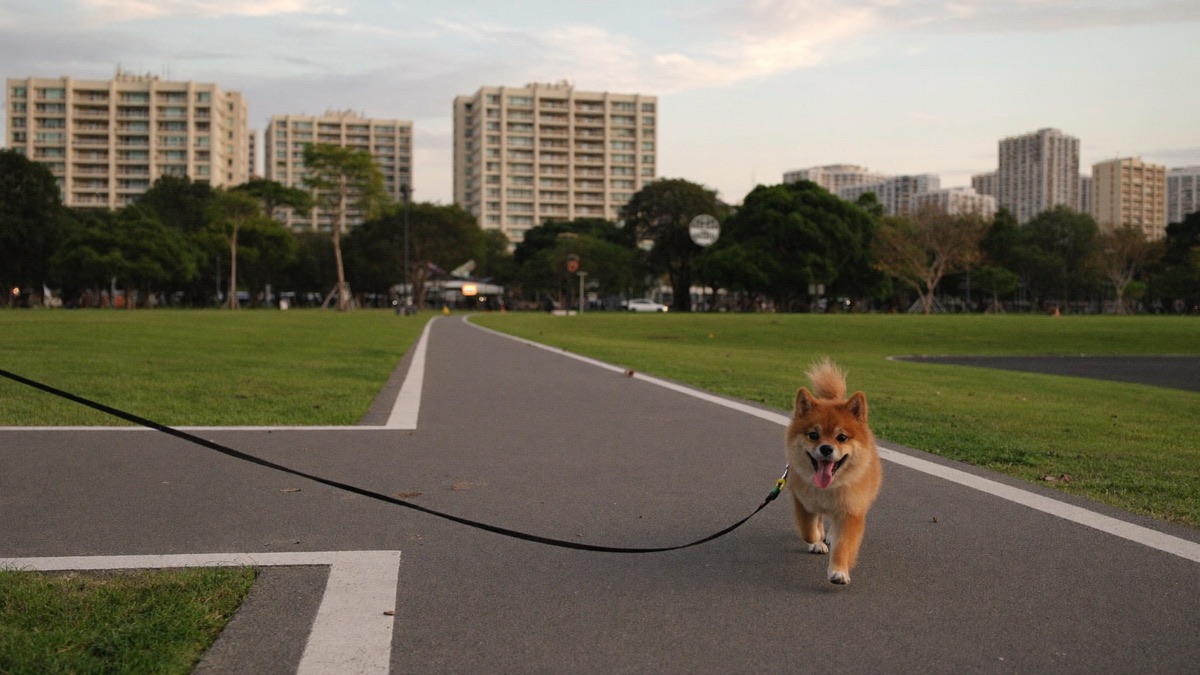
With difficulty — which is a genuine welfare point, not a technicality. Dogs with docked tails, tight spitz curls (think Shiba Inus and Pomeranians), or naturally short bobs have a reduced signalling range, and studies of dog-dog interactions suggest other dogs misread them more often, approaching cautiously or inappropriately because the tail broadcast is missing.
If your dog carries a curl or a bob, weight the rest of the body more heavily: ears, facial tension, weight distribution, and the looseness or stiffness of movement. The base of the tail still tells you something even when the tip can't — a curl held tighter and higher than usual reads as arousal; a curl that drops or unwinds reads as worry.
When should a tail change worry me?
A tail that suddenly hangs limp and won't lift — especially after swimming, a long day out, or in humid SG/MY weather after exertion — may be "limber tail" (acute caudal myopathy), which is painful and warrants a vet visit. Likewise, a normally expressive tail that goes still for days, or pain when the tail base is touched, is a medical question rather than a mood.
For everyday reading, the rule stays simple: the wag tells you how much the dog is feeling, the rest of the tail and body tell you what. Read them together and dogs turn out to be far more honest communicators than their reputation suggests.