Why are dogs afraid of stairs in the first place?
Stairs ask a dog to commit its weight to a series of narrow ledges it can barely see past its own chest. Common drivers:
- Novelty. Puppies raised in lifts-and-level HDB flats or single-storey homes may simply never have met stairs during their socialisation window. First contact at eight months is scarier than at eight weeks.
- Open risers and see-through steps. Stairs with gaps between treads — common in void decks, overhead bridges and industrial-style townhouses — show the dog the drop through the staircase. Many dogs that manage solid stairs refuse open-riser ones; that's reasonable depth-perception caution, not stubbornness.
- Slippery surfaces. One skid on polished tile or varnished timber can install a lasting fear. Dogs remember exactly where their feet betrayed them.
- A bad event. A fall, a slammed door mid-descent, being carried and dropped — one incident is enough.
- Eyesight changes. Dogs with deteriorating vision lose confidence on descents first, since going down is where depth perception matters most.
My senior dog suddenly refuses stairs — is that fear?
Treat it as pain until proven otherwise. A senior dog that managed stairs for years and now baulks, does them one-slow-step-at-a-time, bunny-hops the hind legs or only refuses the down direction is far more likely hurting than frightened — arthritis loads exactly the joints that stairs stress. Book the vet before any training plan, and run through our signs of arthritis in dogs guide first so you arrive with specific observations. Training a dog through pain doesn't build confidence; it teaches the dog that stairs hurt and that you'll make it do them anyway. Once pain is managed, many seniors return to stairs happily — with ramps or carrying as a dignity-preserving backup for the stiff days.
How does the one-step treat ladder work?
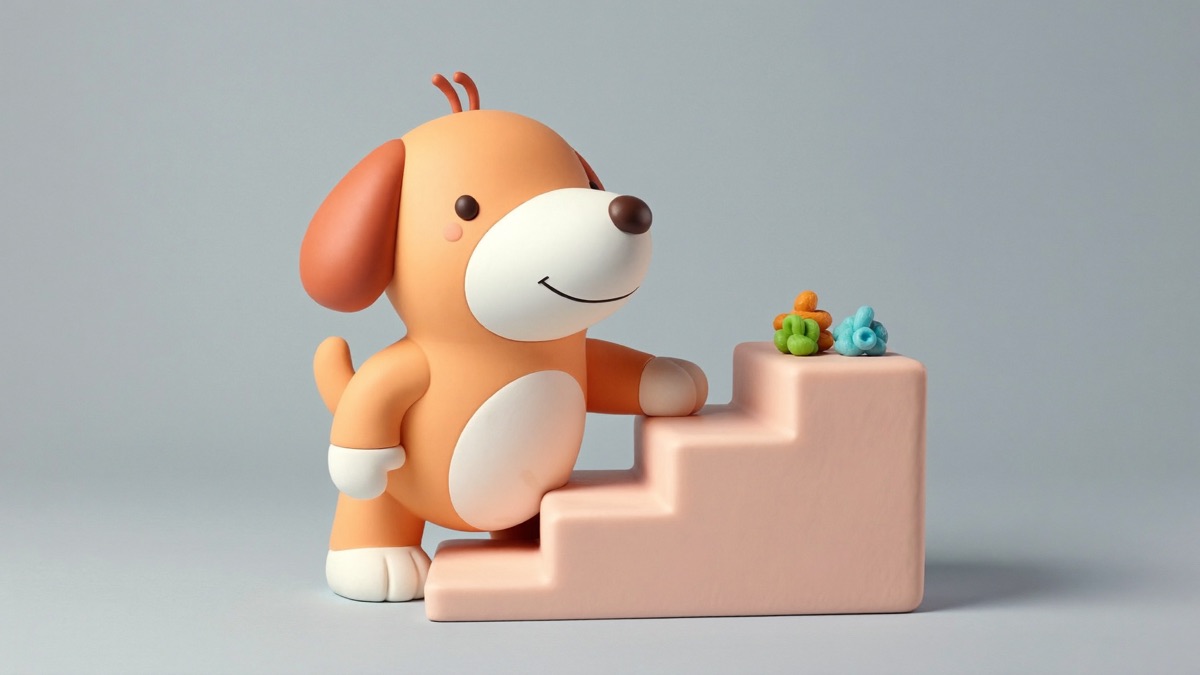
Classic desensitisation with food, one step at a time — literally. Use the least scary staircase you can find: solid risers, good grip, wide treads, quiet, and ideally just three or four steps (a low void-deck flight is perfect).
- Treats at the base. Let the dog eat scattered treats near the bottom step with zero pressure to climb. End the session there.
- Front paws up. Treat on the first step; reward any paw contact. Off, treat, repeat. Keep it a game.
- One full step. All four feet on step one, treat delivered on the next step up so the dog looks forward, then invite back down.
- Two, then three. Add one step per session at most. Deliver every treat on the step ahead — the staircase itself becomes the treat dispenser.
- Short full flights, then the real target staircase. Down-direction training runs the same ladder from the bottom step upward: start one step from the ground, not at the top of a full flight.
Never carry the dog up and let it "find its way down", never pull the lead, and if the dog freezes, you've skipped a rung — scatter treats where it stands and end well. Two or three minutes per session beats one long siege.
What about escalators — can my dog learn those?
Don't train escalators; manage them. Moving treads, the comb plate at each end and the side skirt gaps can catch fur, nails and paw pads, and escalator paw injuries are exactly the kind of accident that ends in emergency surgery. The rules are simple:
- Small dogs: carry them, or use a carrier, sling or pet stroller (S$80-150 / RM150-400 as of 2026). In practice most pet-friendly malls in Singapore require dogs to be carried or in a stroller in indoor areas anyway, so this is the habit to build regardless.
- Big dogs: take the lift. If lifts are the sticking point, our dog scared of lifts guide has the practice ladder.
- Never let a dog walk onto a moving escalator, and hold carried dogs firmly away from the handrail side.

What traction fixes actually help at home?
For fear driven by slipping, change the surface and the dog's grip before drilling more repetitions:
Scroll sideways to compare all columns →
| Fix | Best for | Notes |
|---|---|---|
| Stick-on stair treads / carpet strips | Tile or timber stairs | Cheapest high-impact fix; cover every step, S$20-60 / RM60-180 as of 2026 |
| Runner rug with gripper backing | Straight indoor flights | Secure it properly — a sliding rug is worse than bare tile |
| Nail trims | Every dog | Overgrown nails tip weight off the pads and wreck grip |
| Paw-pad fur trims | Fluffy breeds | Fur over the pads is like walking in socks |
| Toe grips or traction socks | Seniors, post-surgery dogs | Useful adjunct once pain is treated |
Pair any traction fix with a few easy rewarded climbs so the dog updates its memory of the staircase. And keep perspective: a small dog that's carried on escalators, takes the lift daily and merely tolerates stairs is not a training failure — it's a city dog, managed sensibly.