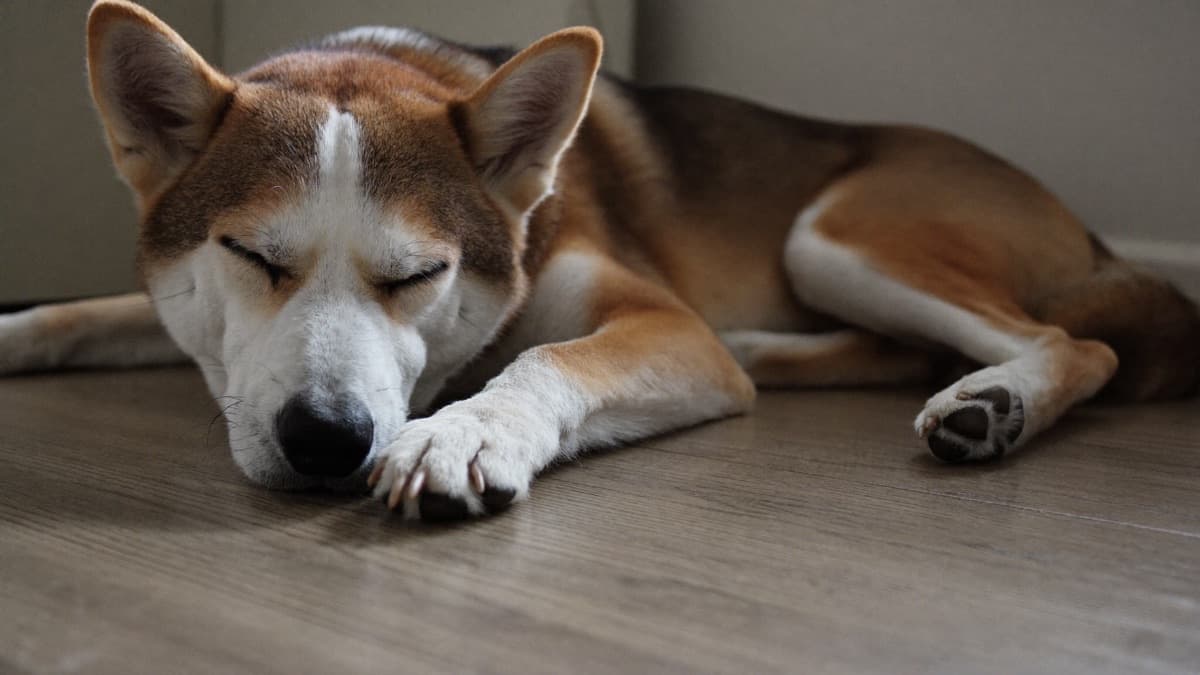
The number that actually matters isn't the total — it's whether your dog's pattern has changed.
How many hours a day does a dog sleep at each age?
| Life stage | Typical sleep per day |
|---|---|
| Puppy (under 12 months) | 18–20 hours |
| Adult (1–7 years) | 12–14 hours |
| Senior (7–10+ years) | 14–18 hours |
Within those ranges, individuals vary a lot. Working-line dogs on active days sleep less; big heavy breeds like Mastiffs and Saint Bernards are famous nappers; and any dog sleeps more after an unusually stimulating day — sleep is when the brain files what it learned.
Why do dogs sleep so much?
Two quirks of canine sleep explain it. First, dogs are polyphasic — instead of one consolidated overnight block, they take many naps around the clock, loosely synced to household activity. Second, their sleep is lighter and less efficient than ours: dogs enter REM (the deep, restorative, dream-twitching stage) faster but spend a smaller share of each cycle there, and they wake easily — a useful trait for an animal that evolved to stay alert to noises. Less deep sleep per nap means more naps to compensate.
That light-sleeping design is also why your dog can be snoring at 2 pm and at the door before you've fully picked up the keys.
My dog naps all afternoon in the heat — is that normal?
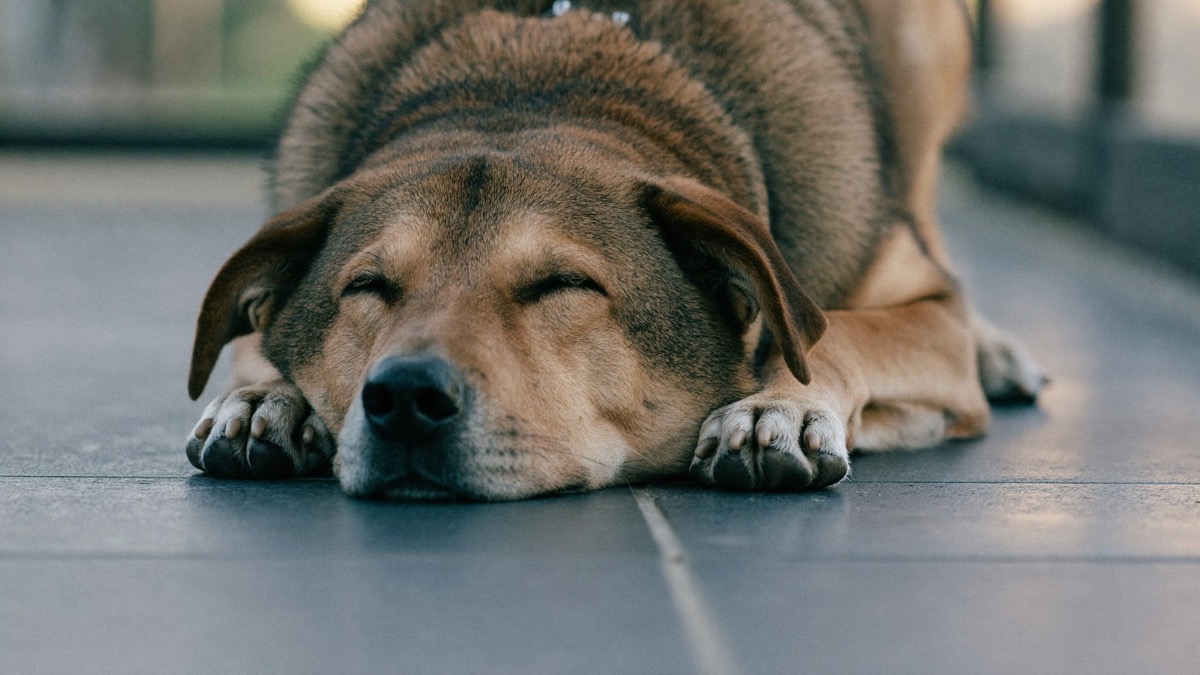
In Singapore and Malaysia, yes — and it's smart. Dogs can't sweat the way we do; they offload heat by panting and by pressing against cool surfaces, which is why the midday hours reliably feature a dog flattened on the coolest tile in the house. Sleeping through the hottest part of the day and coming alive in the morning and evening is normal thermoregulation, not sloth — Singapore's Meteorological Service notes heat stress typically peaks from late morning through afternoon (heat stress guidance here), and dogs handle that stress worse than humans.
Work with it rather than against it: walk early and late, let the afternoon siesta happen, and treat a dog who's suddenly restless and panting hard in the heat — rather than napping — as a possible overheating warning, not extra energy.
When does a dog sleeping too much signal illness?
Total hours are a poor alarm; change from baseline is a good one. Take a mental snapshot of your dog's normal week, then watch for:
- A clear increase in sleep over days to weeks without an obvious cause (no big activity change, no new heat wave).
- Lethargy while awake — the crucial distinction. A healthy big sleeper is bright, hungry, and keen the moment something interesting happens. A sick dog is dull even when awake and declines things they love.
- Sleep plus other signs: appetite loss, weight change, vomiting or diarrhoea, coughing, laboured breathing, pale gums.
- Hard to wake, or wobbly when woken — get this seen promptly.
Excessive sleepiness is a lead symptom of a long list of conditions — hypothyroidism, heart disease, anaemia, infections, pain, kidney disease, and simple depression-like responses to household changes among them. None are diagnosable from the sofa, which is the point: changed sleep is a reason for a vet visit, not a Google diagnosis.
In seniors, watch for the pattern flipping rather than just growing: a dog who sleeps heavily all day but paces, pants, or barks at night may have pain or canine cognitive dysfunction — our dog dementia guide covers the signs. And a normally restless puppy who suddenly sleeps "well" while eating poorly isn't maturing overnight; puppies that go quiet get vet visits.
Can I help my dog sleep better at night?
Mostly by shaping the day. A decent walk and some mental work (sniffing, food puzzles, short training games) build genuine tiredness; a dog who has done nothing all day has no reason to sleep through the night. Keep bedtime consistent, offer a final toilet trip, and give them a comfortable bed in a spot that suits the climate — near a fan or in the air-conditioned room's airflow, not against a heat-soaked west-facing wall. Dogs sleep in loose sync with their household, so a steady human routine quietly trains a steady canine one.
For most dogs, though, the maths is boring and happy: half the day asleep, a third pottering, and a couple of golden hours of full throttle. If you're curious what all those hours of napping look like — flat on the side, curled tight, or belly-up on the tiles — our guide to dog sleeping positions decodes them honestly.