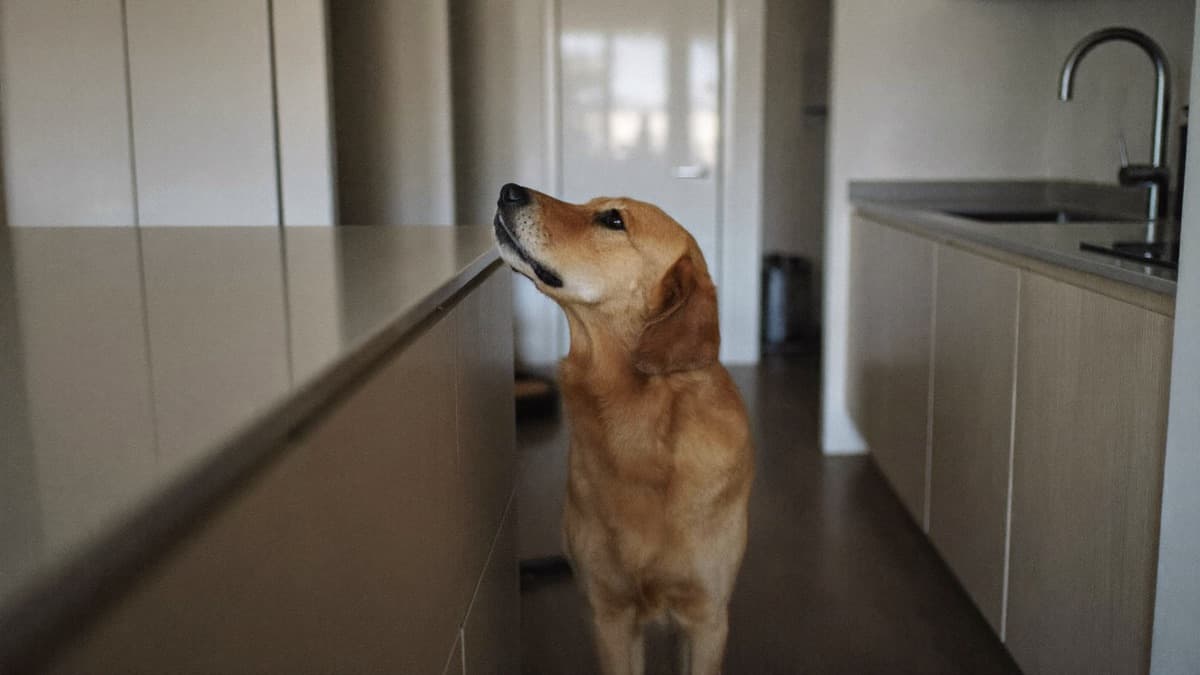
Why does my dog keep raiding the counter?
Because one successful raid pays for a hundred failures. Counter surfing runs on variable reinforcement — the most stubborn learning schedule there is. Your dog doesn't need to score every time, or even often; the memory of one abandoned chicken wing funds weeks of speculative sniffing. Every jump is a lottery ticket, and your kitchen has already paid out at least once, or the behaviour wouldn't exist.
Be honest about this: the dog isn't being defiant, and it certainly isn't feeling guilty afterwards — the "guilty look" is appeasement to your body language, not remorse. Counter surfing is a rational strategy from the dog's point of view. Rational strategies stop when they stop paying.
Why is management 90% of the fix?
Here is the unglamorous truth most training advice buries: you cannot out-train a counter that keeps paying out. Training a leave-it while food sits within reach is asking the dog to choose your biscuit over an entire roast chicken, forever, including when you're asleep. You'll lose eventually.
So say it plainly — clear the counters and block the access:
- Nothing edible lives on the counter. Defrosting meat goes in the microwave or oven. Bread goes in a cupboard or bin with a lid. The butter dish gets a home behind a door.
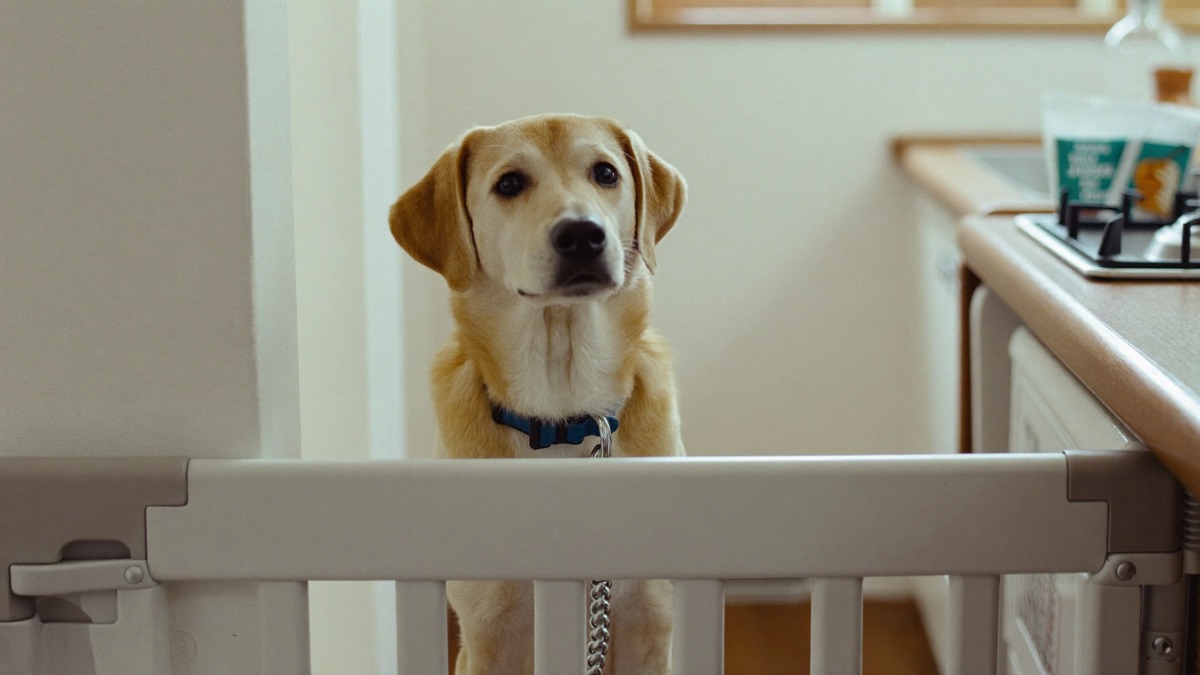
- Block the kitchen when nobody's supervising: a baby gate across the doorway, or the dog stays out of the kitchen zone during cooking and clean-up. In an open-plan HDB or condo kitchen, a freestanding pet gate or pen panel does the job.
- Do the vulnerable moments deliberately. Most thefts happen during the chaos: unpacking groceries, plating dinner, clearing the table. Those are exactly the moments to have the dog behind the gate or on its mat.
Do this for a few months and the counter's payout history goes cold. That, more than any command, is what ends surfing.
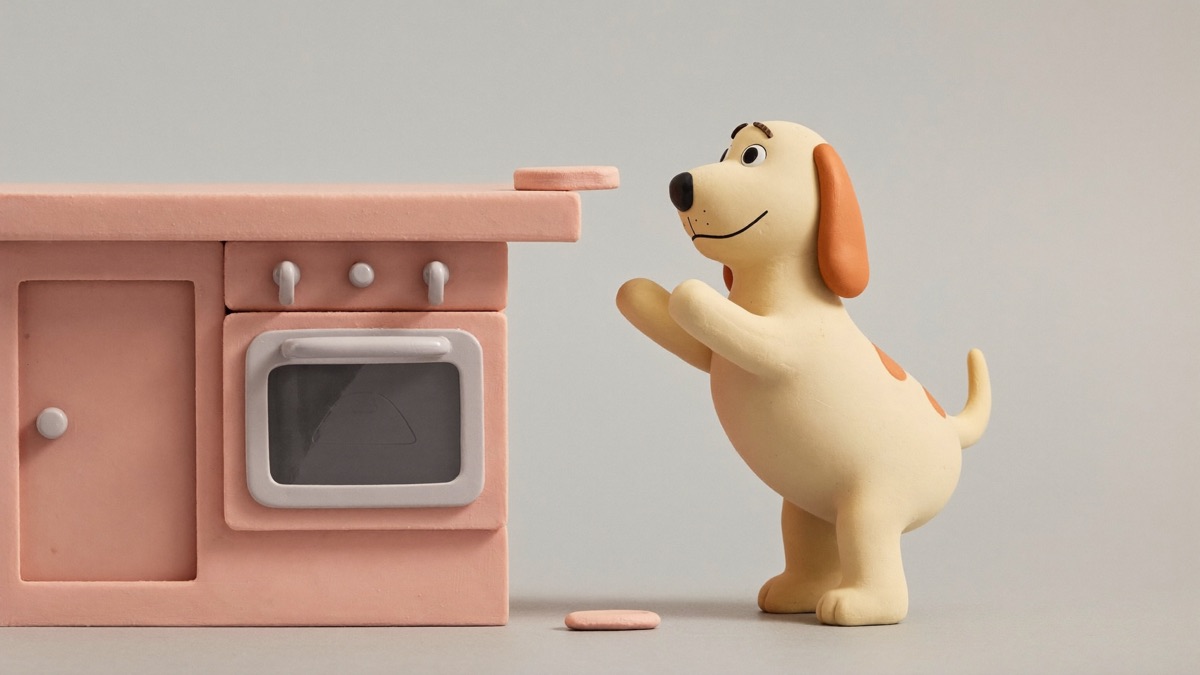
What is the four-on-the-floor kitchen protocol?
Management removes the payoff; this adds a better one. The rule: in the kitchen, all four paws on the floor is the only position that earns anything — and everything the dog earns is delivered at floor level, never from the counter or your cutting board.
- While cooking, keep a pot of your dog's kibble or small treats on the counter, out of reach.
- Every time you notice the dog standing or lying calmly with four paws down, drop a piece on the floor away from the counter, or toss it to the dog's mat at the kitchen edge.
- If paws touch the counter or the dog jumps up, no drama — no shouting, no shoving. The dog simply gets walked out of the kitchen for thirty seconds. Jumping makes the kitchen disappear.
- Over time, ask for more: a settled down-stay on the mat during whole cooking sessions, paid at intervals.
Delivering rewards at floor level matters more than it sounds: food handed from counter height teaches the dog that good things come from up there. Floor-level delivery keeps all the value where you want the dog's nose to be.
What's actually at stake in a local kitchen?
More than a stolen dinner. Singaporean and Malaysian home cooking is dense with foods that are toxic to dogs: onions and garlic run through practically everything — rempah pastes, sambal, stir-fry bases, soup stocks, fried rice, curries. A raided plate of anything from most local kitchens is rarely just "people food"; it's frequently an onion-and-garlic delivery vehicle, and a big enough theft can damage red blood cells days after the dog seems fine. Add chocolate, grapes and raisins in the fruit bowl, and xylitol in sugar-free gum left in a bag on the counter, and counter surfing stops being a manners problem and becomes a poisoning risk. Our full guide to foods dogs can't eat covers the danger list and what to do after a theft.
How do I teach a solid leave-it?
Leave-it is your safety net for the moments management slips — the dropped sausage, the unattended plate at a gathering. Teach it away from the kitchen first: reward the dog for turning away from a covered treat in your fist, then a treat on the floor under your shoe, then food placed on a low surface, always paying from your other hand with something better. The full progression is in our guide to teaching basic commands. Just keep leave-it in its correct role: a brake for emergencies, not a substitute for empty counters. The dog that never gets the chance to rehearse stealing is the dog that stops being a thief.