Why does my dog chase joggers?
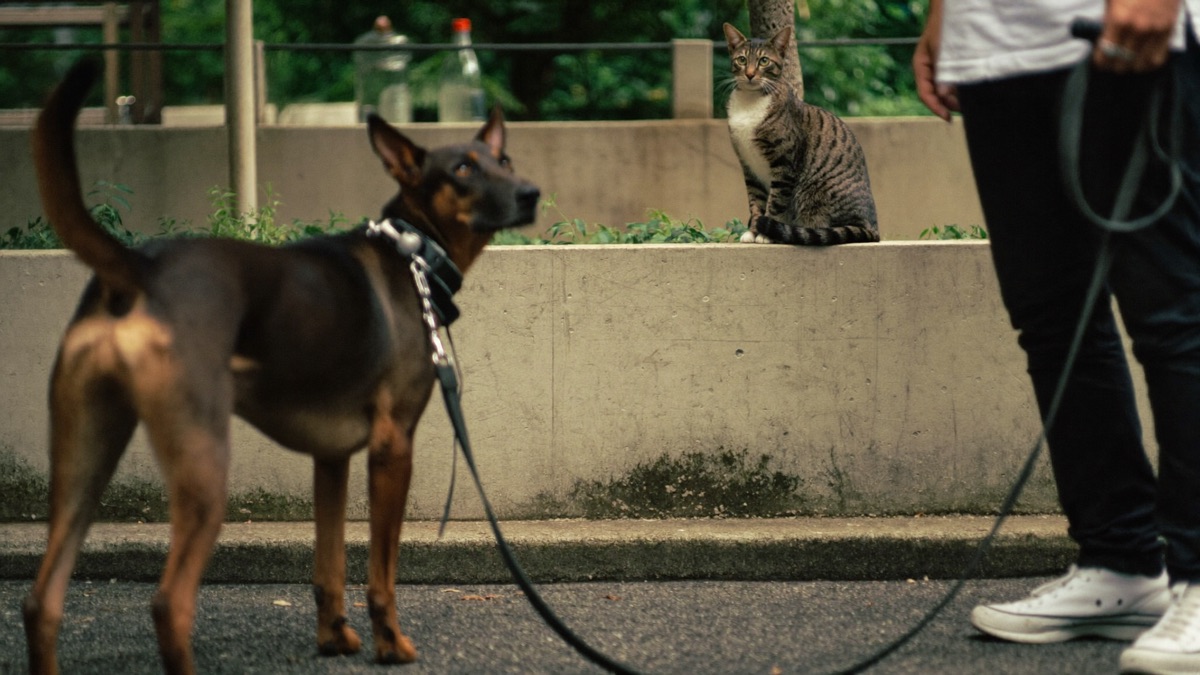
Because fast motion flips a switch that thinking doesn't control. Chase behaviour in dogs is triggered largely by movement — a jogger breaking into stride, a bicycle sweeping past, a PMD humming by — and once the circuit fires, the dog is sprinting before any training has a vote. It's the front end of the predatory sequence repurposed: most dogs chasing joggers have no intention of biting anyone; the chase itself is the reward.
That's why the problem is worst on park connectors. A PCN is a conveyor belt of triggers — runners, cyclists, e-bikes, PMDs — passing close, fast and constantly. And it's why "he's friendly!" is beside the point: a jogger being run down by an unknown dog experiences fear, may fall, and a cyclist swerving from a lunging dog can crash. Friendly intent doesn't change outcomes at 25 km/h.
The encouraging flip side: the same conveyor belt of triggers is the best training resource you have, free, every day.
What is the sit-and-watch-traffic protocol?
Instead of running the gauntlet, park beside it. The goal is a dog that watches fast humans pass the way it watches buses pass — noted, irrelevant.
- Choose your distance. Find a bench or grass verge off the path — far enough that your dog can see traffic pass while staying loose, able to eat and able to hear you. If your dog lunges or fixates, you're too close; double the distance.
- Pay the notice. Each time a jogger, cyclist or PMD appears, mark ("yes!") and feed the moment your dog clocks it. You are pairing fast human with good things from my owner, rep after rep.
- Pay the look-away more. When your dog starts glancing at traffic and then checking in with you, jackpot. That voluntary check-in is the finished product.
- Close the distance over sessions, not minutes. Bench ten metres off the path this fortnight, five metres the next, then standing trailside, then walking the path itself during quiet hours before attempting peak time.
- Keep sessions short — ten to fifteen minutes of traffic-watching beats an hour of over-exposure. End while the dog is still succeeding.
Two or three sessions a week reshapes most motion-chasers within a couple of months. The protocol fails in only two ways: starting too close, and progressing too fast — both cured by adding distance.

What leash setup is safe near bike paths?
Say it plainly: no flexi-leads near bike paths. A retractable lead gives a motion-triggered dog several metres of acceleration room before you have any say, and stretches a thin, near-invisible cord across a path where cyclists travel at speed — a tripwire that has caused serious falls, cord burns and hand injuries. Locked short, a flexi is still a heavy handle and a thin cord; there is no setting on it that belongs on a park connector.
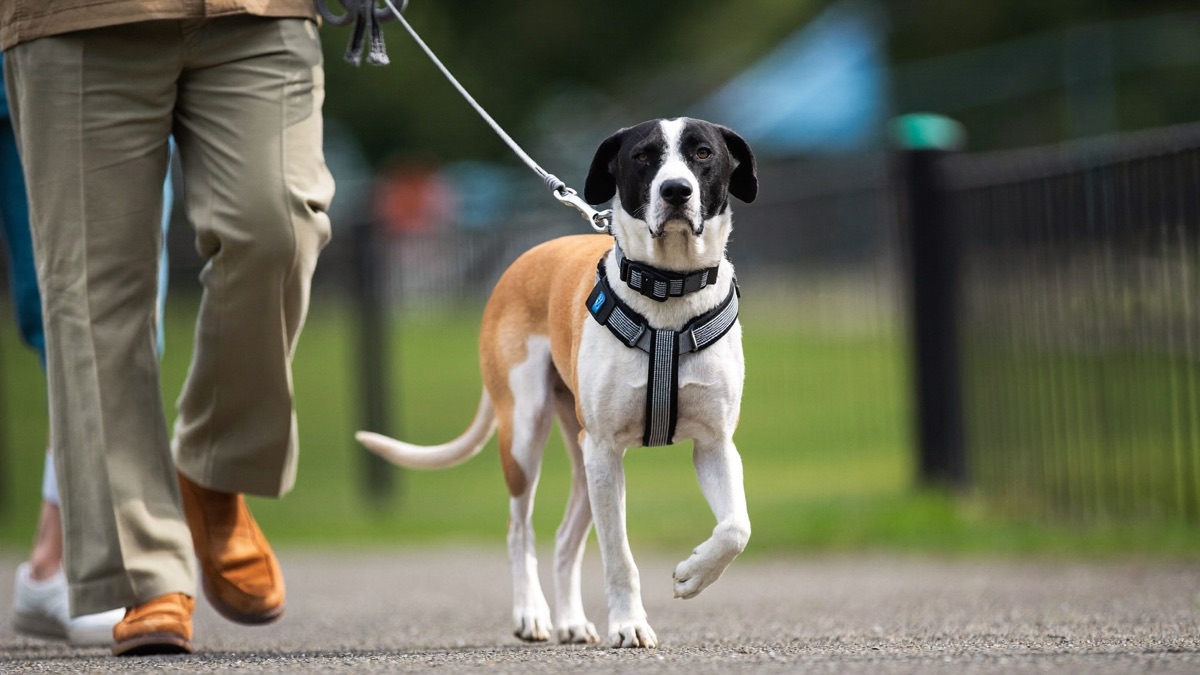
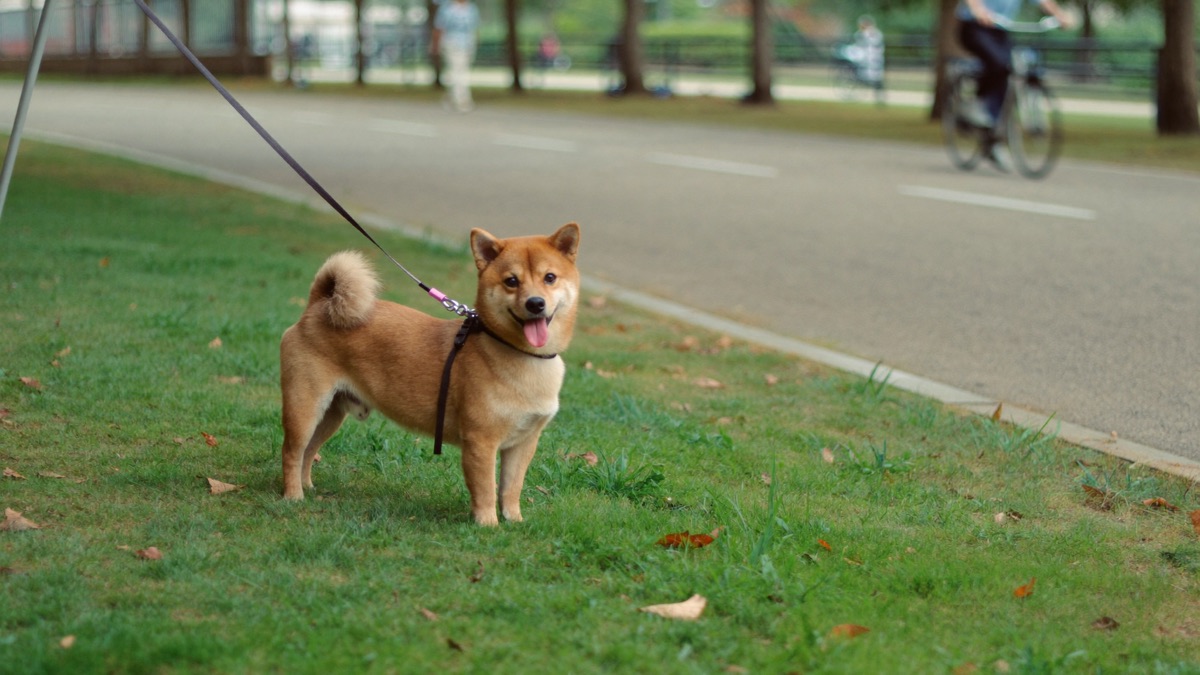
The safe setup is boring: a fixed lead of 1.2-1.8 metres, a well-fitted harness (a back-clip for calm dogs, front-clip for pullers), and your dog walked on the side away from the path. When traffic is heavy, shorten your grip and step onto the verge. Remember the wider rule too: dogs must be leashed at all times in public in Singapore, with designated dog runs the only exception — a motion-chaser off leash near a PCN isn't a training gap, it's an incident waiting for a timestamp.
How do I intercept before the lunge?
The lunge is the last frame of a sequence you can learn to see: ears lock forward, body stills or drops slightly, weight shifts onto the toes, mouth closes. From stillness to sprint is under a second — but from first orientation to stillness you often have three or four. That's your window.
The skill is engaging early: the moment your dog's ears flick towards an approaching runner, call its name brightly, turn 90 degrees away and pay the turn. You're not correcting the chase; you're booking your dog's attention before the chase circuitry finishes loading. Dogs that repeatedly get engaged at the orientation stage start offering the check-in themselves — the street version of the bench protocol above. If you keep missing the window, the traffic is too close or too fast for your dog's current level; go back to the bench.
What if my dog causes an accident?
The general framing, without pretending to give legal advice: leashing is mandatory in public, owners are responsible for their dogs' behaviour, and an owner whose dog knocks down a jogger or causes a cyclist to crash can face enforcement consequences and civil liability for the injuries and losses that follow. Insurance may or may not respond, and "he's never done that before" is the sentence every incident report contains.
Etiquette is the cheaper investment: shorten the lead before traffic reaches you, keep your dog off the marked cycling lane, step aside for anything faster than a walk, and thank the joggers who slow down — some will, and your dog's calm watching gets easier every time one does. The owner doing bench sessions by the PCN this month is the owner walking it loose-leashed and ignored-by-dog next season.