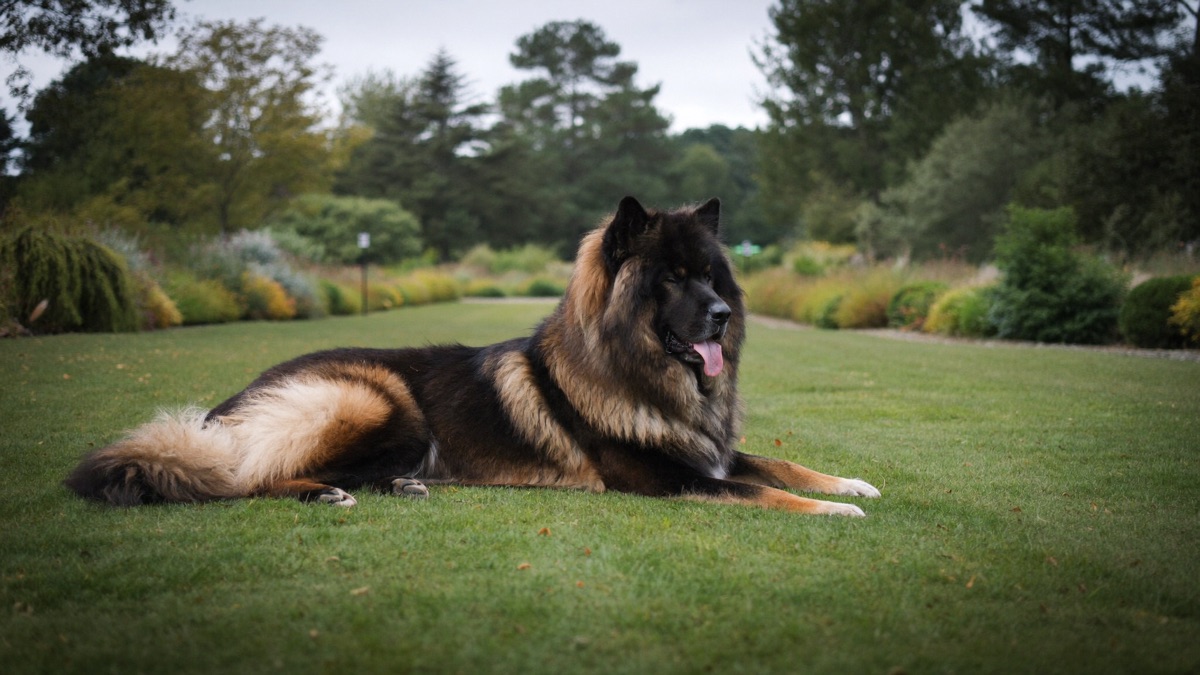
| Quick facts | |
|---|---|
| Size | Medium (43–51 cm at the shoulder) |
| Weight | 20–32 kg |
| Lifespan | 8–12 years |
| Coat | Very dense double coat (rough or smooth) |
| Exercise | Low–moderate — 45 minutes daily, never in heat |
| Apartment suitability | Calm indoors; not HDB-approved in Singapore |
Are chow chows aggressive?
The honest answer: they can be, if you get ownership wrong. Chows were bred to guard, and the instinct is intact. A typical chow is devoted and gentle with its own family, indifferent to acquaintances, and openly suspicious of strangers entering its territory. Many are intolerant of unfamiliar dogs, particularly of the same sex.
Two things make this manageable or dangerous. First, socialisation: a chow puppy needs deliberate, positive exposure to people, dogs, and handling from eight weeks onward, and it needs to continue for life. Second, owner realism: a chow will never be a greet-everyone Labrador, and forcing interactions it dislikes is how bites happen. Their deep-set eyes also give them limited peripheral vision, so approach from the front and teach children never to startle or hug a chow. In the right hands, chows are famously clean, quiet, low-drama housemates — closer to a cat than a guard dog on most days.
What health problems do chow chows have?
Chows carry a heavier health load than their sturdy looks suggest. Buy only from breeders who screen for:
- Hip and elbow dysplasia — common in the breed; both parents should have OFA/BVA hip and elbow scores.
- Entropion — eyelids rolling inward and scratching the eye, to which the chow's padded face predisposes it. Parents need a current ophthalmologist eye exam; affected dogs often need corrective surgery.
- Patellar luxation — ask for a patella evaluation.
- Hypothyroidism — thyroid testing of breeding stock is good practice.
- Gastric dilatation-volvulus (bloat) — a deep-chested-breed emergency; know the signs (unproductive retching, swollen abdomen, restlessness) and get to a vet immediately.
Chows also have a stiff, stilted rear gait by design; sudden lameness still warrants a cruciate-ligament check, another breed weak point.
How much grooming does a chow chow need?
A lot. The rough-coated chow needs thorough brushing to the skin three or more times a week — daily during coat blows — or the undercoat mats, and matting in a humid climate quickly becomes hot spots and skin infections. Budget for professional grooming every four to eight weeks. Never shave the coat; it insulates against heat as well as cold, and shaved double coats often regrow patchy and damaged.
How much exercise does a chow chow need?
Modest: around 45 minutes of unhurried walking a day plus mental enrichment. Chows are low-energy indoors and do not need — or want — running partners. What they need instead is consistency, early training, and a job of quietly overseeing the household.
Can a chow chow live in Singapore or Malaysia?
This is the hardest question, and the honest answer is: only with serious commitment. The chow combines a dense Arctic-grade double coat with a relatively short muzzle, which blunts the panting that dogs rely on to shed heat. In year-round tropical humidity, that makes chows one of the highest heatstroke-risk breeds you can own here. If you proceed:
- Air-conditioning is not optional. The dog needs a cool room for the hottest ten hours of the day, every day.
- Walk before 8 am or after 7 pm, keep sessions short, and carry water. No midday outings, ever.
- Never shave the coat — brush the undercoat out relentlessly instead.
- Learn heatstroke signs cold: frantic panting, thick drool, red or purple gums, staggering, collapse. Cool with room-temperature water and go straight to a vet; heatstroke kills chows fast.
Housing: chows are quiet, low-energy apartment dogs by temperament, but in Singapore, HDB flats only allow dogs from the approved small-breed list, and the Chow Chow is not on it — private housing only. Check the current AVS/HDB approved-breeds list before committing, as rules are updated. In Malaysia, confirm your local council's licensing rules; several councils restrict or condition ownership of guarding breeds, and condo house rules frequently exclude dogs of this size.
Who should not get a chow chow?
Skip the chow if you have young children, a revolving door of guests, no air-conditioning, no grooming budget, or you want an affectionate, biddable first dog. Choose one if you are an experienced, patient owner who values quiet loyalty and can commit to lifelong socialisation, serious coat care, and a climate-controlled home.