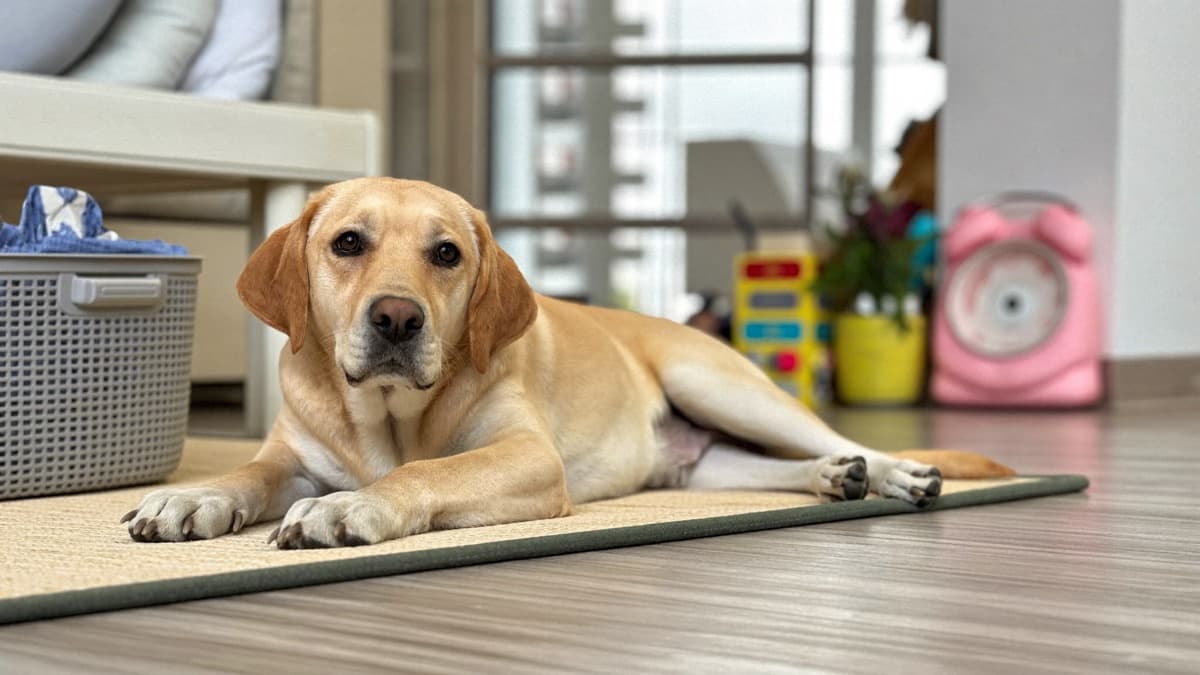
What actually changes for my dog when the baby comes?
Three things, and it's worth naming them honestly:
- Routine. Walks shift to odd hours, meals drift, sleep is chaos. Dogs are pattern animals; a routine that collapses overnight is genuinely stressful.
- Access. Rooms that were open close; the sofa or bed may become off-limits; a gate appears at the nursery door.
- The attention maths. This is the big one. A dog used to being the centre of the household will get less attention — not no attention, but noticeably less, and often distracted attention.
The single most important principle: start the new normal early. If walks will move to 6am, move them now. If the nursery will be gated, gate it in month five. If the dog will get twenty focused minutes a day instead of two ambient hours, build that habit before the birth. Every change introduced early is a non-event; every change introduced on homecoming day gets blamed on the baby. You are deliberately making the baby's arrival the least dramatic day of the whole project.
If your dog already struggles with alone-time or clinginess, address it now — see separation anxiety in dogs — because a newborn household is the worst possible time to discover it.
How do I desensitise my dog to baby sounds?
With classic DSCC — desensitisation and counterconditioning, the same method our desensitisation and counterconditioning guide covers in full. Applied to baby sounds:
- Play recordings of newborn crying, squealing and babbling at a volume so low your dog barely reacts.
- Pair the sound with good things — treats scattered, dinner served, a calm chew session.
- Over weeks, raise the volume gradually, always staying under the threshold where the dog gets worried. If the dog startles or paces, you've gone too loud too fast — drop back.
- Vary it: crying at 3am volume, through a monitor speaker, from the nursery direction.
The goal is a dog whose honest emotional response to crying is "excellent, that noise pays". Run the same pairing logic with equipment: the pram parked in the hallway for weeks, the cot assembled early, baby lotion smells on your hands, the rocking chair rocking. Nothing baby-related should be novel on day one.
What should we practise before the due date?
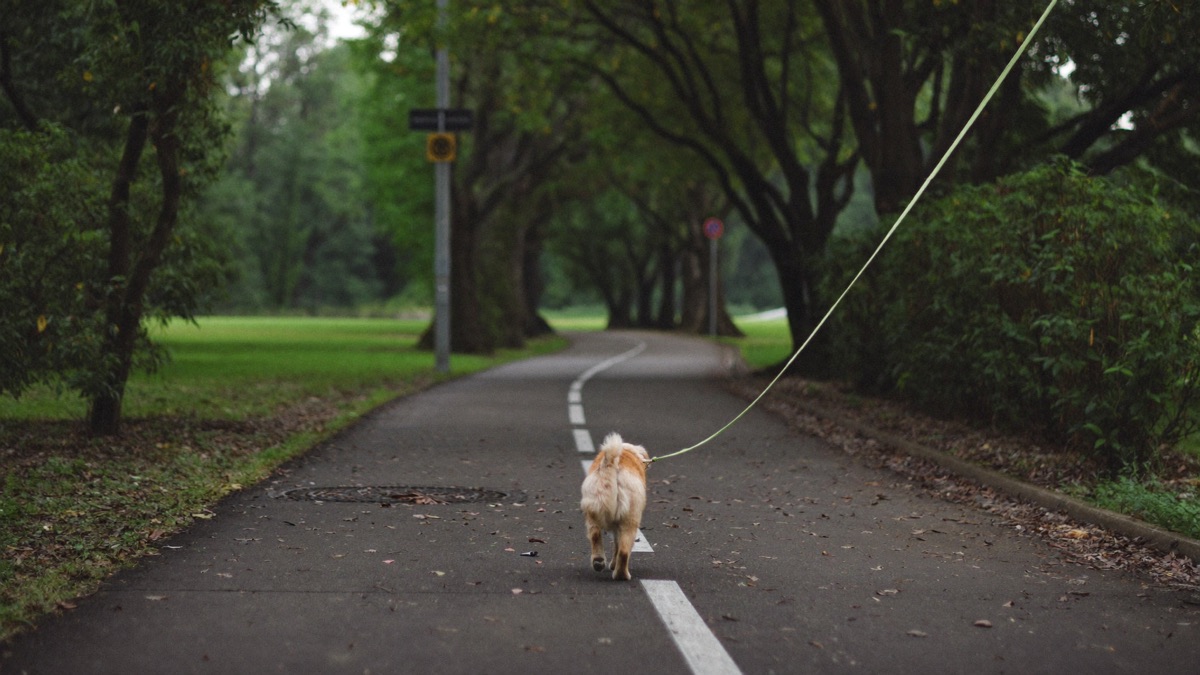
- Pram walks without a baby. Yes, you'll feel silly on the park connector. Do it anyway: walking a dog beside a pram is a genuine skill — the dog needs to hold position without weaving in front of the wheels, and you need one-handed lead management. Master it empty; see leash pulling if position is shaky.
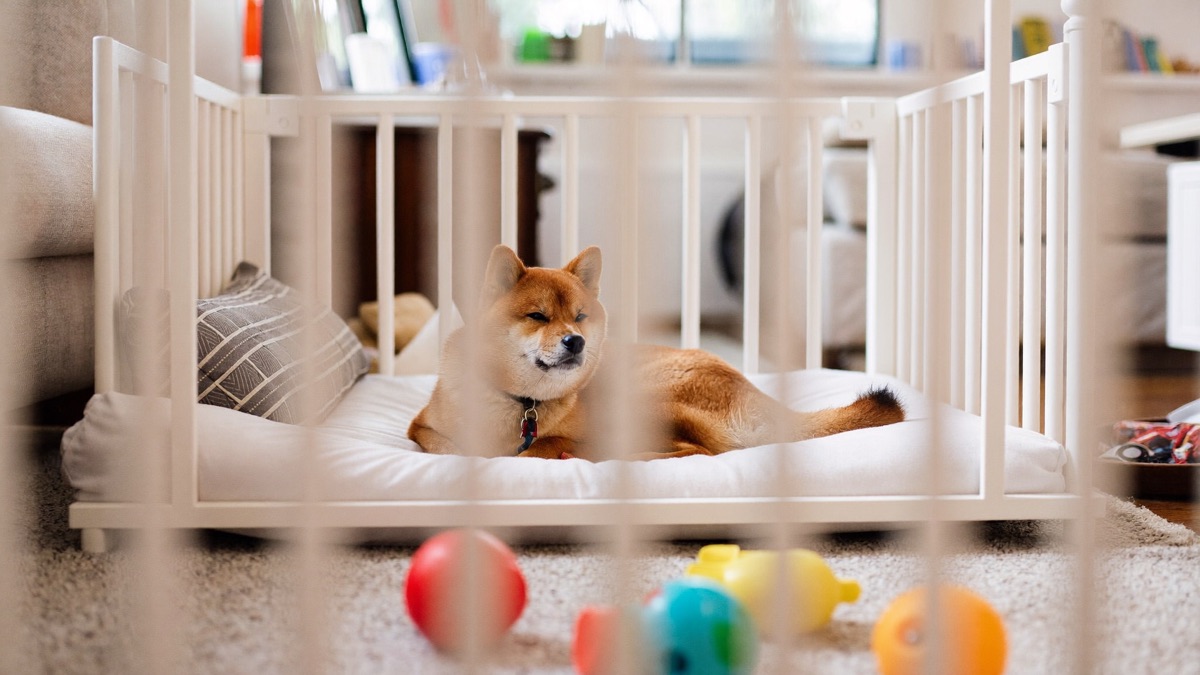
- Nursery boundaries. Decide the rule now — most families settle on "nursery is invitation-only, behind a gate" — and train it months early, always paired with good things on the dog's side of the gate. A gate the dog can see and sniff through beats a closed door, which creates mystery and frustration.
- A settle station. A mat or bed where the dog can relax near the family action, rewarded generously, so "go to your mat" is fluent before you're holding a newborn at 4am.
- Handling by proxy. Carry a wrapped doll, practise feeding positions with the dog settling nearby, reward calm at a polite distance.
How do we handle the coming-home introduction?
Keep it boring, in the best way. One parent greets the dog first, alone, without the baby — the dog has missed you and needs to get the wiggles out. Once the dog is calm, bring the baby in. Let the dog approach on a loose lead and sniff the baby's feet for a few seconds while an adult holds the baby securely and upright, then calmly move on to normal life. Praise quiet interest; don't force interaction and don't hover anxiously — dogs read tension instantly. Repeat brief, calm, rewarded exposures over the following days, and watch for stress signals like lip-licking, yawning and whale eye (see dog body language) so you can give the dog space before it has to ask loudly.
What is the never-unsupervised rule?
A standing rule, not a suspicion: no dog is ever alone in a room with the baby — not for thirty seconds, not to grab the phone charger. This applies to gentle dogs, elderly dogs, dogs that adore children and dogs that have never put a paw wrong, because it is a system, like a car seat, not a verdict on your dog's character. Awake adult in the room, or dog and baby are in separate spaces behind a gate. Gates, playpens and crates make the rule effortless rather than exhausting — set them up before the birth, and the habit will already be automatic when you're running on newborn sleep.