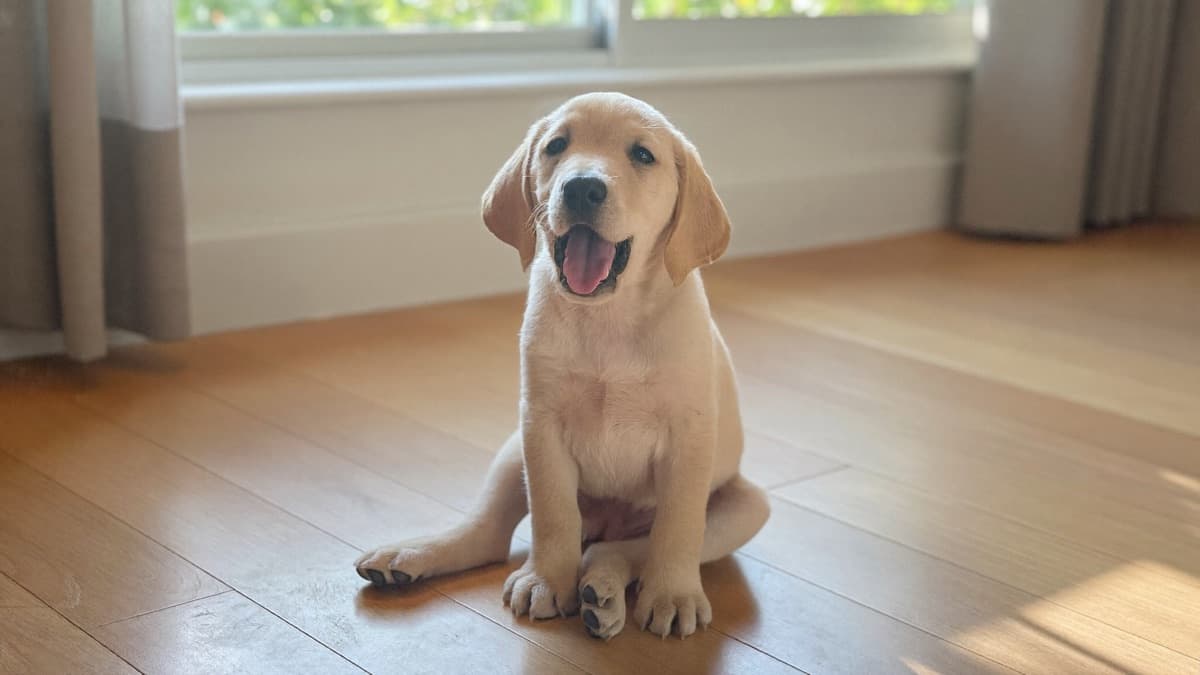
Why do puppies hiccup so much?
A hiccup is an involuntary spasm of the diaphragm — the sheet of muscle that drives breathing — with the characteristic "hic" produced as the airway snaps briefly shut. Puppies get them constantly for two stacked reasons:
Their diaphragm is still maturing. In a young puppy, the diaphragm and the nerves that coordinate it are new equipment being run in. The muscle is more excitable and easier to tip into spasm — the same reason human babies hiccup far more than adults. Some researchers think fetal and infant hiccups may even help exercise the breathing muscles. Whatever the purpose, immaturity is why a ten-week-old puppy hiccups after nearly every meal and most adult dogs barely hiccup at all. Puppies largely outgrow it by around their first birthday.
Everything a puppy does, it does too fast. Bolting food, gulping water, squeaking with excitement mid-play — all of it pulls air into the stomach, and a stretched stomach pressing on the diaphragm is the classic hiccup trigger. Meals and zoomies are why hiccup bouts so reliably follow both.
Do adult dogs get hiccups too?
Yes, just much less often — an occasional bout after fast eating, cold water gulped in a hurry, excitement, or a stress-panting session is entirely normal. An adult dog that suddenly starts hiccuping frequently after years of never doing it is worth a closer look, not because hiccups are dangerous but because a change in pattern is how quiet problems introduce themselves. Mention it at the next vet visit; mention it sooner if anything else changes alongside.
How do I stop my dog's hiccups?
Mostly, you wait — the calm-wait approach is the whole treatment:
- Stay relaxed. Hiccups don't distress most dogs nearly as much as they amuse their owners. Your calm keeps the puppy calm.
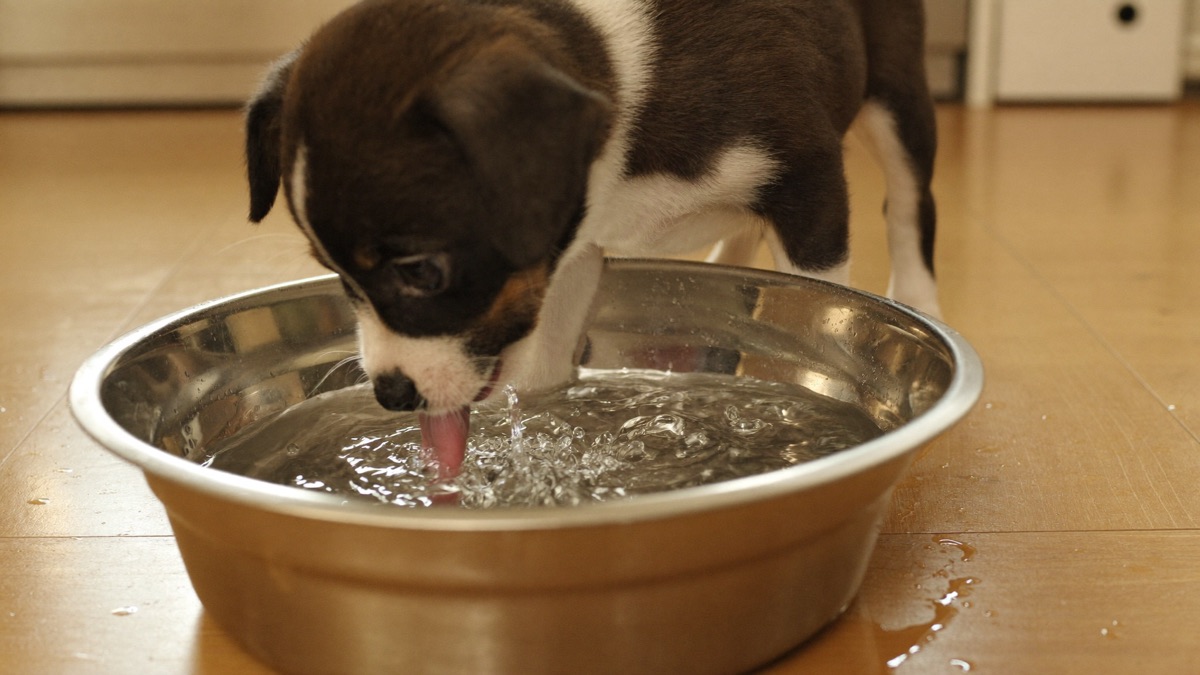
- Offer water, slowly. A few licks of room-temperature water often resets the rhythm. Don't let a hiccuping puppy gulp a whole bowl — that's the trigger, not the cure.
- Gentle chest or belly rubs. Slowing the breathing settles the diaphragm.
- Slow the source. If bouts always follow meals, a slow-feeder bowl or smaller, more frequent portions removes the main trigger.
- Skip the folk remedies. No scaring, no sugar, no vinegar, nothing pinched or startled. None of it works on dogs, and some of it (sugar in quantity, anything with xylitol) is actively harmful.
A normal bout lasts a few minutes — ten to fifteen at the outside. If your puppy hiccups, keeps playing, and forgets about it, so should you.
When are "hiccups" actually something else?
Two conditions get reported to vets as hiccups and are nothing of the sort:
Reverse sneezing. Sudden bouts of loud, snorting, backwards inhalations — the dog stands stiff, elbows out, neck extended, making a goose-like honking snort for 10–30 seconds. It looks and sounds alarming but is generally as harmless as hiccups, especially in small and flat-faced breeds. The giveaway: hiccups are soft and rhythmic; reverse sneezing is loud and urgent. Our reverse sneezing guide covers what triggers it and the simple ways to shorten an episode.
Seizure-like activity. Rhythmic jerking that is stiff and forceful rather than soft, hiccup-jerks that continue during sleep and can't be interrupted, twitching that spreads to the limbs or face, or a dog that seems absent or unresponsive during the episode — none of that is hiccups. Focal seizures in puppies can masquerade as hiccup bouts. Take a video — this is the single most useful thing you can do, because the episode will not perform on cue at the clinic — and book a vet visit promptly.
Also see a vet if genuine hiccups last more than an hour, recur many times daily for more than a day or two, or arrive with drooling, vomiting, coughing, laboured breathing, or a dog that seems unwell between bouts. For the other 99% of hiccup bouts: enjoy them. Few things in dog ownership are this cute and this benign at the same time.