Which dogs drool normally?
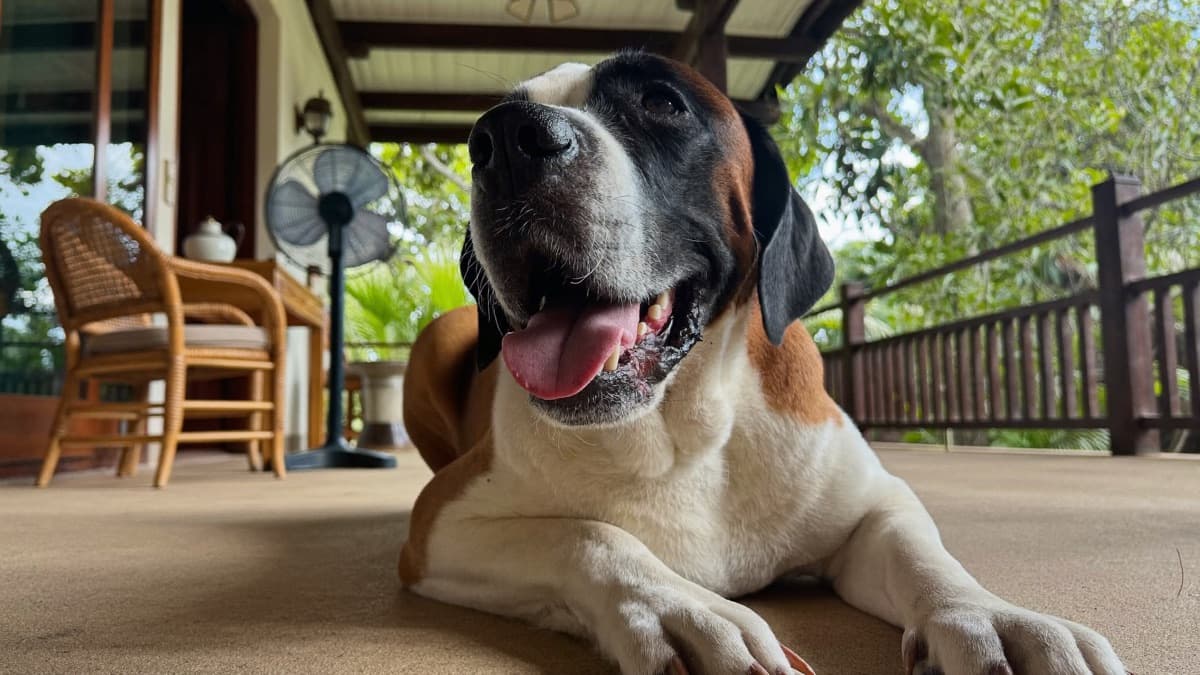
Some breeds are built to drool. Loose, pendulous lips (vets call them flews) simply can't hold saliva in, and no amount of training or diet changes that.
Scroll sideways to compare all columns →
| Drool level | Typical breeds | What's normal |
|---|---|---|
| Heavy, constant | Bloodhound, Saint Bernard, Mastiff, Newfoundland, Dogue de Bordeaux | Ropes of drool daily, worse around food, heat, and excitement |
| Moderate | Boxer, Bulldog, Great Dane, Basset Hound | Regular drool around mealtimes and after drinking |
| Minimal | Most small and tight-lipped breeds — Poodles, Maltese, Shibas, most local mixed-breeds | Occasional drips when food appears |
A Bloodhound that drools all day is healthy. A Maltese that starts drooling all day is not. Know your dog's baseline — that's the entire diagnostic trick.
Why is my dog suddenly drooling?
When a normally dry-mouthed dog starts drooling, work through this list. All of them deserve attention; several deserve it today.
- Nausea. Saliva surges before vomiting — expect lip-licking, repeated swallowing, and grass-seeking alongside. One episode that passes is usually fine; drooling with repeated vomiting or a miserable dog is a vet visit.
- A toxin. Profuse drooling is often the first sign after a dog licks something caustic or toxic — cleaning products, certain toads (a real hazard in Singapore and Malaysia gardens after rain), some plants, and toxic human foods. Our list of foods dogs can't eat covers the kitchen hazards. If you saw or suspect ingestion, call a vet now — don't wait for the next symptom.
- Dental or mouth pain. A rotten tooth, an abscess, an ulcer, or gum disease makes swallowing unpleasant, so saliva pools and spills. Drooling with bad breath, dropping food, or chewing on one side points straight at the mouth — see our dog bad breath guide for what's hiding under the smell.
- Heatstroke. In our climate this one is never off the table. Thick, ropey drool with heavy panting, brick-red gums, weakness or wobbling after exercise or time outdoors is an emergency — cool the dog and go. Our heatstroke in dogs guide covers the full protocol.
- Something stuck. A bone shard wedged across the roof of the mouth, a stick splinter in the gum, a foreign object at the back of the throat. The dog drools, paws at its face, and may gag or refuse food.
- Less common but serious: salivary gland problems, growths in the mouth, or nerve disorders affecting swallowing. Drooling that persists for more than a day without an obvious cause needs an exam.
How do I check my dog's mouth safely?
A quick look at home can find the wedged bone or broken tooth — but do it on your terms, not the dog's.
- Only if the dog is calm and yours. A painful, panicked dog bites the people it loves. If the dog resists or growls, stop — that's what vets and sedation are for.
- Lift the lips first, before opening anything. Most of the useful information — gum colour, swelling, broken teeth, ulcers, that awful abscess smell — is visible with the mouth shut.
- Check gum colour. Healthy gums are bubblegum pink. Pale, brick red, blue-tinged, or yellow gums are each their own emergency, whatever else you find.
- Open briefly if tolerated. Tilt the head slightly up, open the jaw with gentle pressure, and look fast: across the roof of the mouth (bones love to wedge there), under the tongue, and along the back teeth.
- Never pull at a visible thread or string. A string disappearing down the throat can be anchored deep in the gut — pulling can slice the intestines. Vet, immediately.
If you find nothing but the drooling continues, that's still information — it moves nausea, toxins, and internal causes up the list.
When does drooling need a vet?
Same day: suspected toxin or toad contact, drooling with vomiting or diarrhoea, signs of heatstroke, pawing at the mouth, refusing food or water, or blood in the saliva. Within a few days: gradual-onset drooling with bad breath or messy eating — that's almost always dental, and it only gets more expensive with time. And any drooling with facial swelling, a drooping face, or difficulty swallowing goes straight in — today, not tomorrow.