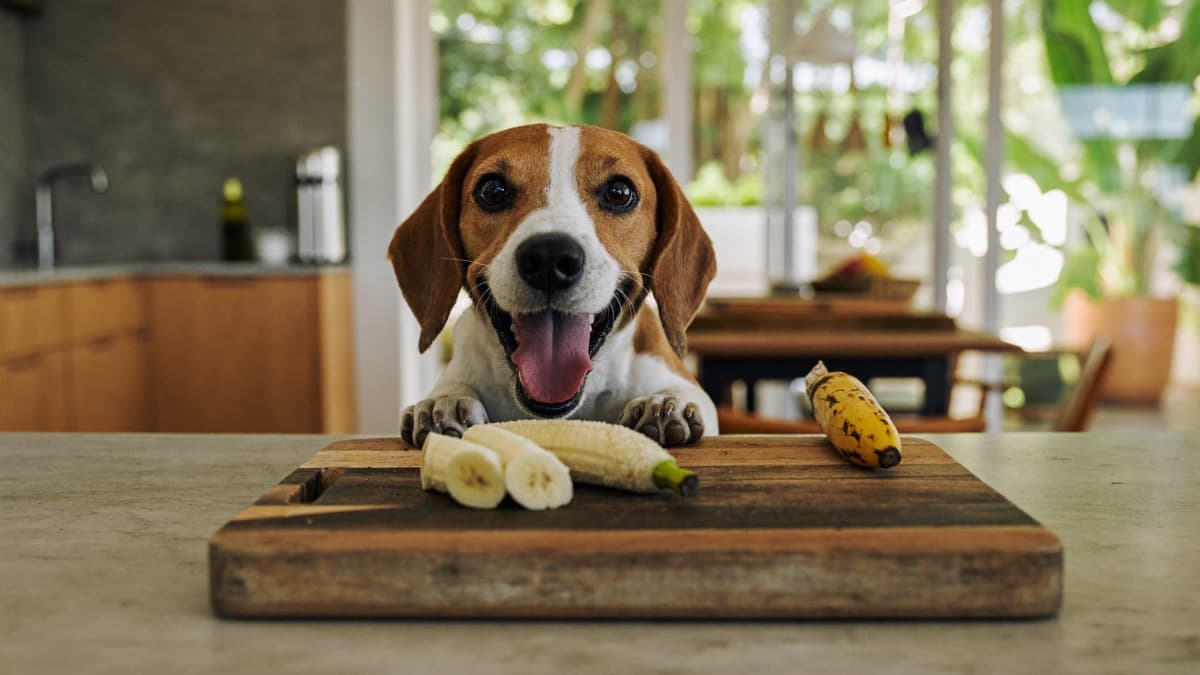
Are bananas good for dogs?
In small amounts, yes. Bananas contain potassium, vitamin B6, vitamin C and fibre, and they are lower in fat and salt than many commercial dog treats. That is why veterinary sources such as the American Kennel Club list banana among the fruits dogs can safely eat.
The catch is sugar. A medium banana carries roughly 14 grams of it, which adds up fast for a dog whose complete, balanced kibble or fresh diet already provides everything it needs. Vets generally recommend that all treats combined — banana included — make up no more than 10 percent of a dog's daily calories. For dogs that are overweight or diabetic, ask your vet before offering banana at all.
How much banana is safe for my dog?
Portion by body size, and offer it a couple of times a week at most rather than daily.
Scroll sideways to compare all columns →
| Dog size | Example weight | Safe amount per serving |
|---|---|---|
| Small (Chihuahua, toy poodle, shih tzu) | Under 10 kg | 1–2 thin slices |
| Medium (beagle, Singapore Special, border collie) | 10–25 kg | 2–4 slices |
| Large (golden retriever, GSD, labrador) | Over 25 kg | Up to half a banana |
When introducing banana for the first time, start with a single slice and watch for 24 hours. Loose stool or gas means banana simply does not agree with your dog — no harm done, just cross it off the treat list.
Can dogs eat banana peel?
No. The peel is not poisonous, but it is dense, fibrous and very difficult to digest. At best it causes vomiting or diarrhoea; at worst, especially in small breeds, a swallowed peel can lodge in the gut and cause a blockage that needs surgery. Bin peels securely — the sweet smell makes them tempting to counter-surfers and bin raiders.
What is the best way to serve banana to a dog?
Keep it plain. Good options:
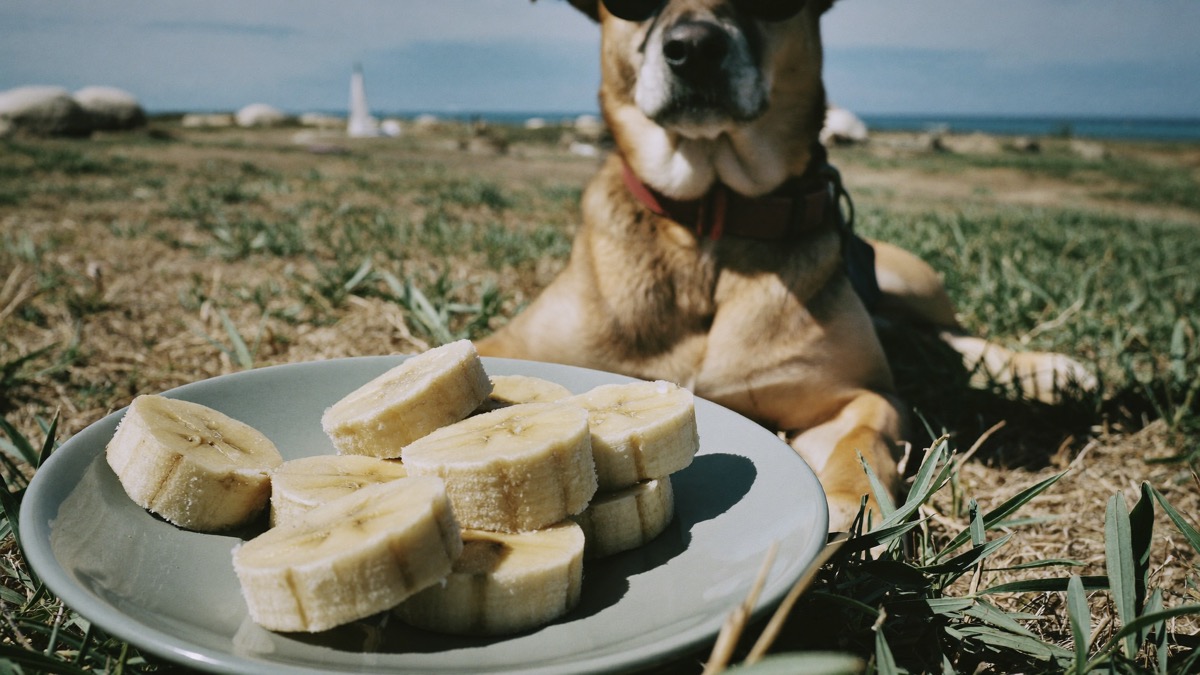
- Sliced — a slice or two straight from the fruit.
- Mashed — stirred into their regular food or smeared inside a lick mat or treat toy.
- Frozen — frozen slices are a welcome cool-down treat in Singapore and Malaysia's year-round heat.
Skip goreng pisang and other banana fritters — the batter and frying oil are a recipe for stomach upset, and fatty scraps are a known trigger for pancreatitis in dogs. The same goes for banana cake, muffins and anything from the kopitiam table: baked goods can contain xylitol, chocolate or raisins, all of which are genuinely dangerous.
When should I call the vet?
Plain banana flesh rarely causes trouble, but call your vet if:
- Your dog swallowed a whole peel (or a whole banana, wrapper and all) and shows vomiting, lethargy, a bloated or painful belly, poor appetite, or strains without passing stool.
- Your dog is diabetic or overweight and got into a large amount of banana.
- Vomiting or diarrhoea after eating banana lasts more than 24 hours or your dog seems flat and unwell.
- The banana came in a baked good that may have contained xylitol, chocolate or raisins — treat this as urgent and call immediately.
When in doubt, a quick phone call to your clinic is always the right move. In Malaysia, the Department of Veterinary Services is the national animal-health authority — but after hours, your nearest 24-hour emergency clinic is the fastest call.
Which similar snacks are actually toxic to dogs?
Do not let banana's safe status lull you into pattern-matching across the fruit bowl. These common foods are dangerous for dogs:
- Grapes and raisins — can cause acute kidney failure, even in small amounts.
- Xylitol — a sweetener in sugar-free gum, some peanut butters and baked goods; it can trigger life-threatening low blood sugar.
- Chocolate — toxic to dogs at surprisingly small doses, especially dark chocolate.
If your dog eats any of these, contact your vet or an emergency animal clinic straight away rather than waiting for symptoms.