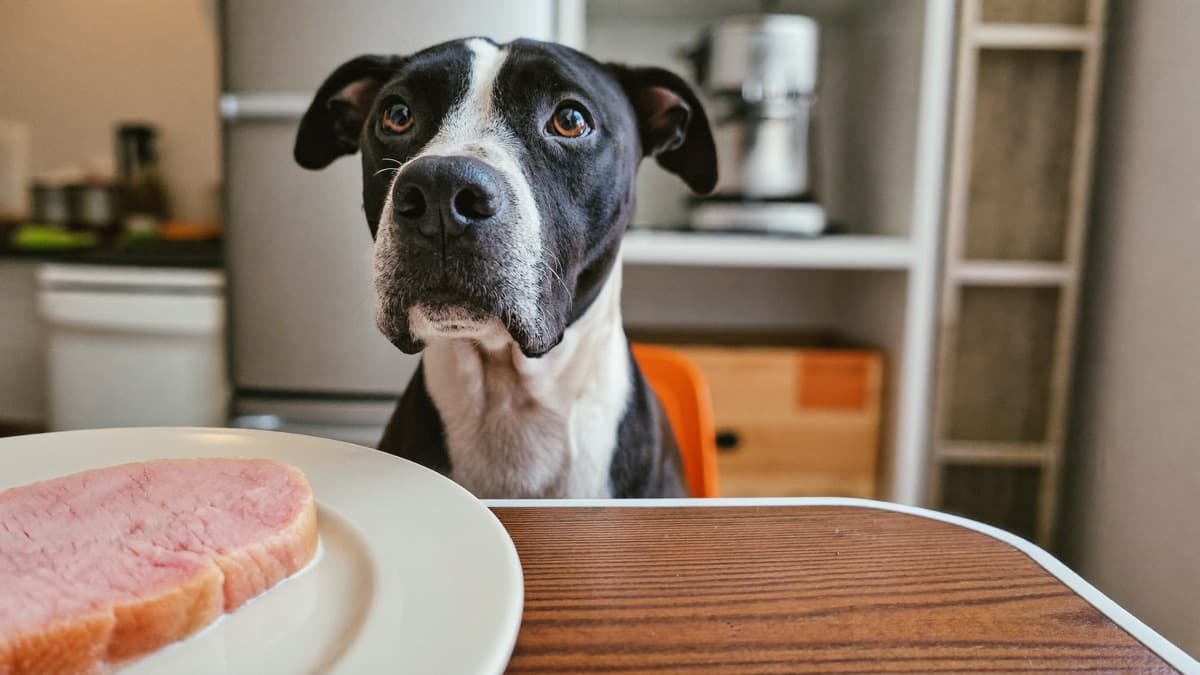
Is chicken good for dogs?
Cooked plain chicken is lean, digestible protein with B vitamins, and vets often reach for it deliberately: boiled chicken with rice is the classic bland diet for a dog recovering from an upset stomach. If your dog already eats a chicken-based kibble or fresh diet, a little extra cooked chicken is simply more of what it knows.
The caveats are seasoning and skin. Chicken skin, frying oil and rendered fat are rich enough to trigger pancreatitis in susceptible dogs, and the marinades we love — soy, garlic, onion, chilli, curry — range from unhealthy to outright toxic. Share the meat, not the flavour.
How much chicken is safe for my dog?
Plain, cooked, skinless, boneless, cut to bite size — and counted inside the 10 percent treat allowance.
Scroll sideways to compare all columns →
| Dog size | Example weight | Safe amount per serving |
|---|---|---|
| Small (Chihuahua, toy poodle, shih tzu) | Under 10 kg | 1–2 tablespoons, shredded |
| Medium (beagle, Singapore Special, border collie) | 10–25 kg | 3–4 tablespoons |
| Large (golden retriever, GSD, labrador) | Over 25 kg | Up to half a cup |
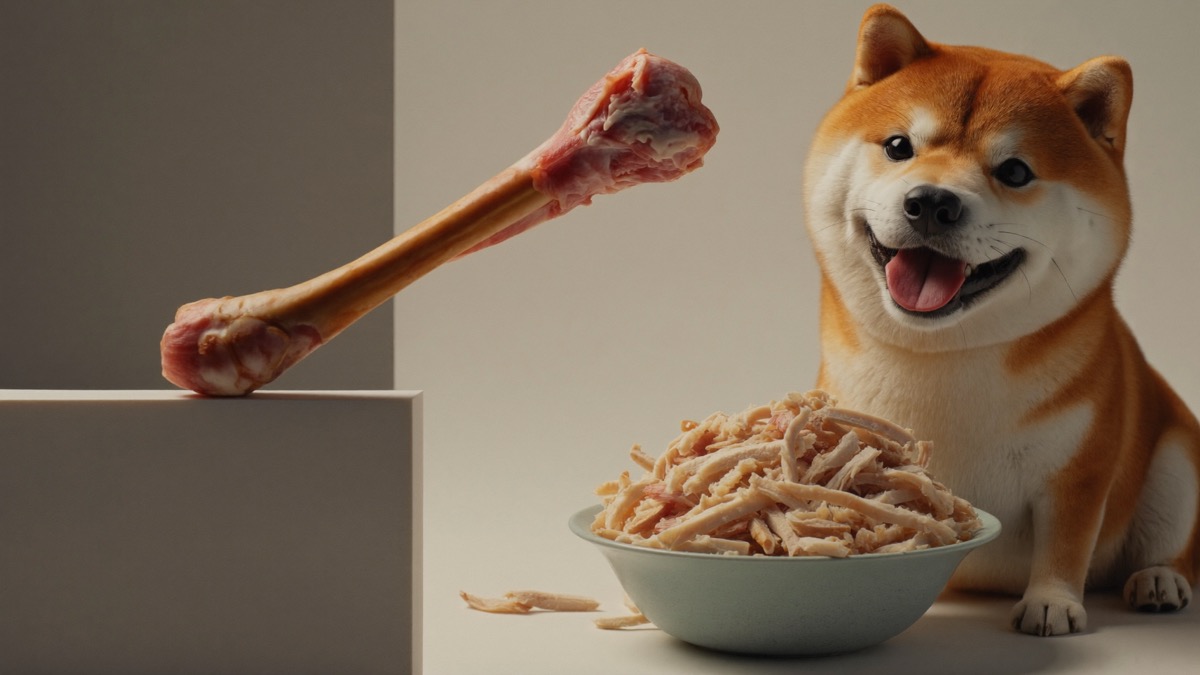
Why are cooked chicken bones so dangerous?
Cooking changes bone structure: it dries out and turns brittle, so instead of crunching, it splinters into needle-sharp shards. Those shards can pierce the mouth, throat, stomach or intestines, or wedge together into a blockage that needs surgery.
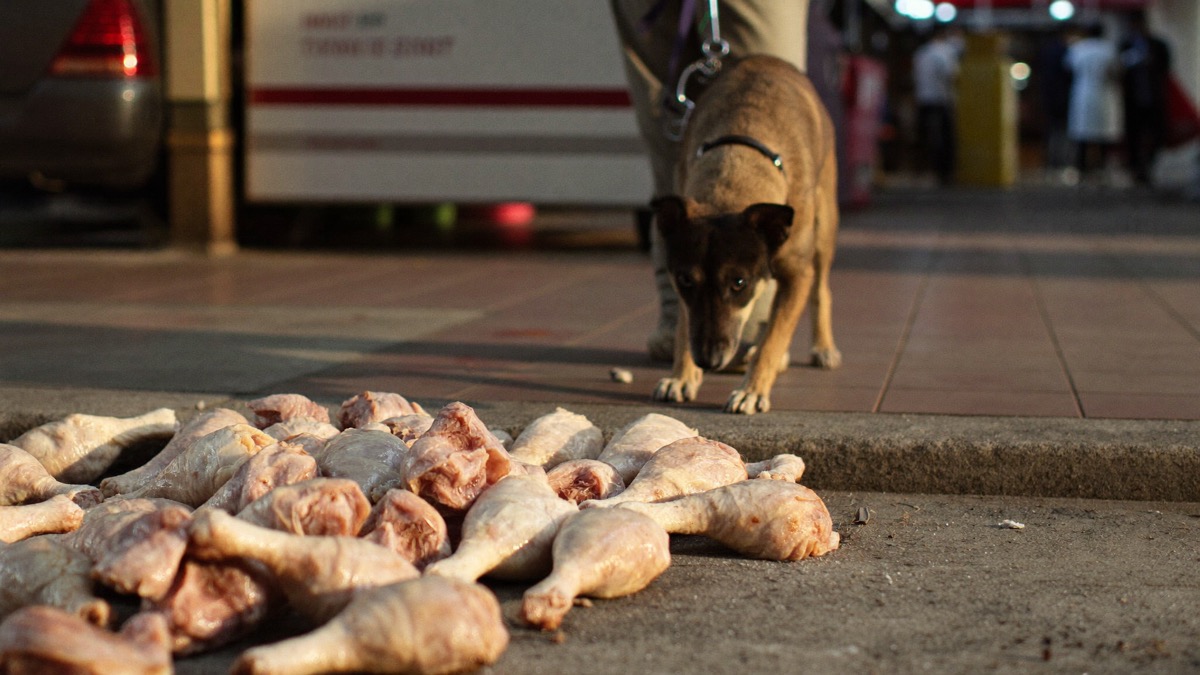
This is the classic Singapore dog emergency for a reason. Hawker centres and void decks are scattered with discarded chicken wing and drumstick bones, and dogs hoover them off the floor faster than any owner can react. If your dog walks routes past food centres, a solid "leave it" cue is genuinely protective — and if a bone goes down anyway, do not induce vomiting (shards can cut twice), do not wait to see what happens. Call your vet. In Singapore, the Animal & Veterinary Service is the national authority on animal health, but for a swallowed bone your nearest clinic is the number to ring.
Raw bones are less brittle but still carry choking, fracture and bacterial risks — they are not a free pass either.
Can dogs eat raw chicken?
Vets generally say no. Raw chicken commonly carries salmonella and campylobacter. Many dogs shrug these off, but some get properly ill, and infected dogs can shed bacteria that sicken the humans in the house — a real concern in homes with kids or elderly family.
There is also a rarer, more serious association: research from the University of Melbourne linked raw chicken consumption (via campylobacter infection) to an increased risk of acute polyradiculoneuritis (APN), a paralysis condition in dogs that resembles Guillain-Barré syndrome in people. It is uncommon, but it is one more reason the "raw is natural" argument does not hold up well for chicken specifically. If you feed a raw diet, do it with your vet's input and strict hygiene.
Can dogs be allergic to chicken?
Yes, and it is more common than most owners expect — precisely because chicken is in so many dog foods, dogs get plenty of exposure. Suspect it if your dog has itchy paws, recurring ear infections or chronic soft stool that no dewormer fixes. Diagnosis takes a proper elimination diet, not a guess. Our guide to food allergies in dogs walks through how that works.
When should I call the vet?
Call promptly if:
- Your dog swallowed a cooked bone — especially if you see gagging, drooling, pawing at the mouth, vomiting, blood in stool, a painful belly or straining.
- Your dog ate raw chicken and develops vomiting, diarrhoea, fever or, rarely, weakness in the hind legs.
- The chicken was heavily marinated or cooked with onion or garlic.
- Vomiting or diarrhoea after any chicken meal lasts more than 24 hours.
Which lookalike table scraps are actually toxic to dogs?
The chicken is often fine; what comes with it is the problem:
- Onion and garlic — foundational to satay marinades, curries and stir-fries; they destroy red blood cells and can cause anaemia.
- Grapes and raisins — sometimes in salads and sauces; small amounts can cause kidney failure.
- Xylitol — a sweetener in some sauces and baked goods; it causes life-threatening low blood sugar in dogs.
If your dog gets into any of these, call your vet or an emergency clinic straight away rather than waiting for symptoms.