Why do kidneys hide damage for so long?
Because they're built with enormous spare capacity. Kidneys filter waste from the blood, balance water and minerals, and help regulate blood pressure — and a healthy dog has far more filtering units than daily life requires. As units are lost to age or disease, the survivors work harder and cover the gap. The dog looks fine. Blood values stay normal. Only when around 75% of function is gone does waste start accumulating in the blood where a standard panel sees it.
This is why "the bloods were normal last year" and "advanced kidney disease this year" can both be true — and why senior screening now includes newer markers (your vet may mention SDMA) that flag trouble earlier, plus urine tests, which often show the first changes of all.
What's the earliest sign an owner can actually catch?
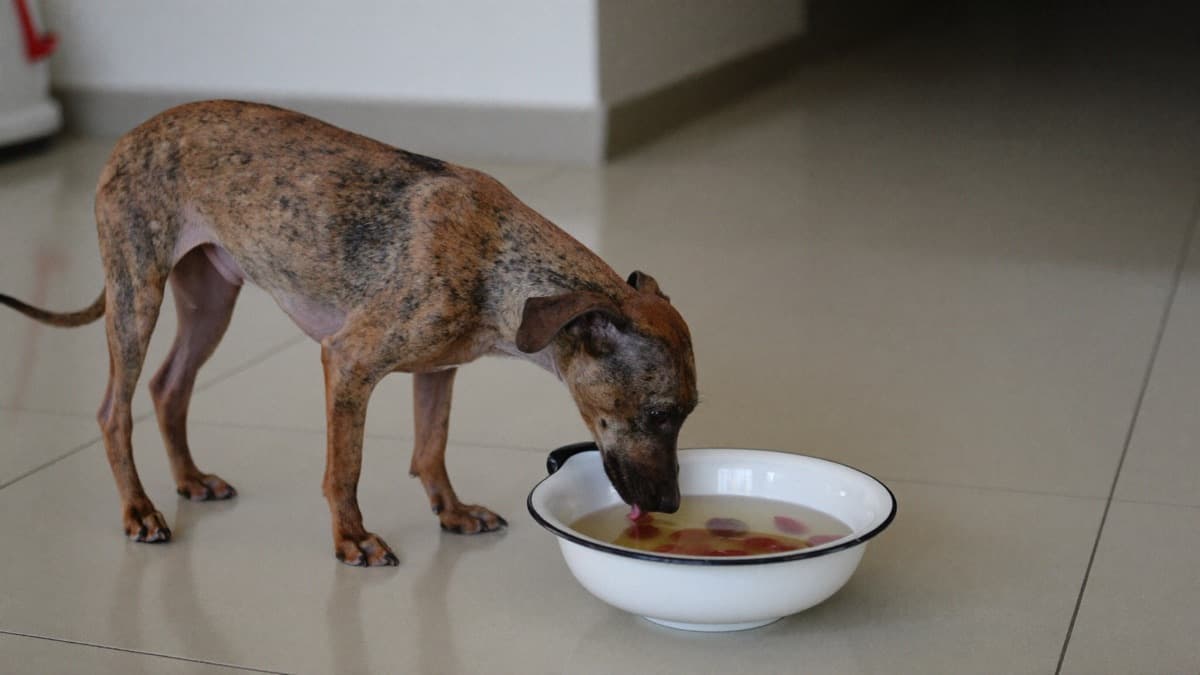
Drinking more, peeing more. Struggling kidneys lose the ability to concentrate urine first, so the dog produces more dilute urine and drinks to keep up. It creeps in gradually — a water bowl refilled more often, bigger puddles on walks, the odd overnight accident — and it's easy to file under "it's hot lah." Our guide to old dogs drinking more water covers how to measure intake properly, and the baseline numbers live in how much water a dog should drink. A sustained, unexplained rise in drinking is a blood-and-urine-test flag, every time.
What do the IRIS stages mean?
Vets stage CKD using the IRIS system (International Renal Interest Society). Strip away the jargon and it's a simple ladder based on blood waste levels, with urine protein and blood pressure as modifiers:
Scroll sideways to compare all columns →
| IRIS stage | Plain English | Typical outlook when managed |
|---|---|---|
| 1 | Damage detectable, wastes still normal | Often years — monitor, protect |
| 2 | Mild waste build-up, subtle or no signs | Years is a realistic goal |
| 3 | Moderate build-up, signs visible | Months to a couple of years |
| 4 | Severe — the crisis stage | Weeks to months, comfort-focused |
The ladder explains the strategy: everything about CKD management is about being found on the top rungs, and staying there as long as possible.
What does the renal diet actually do?
More than any drug. The cornerstone of CKD management is a phosphorus-restricted therapeutic renal diet — damaged kidneys can't clear phosphorus properly, and the excess accelerates the remaining damage. Prescription renal diets also moderate protein quality and quantity and add omega-3s. This is the one situation where the old "low protein for old dogs" idea genuinely applies — as a prescribed medical diet after diagnosis, never as a guess from a shelf, as we cover in best food for senior dogs.
Two practical notes. First, transition slowly and while the dog still feels well — a nauseous dog learns to hate the new food. Second, wet or water-added food is a quiet win: hydration is medicine for these kidneys.

What can management realistically achieve?
Years. That deserves to be said plainly, because "kidney disease" lands like a death sentence in the consult room, and for early-stage dogs it simply isn't. A stage 1–2 dog on a renal diet, with blood pressure managed and check-ups every few months, commonly lives a normal-feeling life for years — many die with their kidney disease rather than of it. Studies behind renal diets show dogs living two to three times longer than unmanaged disease would allow.
As of 2026, expect the diagnosis workup — consult, blood panel, urine test — to run roughly S$150–350 (about RM450–1,100), with renal prescription food costing somewhat more than regular senior diets and monitoring visits a few times a year. It's real money, but spread over the years it buys, it's one of the better deals in senior-dog care.
The action list is short: for any senior, blood and urine screening at least yearly, a hard look at the water bowl, and a same-month vet visit if drinking has genuinely increased. The silent disease stops being dangerous the moment someone's listening for it.