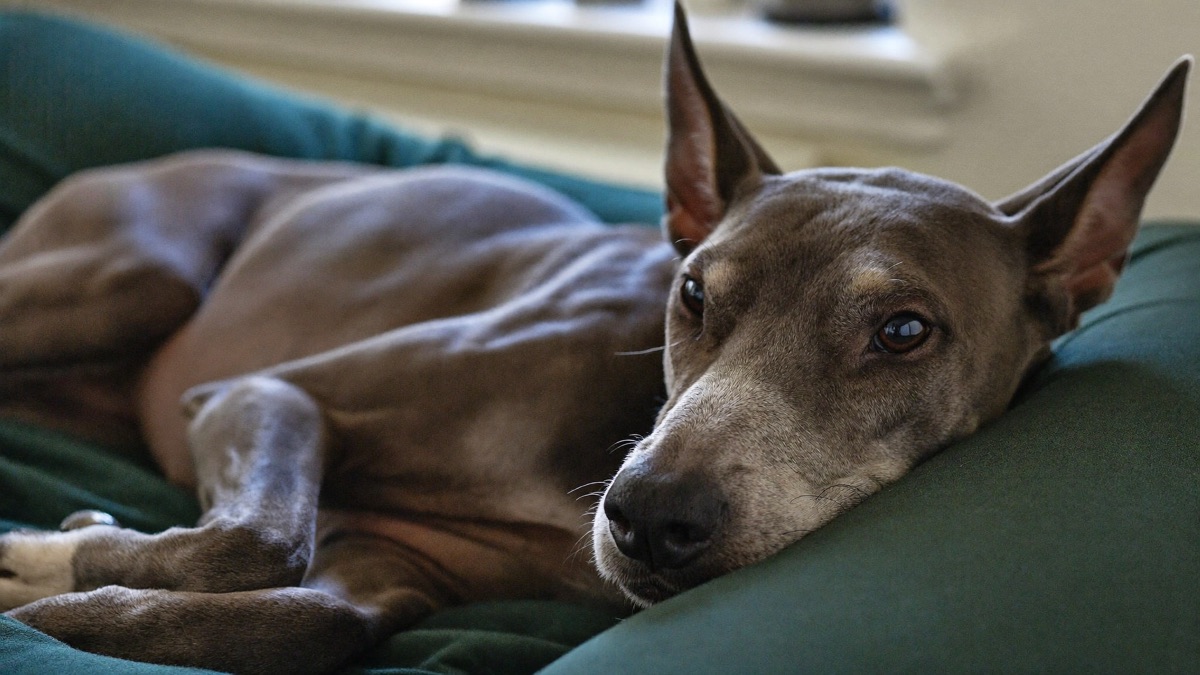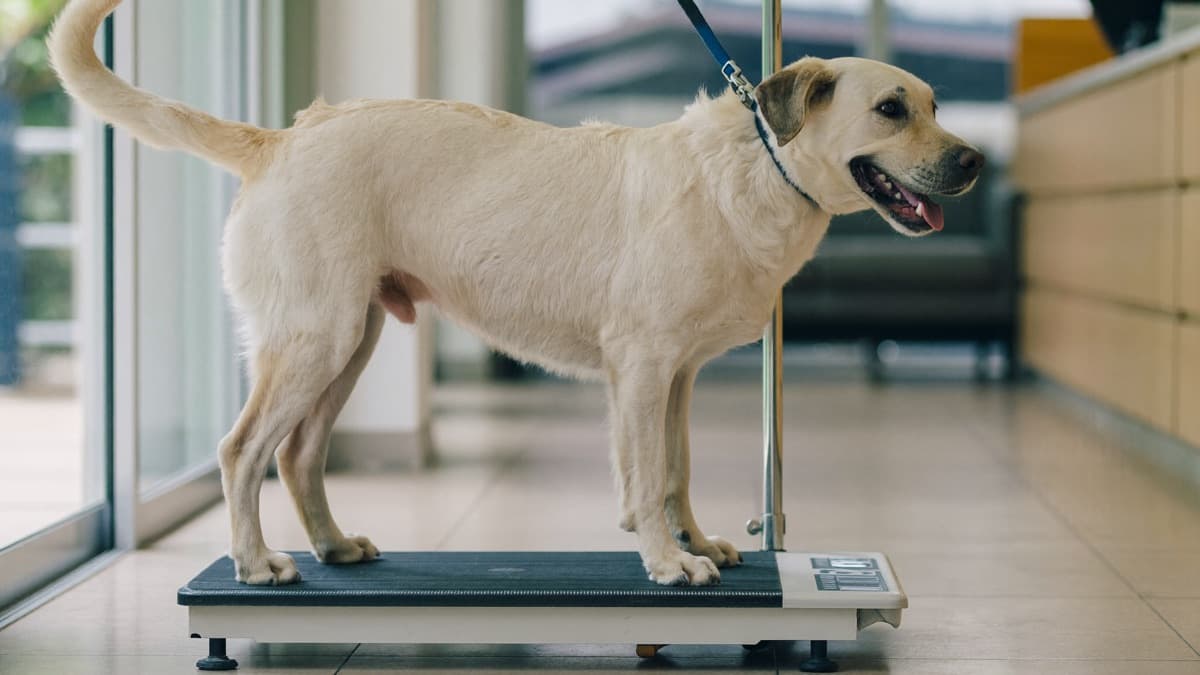
The reassuring part: "something specific" is usually one of four things, and all four are findable with an exam and a basic blood and urine panel.
What are the big four causes of weight loss in senior dogs?
1. Dental pain. The most overlooked and the cheapest to fix. By senior age most dogs have significant dental disease, and a dog with an abscessed tooth doesn't dramatically stop eating — it chews less, drops kibble, swallows food half-chewed, favours soft bits, and slowly loses condition. Owners read it as fussiness. Flip the lip and look for red gums, brown crusted teeth, or a smell that arrives before the dog does — then read our dog dental care guide.
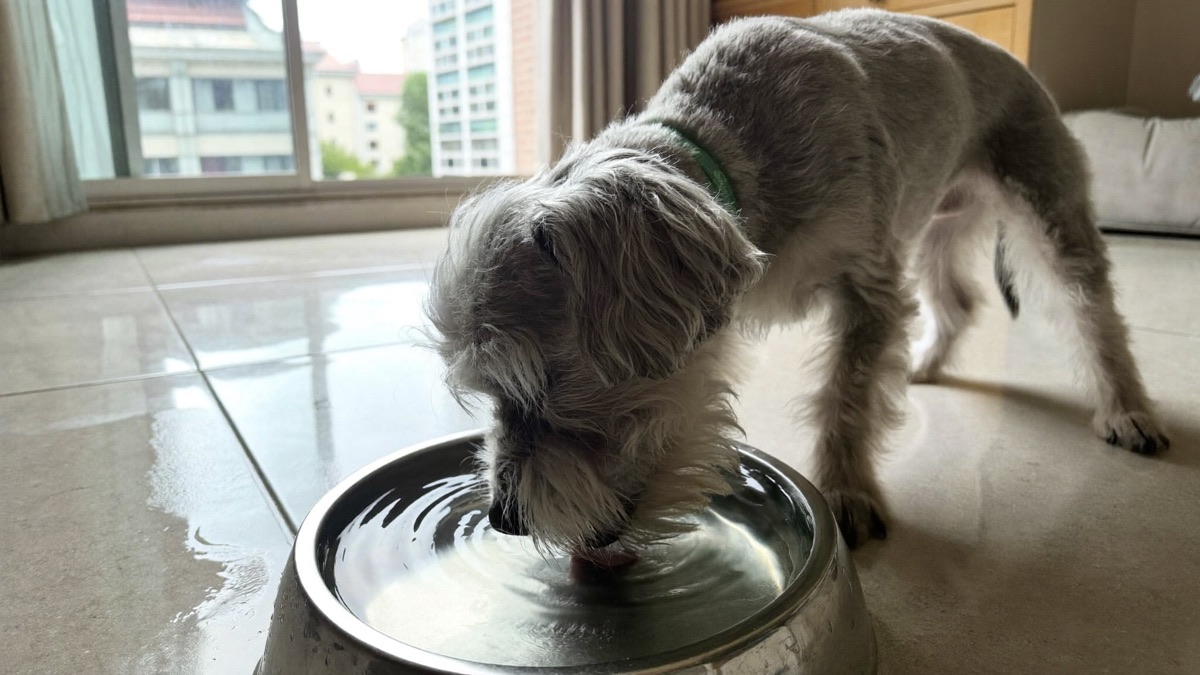
2. Chronic kidney disease. Extremely common in older dogs. Failing kidneys leak protein, blunt appetite through nausea, and drive the thirst-and-urination increase many owners notice first. Weight loss plus a dog that's suddenly drinking a lot of water is a classic pairing that deserves bloodwork this week, not this quarter.
3. Cancer. The word everyone is braced for, and yes, it belongs on the list — many cancers burn calories and suppress appetite long before a lump is visible. This is precisely why unexplained weight loss gets a proper workup: if it is cancer, months matter; if it isn't, you've ruled out the scary one and usually found something treatable instead.
4. Sarcopenia — age-related muscle loss. The one that genuinely is "age", but isn't harmless. Old dogs lose muscle even at a stable diet, especially over the hindquarters, and the fix isn't more food alone — it's adequate protein plus regular gentle strength work. Our senior dog exercise guide covers the sit-to-stand routine that helps.
Does it matter whether the appetite is still there?
Yes — it's the single most useful clue you can bring to the consult:
Scroll sideways to compare all columns →
| What you see | What it points to | Urgency |
|---|---|---|
| Eating well, still losing weight | Kidneys, diabetes, cancer, malabsorption, sarcopenia | Vet within 1–2 weeks |
| Wants food but eats slowly, drops it, chews one side | Dental pain, mouth mass | Vet within 1–2 weeks |
| Appetite fading or gone, plus weight loss | Kidney disease, cancer, liver disease, severe nausea | Vet within days |
| Not eating at all for 24–48 hours | Anything — this is its own emergency | Same day |
A senior that stops eating outright shouldn't wait — see what to do when a dog won't eat.
How do I actually catch weight loss early?
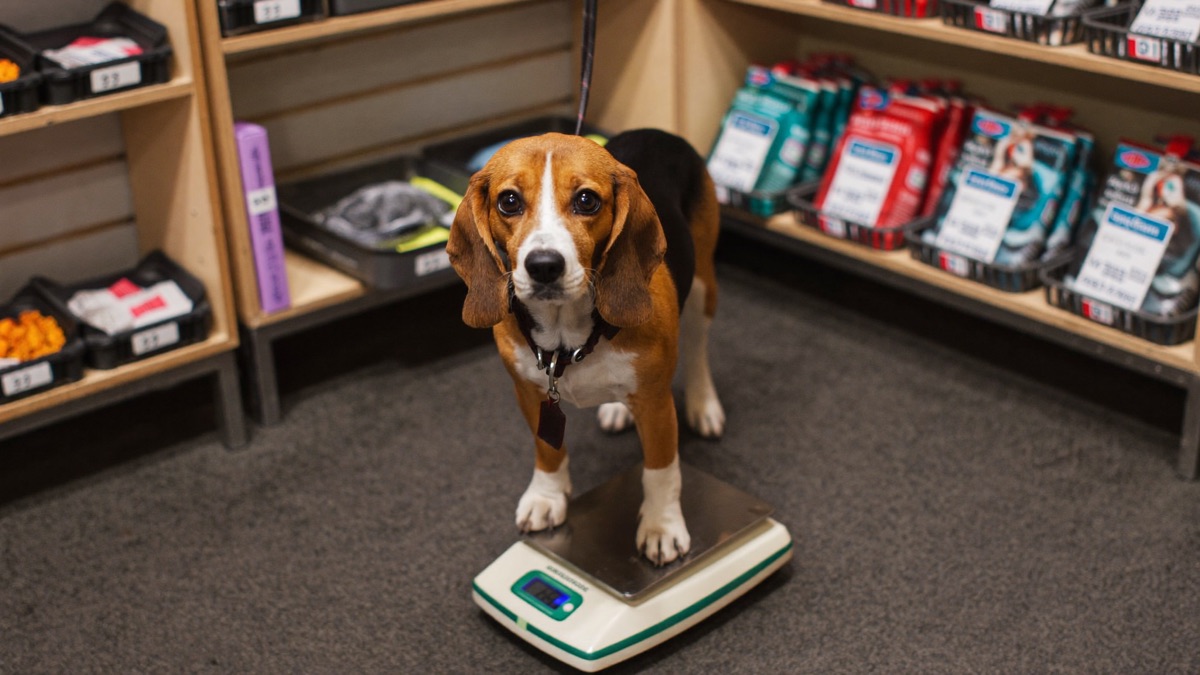
You can't see a 7% loss under a coat — you weigh it. Make a monthly weigh-in a fixed habit: small dogs go on a bathroom scale in your arms (weigh yourself, subtract), bigger dogs on the walk-on scale almost every vet clinic and many pet shops in Singapore and Malaysia leave in the waiting area, free to use. Write the number down with the date; a note on your phone is enough.
Two thresholds to act on:
- 5% down from the dog's stable adult weight, sustained over two readings — book a routine consult.
- 10% down — that's an urgent workup: full physical, blood panel, urine test, and usually a dental check under the same visit. For a 30kg golden retriever, 10% is 3kg — a loss you might genuinely not notice by eye or by touch under that coat. As of 2026, a senior consult with bloodwork typically runs S$150–350 (roughly RM450–1,100).
Why "he's just getting old" is the answer to reject
Every disease on the big-four list gets called "just age" for a few months first — and those are the months when treatment is cheapest and works best. A dental procedure restores eating within days. Early kidney disease managed with diet routinely buys years. Even cancer caught at a small, local stage may be surgically curable. Sarcopenia responds to protein and exercise. None of them respond to being ignored.
The habit that makes all of this work is embarrassingly simple: weigh monthly, write it down, and treat any unplanned downward trend as a question for your vet — the full routine is in our senior dog care checklist. Thin is not what old age looks like; thin is what undiagnosed disease looks like.