Why are choice and control the active ingredients?
Research on fear across species keeps landing on the same finding: it's not the scary thing itself that damages confidence, it's having no control over it. A dog that can retreat, approach at its own speed and end an interaction whenever it wants stays under threshold and learns "I can handle this." A dog that's carried, cornered or lured past its comfort point learns "things happen to me and I can't stop them" — the exact opposite lesson, even when nothing bad occurs.
Practically, that means one rule underneath everything: the dog opts in. You set up the situation; the dog decides whether, when and how much. If the dog says no, the no is honoured — and paradoxically, dogs whose no is respected say yes far more often.
Which confidence games actually work?
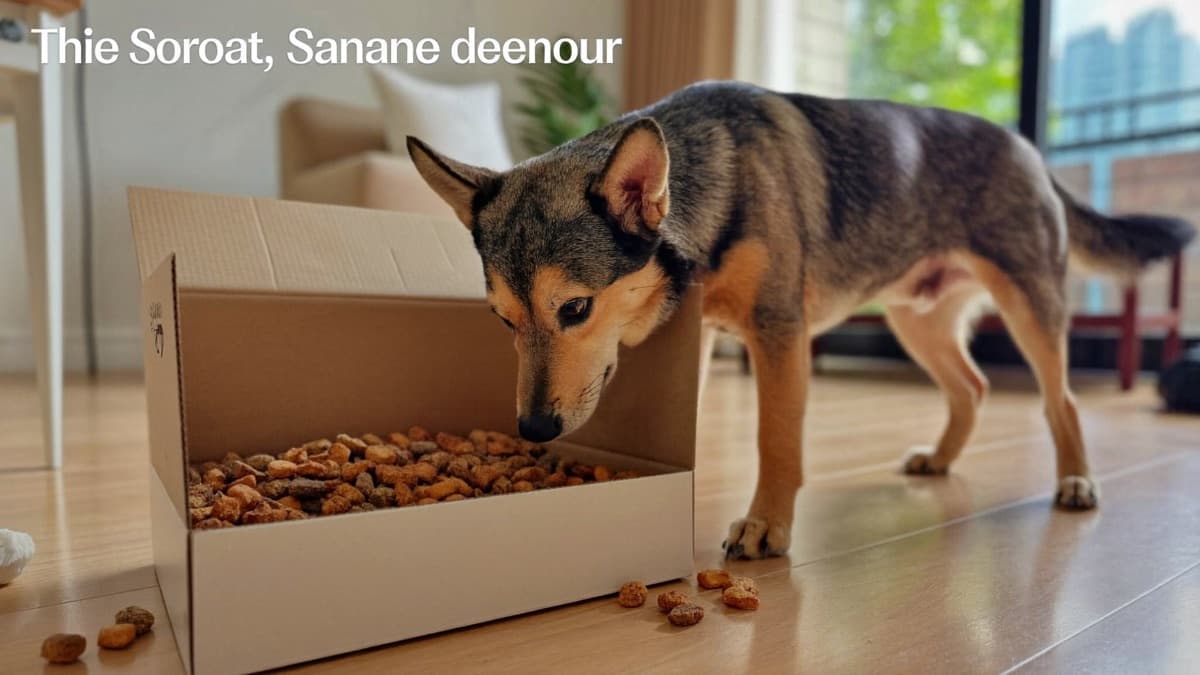
- Cardboard box exploration. Scatter a few boxes of different sizes on the floor, drop treats in and around them, and sit back. Rustling, nosing, stepping into and eventually diving inside boxes are all self-chosen victories. Novel objects on the dog's own terms is the whole game.
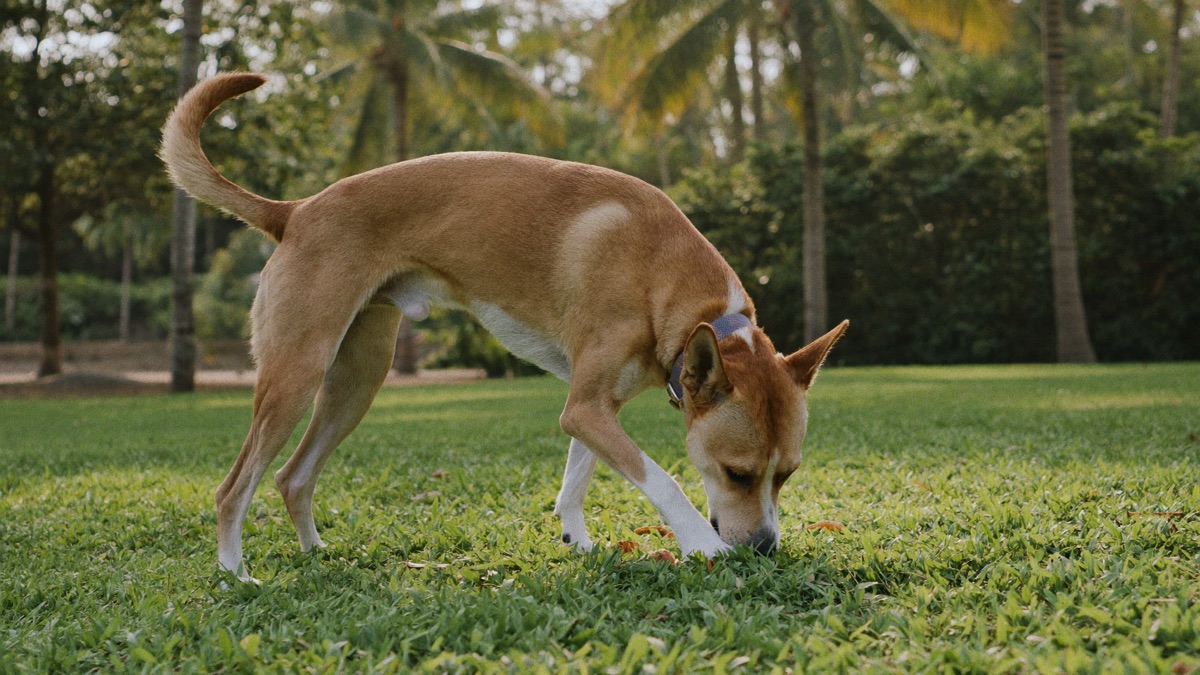
- Snuffle scatter. Toss a handful of kibble into a towel, snuffle mat or patch of grass. Sniffing is calming in itself, it keeps the head down in a relaxed posture, and every found piece is a small success the dog earned alone.
- Free work. Lay out a little obstacle buffet — a cushion, a low step, a wobbly cardboard tray, a muffin tin with treats — and let the dog explore the lot unguided for ten minutes. No cues, no calling, no pointing. You're building a dog that experiments.
- The choose-to-approach game. Sit on the floor side-on, treats in hand, and do nothing. The dog approaching you as a choice is worth fifty approaches you engineered.
Keep sessions short — five to ten minutes — and end while the dog still wants more.
What is the wins ledger?
Shy-dog progress is invisible day to day and unmistakable month to month, so write it down. A note on your phone, one line per entry: "12 Aug — chose to sniff the delivery trolley." "19 Aug — stayed in the room when the blender ran." "2 Sep — first play bow."
The ledger does two things. It stops you moving the goalposts — without it, every new win instantly becomes the new normal and you feel like nothing's changing. And on the bad days (there will be bad days; regression after a fright is completely normal), thirty entries of documented progress is the antidote to despair.
Why don't obedience drills fix fear?
Because obedience changes behaviour and fear is an emotion. A shy dog drilled into a sit-stay while something scary approaches is a dog that's been stripped of its coping options — it can't retreat, can't investigate, can't create distance. It may look "calmer" because it's holding position, but suppressed fear isn't reduced fear, and suppression has a habit of resurfacing worse.
That doesn't make training useless. A handful of well-paid cues learned in calm settings — a hand target especially — become portable security blankets later. But the order matters: safety first, confidence second, obedience a distant third. If your dog is newly adopted, the decompression phase comes before any of this.
How do I celebrate micro-progress without wrecking it?
Quietly. Shy dogs find applause, squealing and sudden reaching alarming, so the celebration is calm: a soft "good", a treat rolled towards the dog rather than a hand thrust at it, and the situation ending on that success. Resist the universal temptation of "that went well, let's do one more" — one more is how wins turn into overwhelm. Bank it, note it in the ledger, and stop.
Watch for the signs the dog is telling you it's working: weight shifting forward instead of back, a tail held level and loose, shake-offs after mild stress, and recovery time shrinking from minutes to seconds. If you're seeing ongoing anxiety signs despite weeks of low-pressure work, loop in your vet — pain and anxiety disorders masquerade as shyness more often than people think, and a veterinary behaviourist can change the trajectory entirely.