Why are SG/MY fireworks nights actually easier to handle than storms?
Because you get a schedule. Thunderstorms ambush you year-round here, but fireworks cluster around known dates: NDP fireworks and their rehearsal weekends through July into August, CNY (including firecrackers and home fireworks, which are far more widespread in Malaysian neighbourhoods), Deepavali, Merdeka celebrations, and 31 December. If your dog trembled through last NDP, you know precisely when the next test is — and a dog that panics at fireworks usually also struggles with storms, so the plans reinforce each other; see our thunder fear guide for the storm-specific version.
The mistake almost everyone makes is starting on the afternoon of the event. The night-of protocol below softens a bad evening; only the weeks-before work actually changes the fear.
How do I desensitise my dog in the weeks before?
Desensitisation and counterconditioning (DSCC) — pair the scary sound, at non-scary volume, with wonderful things:
- Start 4-8 weeks out. Play a good fireworks recording at a volume so low your dog barely flicks an ear.
- While it plays, deliver something excellent: favourite treats, a lick mat, a game. Sound on, jackpot on; sound off, jackpot off.
- A few minutes per session, several sessions a week, raising the volume one small notch at a time — only while your dog stays loose, relaxed and eating.
- If the dog stiffens, stops eating or leaves, drop back two notches. Slower is faster.
Recordings can't reproduce the flashes, vibrations and burnt-powder smell of the real thing, so expect DSCC to shrink the reaction rather than delete it — that's still the difference between a dog that startles and settles versus one that panics for hours. Build the den (below) during the same weeks and feed meals in it, so it's a trusted refuge before it's ever needed.
What's the night-of protocol?
- Walk early, before dark. A long sniffy walk and a full toilet stop in daylight, hours before the first bang. A half-empty dog at 11pm on New Year's Eve with fireworks overhead is how accidents — and bolting — happen. Keep the leash on for that last toilet break even in familiar places.
- Set up the den. The most interior room, curtains drawn, lights on to mask flashes. A crate or table draped with thick blankets, door permanently open, familiar bedding and water inside. Never lock a panicking dog in a crate.
- Layer steady noise. Air-con hum, a fan, white noise, or the TV at normal volume — constant broadband sound blunts the contrast of each crack. Start the soundtrack an hour before the fireworks, not after the first one.
- Give a long-lasting chew or lick mat as the evening starts; licking and chewing are self-soothing, and a dog that keeps eating is a dog still coping.
- You: calm, boring, available. Comfort freely if your dog seeks you out — fear is an emotion, not a behaviour you can reward into existence. What you must never do is punish fearful behaviour or drag the dog out to "face it"; flooding makes phobias worse.
How do I stop my dog escaping on fireworks nights?
Shelters and lost-pet groups across Singapore and Malaysia see the same spike after every major fireworks night — panicked dogs jump gates, slip collars and squeeze through grilles they've ignored for years. Before the season:
- Check the microchip. Confirm the chip is registered and your phone number is current — in Singapore, microchipping and licensing are AVS requirements, and an unreadable or outdated registration turns a two-hour reunion into weeks. Details in our microchipping guide.
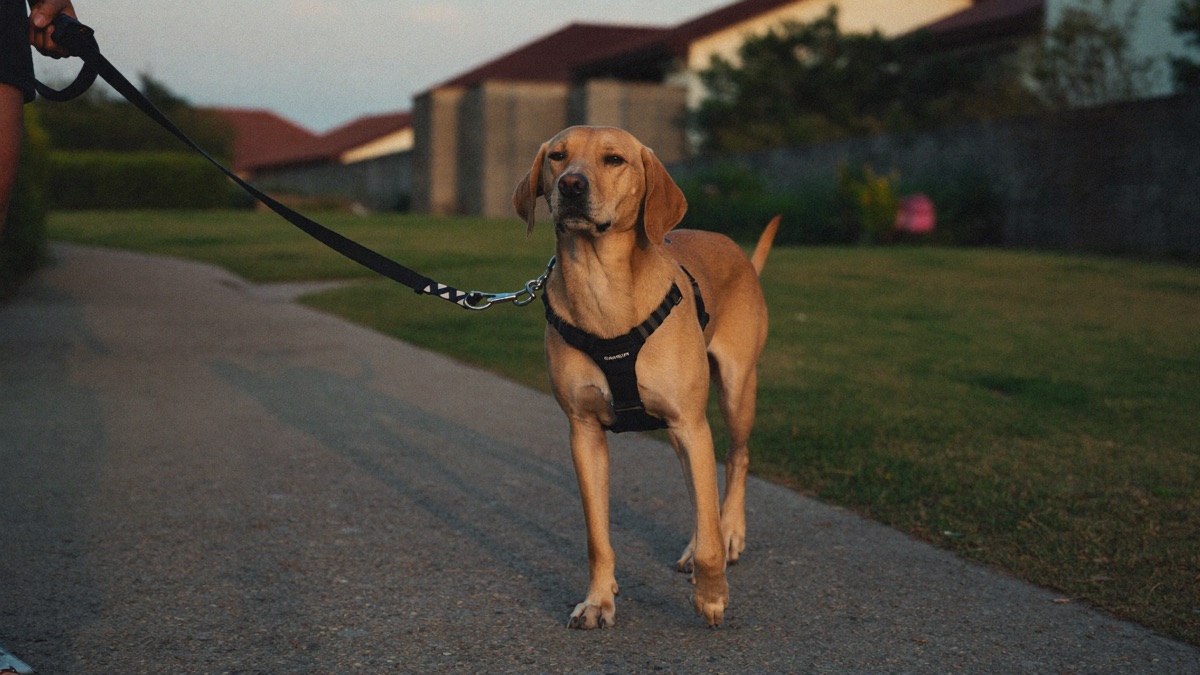
- Tag the collar with a current mobile number, and use a well-fitted harness for the evening walk — scared dogs reverse out of flat collars with ease.
- Close the flat. Windows, balcony doors and gates shut before dusk; a screen door alone has never stopped a panicking dog.
When should I talk to the vet about medication?
If your dog trembles and drools for hours, won't eat, injures itself, damages doors or grilles, or toilets indoors from fear, that's a noise phobia — and phobias escalate year on year without treatment. Modern event medications, given before the noise starts, take the terror out of the night and are considered humane, standard care; severely affected dogs may do best with daily medication through a heavy season like CNY-to-NDP, alongside the DSCC work. Pressure wraps (S$50-90 as of 2026) and pheromone diffusers are reasonable low-risk add-ons for mild cases, not substitutes for the vet conversation in severe ones.
Book the appointment weeks ahead — vets are flooded with same-day panic calls every CNY eve, and most event medications work best when trialled on a quiet night first. The calendar tells you exactly when the next test is; use it.