Which noises trigger dogs here?
Each major trigger has its own dedicated plan on this site; this guide is the map.
Scroll sideways to compare all columns →
| Trigger | Pattern | Guide |
|---|---|---|
| Thunder | Year-round afternoon storms, arrives with pressure and light cues | Thunder fear plan |
| Fireworks | Predictable calendar: CNY, NDP and rehearsals, Deepavali, NYE | Fireworks survival plan |
| Renovation drilling | Weekday 9am-5pm blocks for weeks; vibration through concrete | Renovation noise guide |
| Household appliances | Vacuums, blenders, hairdryers — close-range, sudden onset | Vacuum fear fix |
Dogs generalise poorly, so calm in storms doesn't transfer to fireworks — but untreated phobia of one noise commonly spreads to others, which is one more reason to intervene early.
Why does noise phobia get worse without treatment?
Because of sensitisation. Habituation — "he'll get used to it" — happens with mild, meaningless sounds. Frightening sounds work the other way: each exposure the dog cannot predict or escape strengthens the fear pathway, the reaction starts earlier and runs bigger, and the brain begins flagging predictive cues — darkening sky, the lift lobby smell of cement, the vacuum cupboard opening — as threats in their own right. That's how a dog that once flinched at thunder ends up pacing an hour before the storm. Waiting is not a neutral choice; it is how mild cases become severe ones.
How severe is my dog's noise fear?
Be honest about where your dog sits, because the right response differs by grade:
- Mild: startles, orients to the sound, recovers within a minute; still takes treats. → DSCC training alone usually fixes this.
- Moderate: pacing, panting, clinginess or hiding for the duration; food refusal during events. → DSCC plus event management (den, masking), and a vet conversation is reasonable.
- Severe: trembling and drooling for hours, hiding long after the noise ends, destruction around doors and windows. → Vet visit now; behaviour work needs medication support.
- Extreme: panic self-injury — broken teeth and nails from cage or grille escape attempts, jumping from height, bolting blindly through traffic. → Urgent veterinary case; this grade is dangerous.
Anything from grade 2 up, and any dog whose signs are escalating year on year, deserves professional help. Cross-check the broader stress picture with our dog anxiety signs guide.
What does a good sound-masking setup look like?
Masking doesn't erase noise; it shrinks the contrast between silence and bang, which is what triggers the startle.
- Location: the most interior room — usually a bathroom-adjacent bedroom or walk-in wardrobe in a flat — away from windows and the facade.
- Steady broadband sound: air-con or a fan for the base layer, plus white/brown noise or normal-volume TV. Start it before the noise event, not after the first bang.
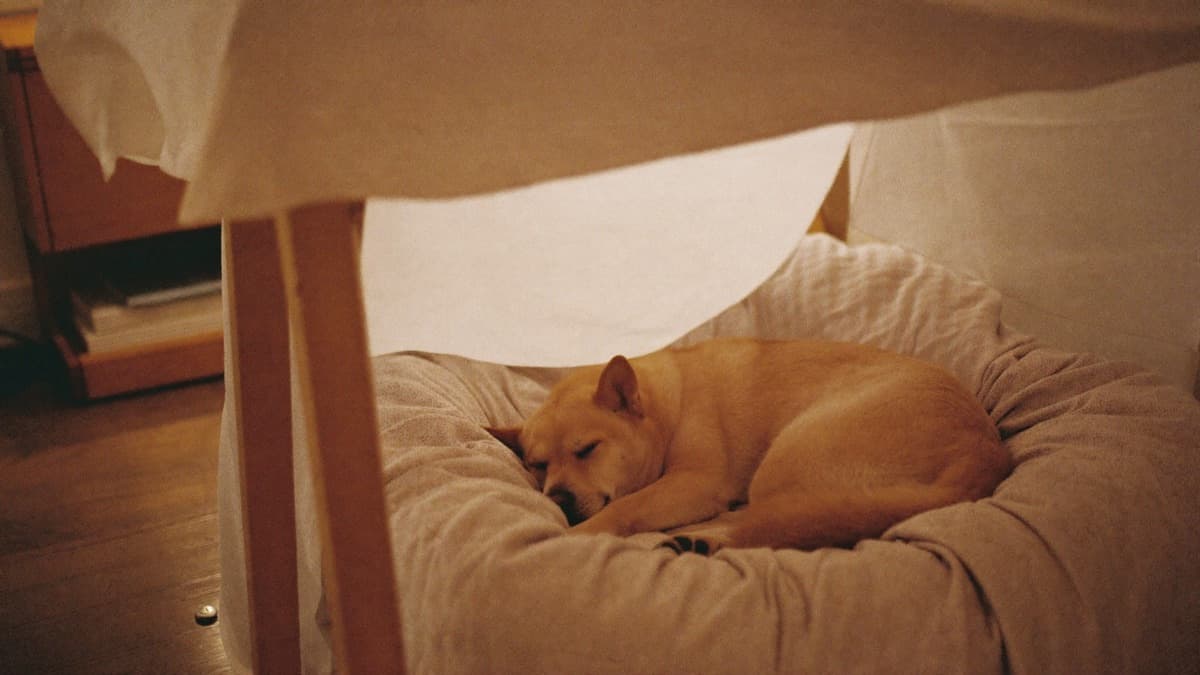
- A den within the room: a crate or table draped in thick blankets, door always open, familiar bedding. Never lock a panicking dog inside.
- Soft furnishing: rugs, curtains and a mattress absorb reflections and, importantly, decouple a lying dog from floor vibration.
- Something to lick or chew: a frozen lick mat or long chew, because licking and chewing are self-settling — and a dog still eating is a dog still coping.
Should my dog be on medication for noise phobia?
For moderate-to-severe cases, yes — and it's worth saying plainly: using medication for noise phobia is standard, humane veterinary care, not a failure of training or character. Modern options fall into a few categories your vet will choose between: fast-acting event medications given shortly before predictable noise (an oromucosal gel licensed specifically for noise aversion, such as Sileo, is one example), situational anti-anxiety drugs in the gabapentin category used ahead of storms or renovation days, and daily background medication for dogs facing a long season or whose anxiety has generalised. What no dog should get is old-style sedation that immobilises the body while leaving the terror running — that era is over. Trial any new medication on a quiet day first, and combine it with DSCC training: medication lowers the fear enough for learning to happen; the training does the lasting repair.
Does comforting my dog make the fear worse?
No — this myth refuses to die, so let's bust it again. Fear is an emotion, and emotions don't obey reinforcement the way behaviours do; you cannot pat terror into becoming more frequent. If your dog seeks you out mid-storm, calm, boring comfort is exactly right. What genuinely worsens noise phobia: punishing fearful behaviour, dragging the dog towards the noise to "show it's fine", and leaving a severely phobic dog alone on a night you know will be loud. Be the safe, predictable fixture in the room — and get the vet involved early, because with noise phobia, early is everything.