| Quick facts | |
|---|---|
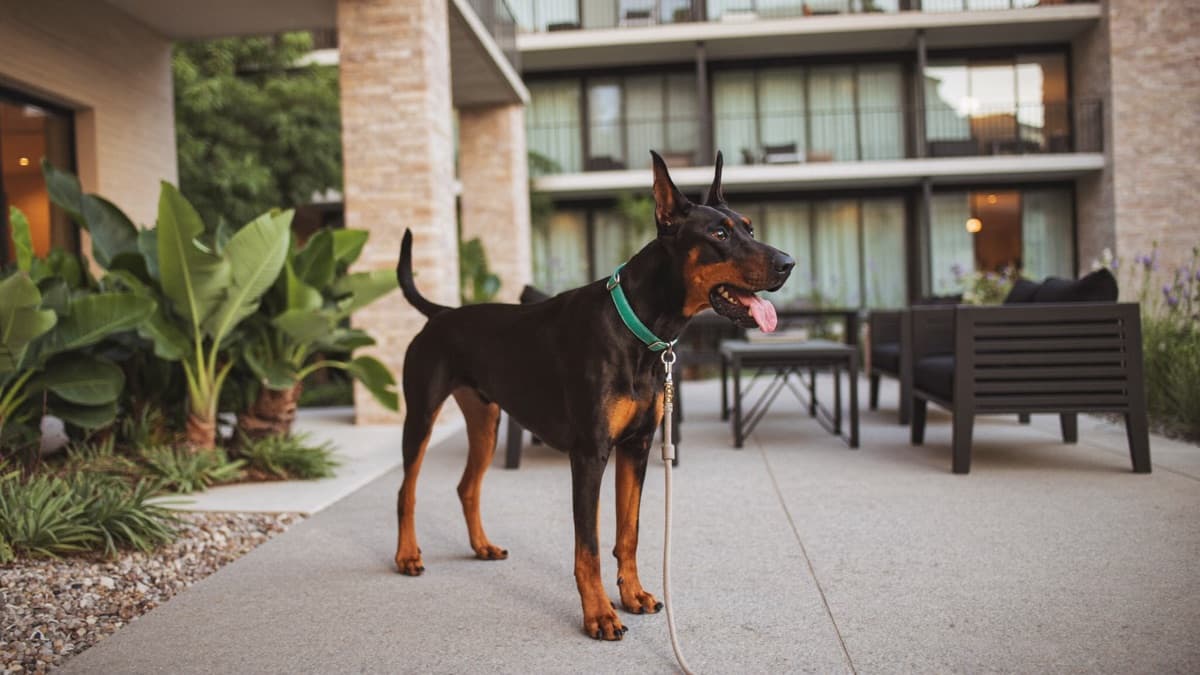
| Size | Large (61–72 cm at the shoulder) |
| Weight | 27–45 kg |
| Lifespan | 10–12 years (often shortened by heart disease) |
| Coat | Short, thin single coat; light shedding |
| Exercise | High — 90+ minutes daily plus mental work |
| HDB-approved | No — private housing only in Singapore |
Are Dobermans as fierce as their reputation?
No, and the gap between reputation and reality is the first thing to understand. The Doberman was created as a personal protection dog, but decades of breeding have produced a modern dog that is intensely people-oriented, sensitive, and often comically clingy — owners joke about 40 kg lap dogs. Well-bred, well-socialised Dobermans are among the most trainable of all breeds and typically gentle with their families, including children.
The honest caveats: this is still a large, fast, powerful dog with natural watchfulness, and a poorly bred or unsocialised Doberman is a serious liability in a way a poorly raised Maltese is not. They are also emotionally demanding — a Doberman left alone and unstimulated becomes anxious, vocal, and destructive, and some develop compulsive behaviours like flank-sucking. Buy only from breeders who prioritise temperament and health testing, socialise heavily from puppyhood, and give this dog a job, even if the job is daily obedience games and long runs.
What is DCM and why does every Doberman owner need to know about it?
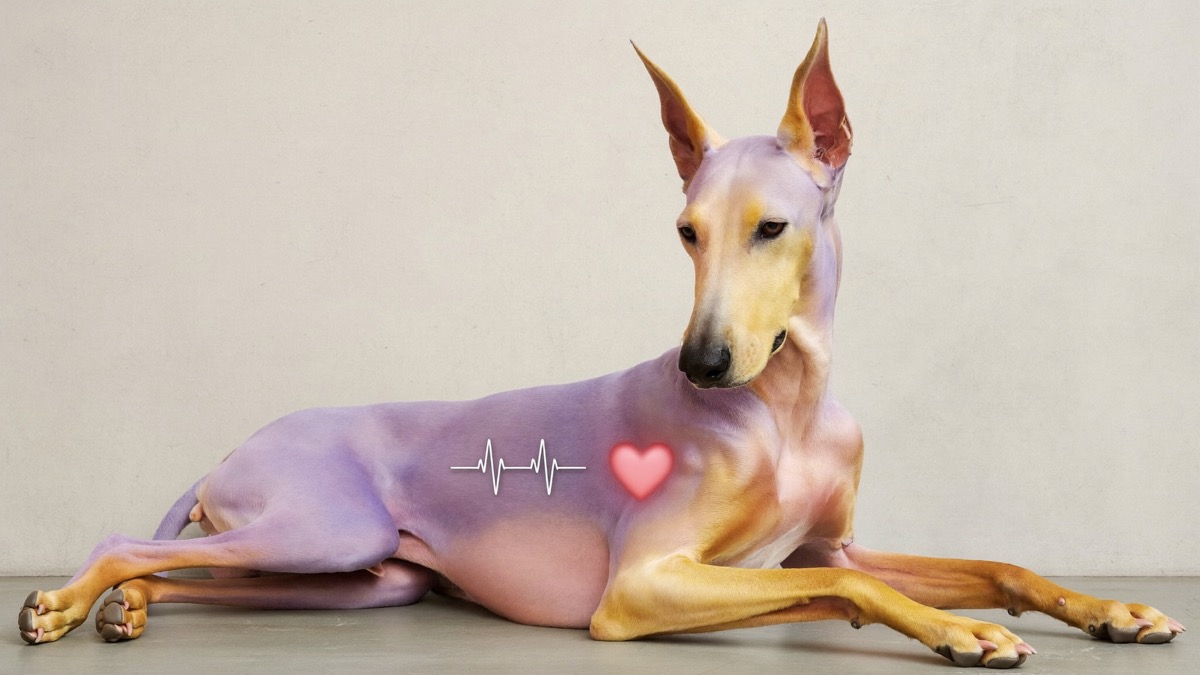
Dilated cardiomyopathy (DCM) is the breed's defining health problem. The heart muscle progressively weakens and stretches, pumping less effectively until arrhythmia or heart failure follows — and the cruel feature is a long silent phase where the dog looks completely healthy. Studies in Dobermans suggest lifetime rates around 40 to 60 percent, among the highest of any breed, and the first visible sign can be sudden collapse or sudden death.
This is why screening is not optional with this breed. From roughly age three, an annual cardiac work-up — an echocardiogram plus a 24-hour Holter ECG to catch arrhythmias an echo misses — detects occult DCM years before symptoms. Caught early, medication such as pimobendan meaningfully delays the onset of heart failure. Ask breeders for the parents' recent cardiac results, not results from years ago, since DCM develops with age. Budget for screening as a fixed annual cost of Doberman ownership.
Von Willebrand's disease is the second breed-specific issue: an inherited clotting disorder common in Dobermans. Affected dogs can bleed excessively during surgery or injury. A simple DNA test identifies status — reputable breeders test all breeding stock, and your vet should know your dog's status before any surgery, including neutering. Also on the list: hypothyroidism, cervical spine instability (wobbler syndrome), and bloat — as a deep-chested breed, know the emergency signs of a swollen, unproductive-retching dog.
How much grooming does a Doberman need?
Almost none — a weekly rubber-mitt session, occasional baths, plus nails and teeth. What the thin coat costs you instead is protection: no insulation against sun on the skin and no padding on pressure points, so provide soft bedding to prevent elbow sores.

Can a Doberman live happily in Singapore or Malaysia?
Physically, better than most large breeds. That thin single coat is well suited to the tropics — Dobermans shed heat efficiently and handle warm, humid weather with sensible precautions. The specific tropical points: a dark, short coat absorbs sun quickly and offers the skin little protection, so avoid extended midday sun, walk at dawn and dusk, and always provide shade and water. In heavily air-conditioned homes they can genuinely get cold, which they will solve by claiming your sofa.
Housing is the constraint. Dobermans are not HDB-approved — in Singapore this is a private-housing breed only, and it is also scheduled under AVS rules that require measures such as leashing and muzzling in public for certain breeds, so check current AVS requirements carefully before committing. Many condos restrict large or listed breeds through their own by-laws. In Malaysia, several local councils restrict or condition Doberman ownership; verify your council's rules first.
Who should not get a Doberman?
Skip this breed if you are a first-time owner, live in an HDB flat, cannot fund annual cardiac screening, or want a low-contact outdoor guard dog — a Doberman exiled to a yard is a wasted, unhappy dog. For an experienced owner offering training, exercise, and genuine companionship, a well-bred Doberman is a devoted, brilliant partner; just go in with your eyes open about its heart.
Related guides: Doberman rules and prices in Malaysia.