| Quick facts | |
|---|---|
| Size | Toy (23–27 cm at the shoulder) |
| Weight | 4–7 kg |
| Lifespan | 10–16 years |
| Coat | Long double coat of hair; low shedding, high maintenance |
| Exercise | Light — two short walks plus indoor play |
| HDB-approved | Yes — check the current approved list |
What is a Shih Tzu's temperament really like?
Bred for centuries as a palace lap dog, the Shih Tzu's whole purpose is companionship, and it shows. Most are sweet, sociable, and tolerant — good with considerate children, other dogs, and visitors. They are less yappy than many small breeds and adapt well to quiet flat living.
The hard parts are real, though. Shih Tzus are famously stubborn about house-training; expect months of patient, consistent reward-based work, and accept that some are never perfectly reliable indoors. They can be wilful in training generally — not unintelligent, just unbothered by your agenda. And because they bond so closely with their people, many struggle when routinely left alone for full working days. A Shih Tzu in a household that is out ten hours a day is a recipe for distress and neighbour complaints.
Health: what goes wrong with Shih Tzus
The face is the headline issue. The Shih Tzu is a brachycephalic breed, and some individuals have brachycephalic obstructive airway syndrome (BOAS): narrowed nostrils, an overlong soft palate, and a compromised airway. Signs include noisy breathing, snoring, gagging, and poor exercise tolerance. Severity varies widely between individuals — ask a vet to assess the airway rather than assuming snoring is cute. Severe cases benefit from corrective surgery, ideally young.
Those large, prominent eyes sit in shallow sockets with little protection. Corneal ulcers and scratches are common and can escalate fast; dry eye (keratoconjunctivitis sicca) and eyelash disorders also run in the breed. Any squinting, pawing at the eye, or sudden cloudiness is a same-day vet visit, not a wait-and-see. Other breed risks worth screening for: luxating patellas (slipping kneecaps), dental crowding and early periodontal disease in that short jaw, ear infections under all that hair, and renal dysplasia in some lines. Buying from a breeder? Ask for eye and patella checks on both parents. Adopting through a group like the SPCA in Singapore gets you a vet-assessed dog with known issues disclosed.
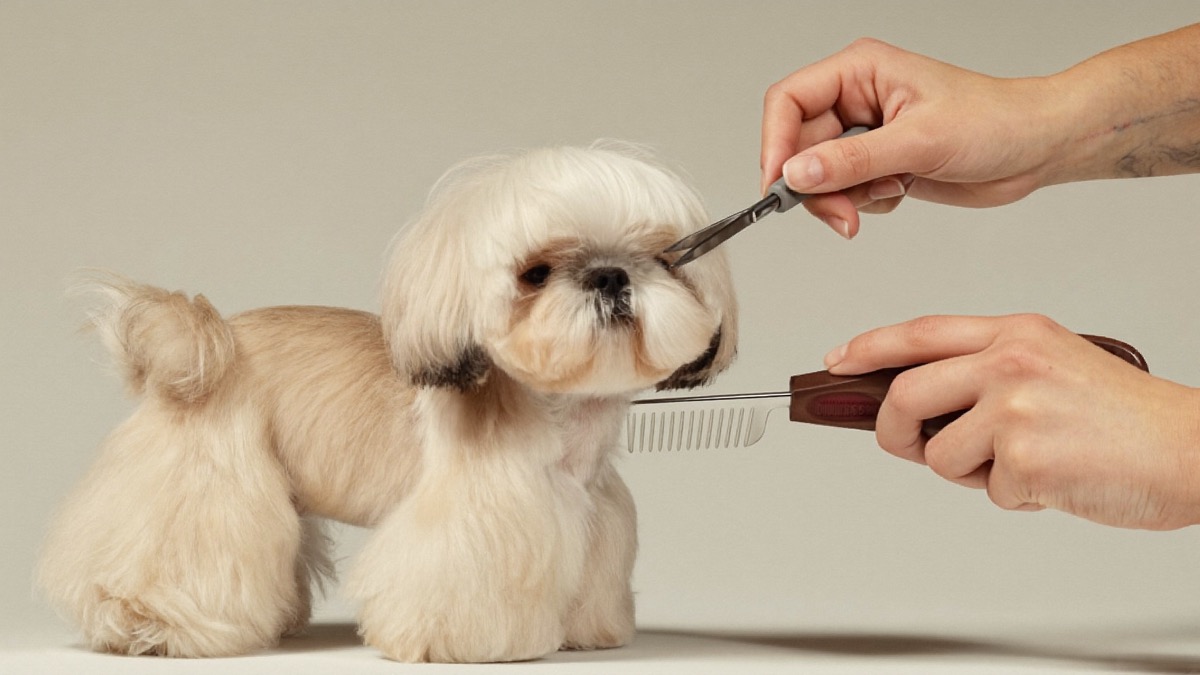
Grooming in a humid climate: long coat or puppy cut?
In airconditioned show homes, a floor-length Shih Tzu coat is achievable. In real Singapore and Malaysia households, it means 20–30 minutes of line-brushing daily, because humidity plus a fine double coat equals mats — and mats near the skin trap moisture and trigger hot spots and skin infections.
Most local owners sensibly keep a puppy cut: 1–2 cm all over, professionally clipped every 4–8 weeks. You still brush a few times a week, wipe the face daily (food and tear staining collect in facial hair), keep hair trimmed away from the eyes, and clean ears regularly. Budget roughly S$60–100 or RM80–150 per grooming session. A short coat also helps modestly with heat — though the flat face, not the coat, is the main overheating problem.
What human foods can a Shih Tzu eat safely?
A Shih Tzu can safely share small amounts of plain fruit and plain cooked meat, but the portions stay tiny — a cube or two, no skin, seeds, bones, salt, sugar or sauces. Their small stomach upsets easily and their flat face makes large or hard pieces a real choking risk, so cut everything small and introduce one food at a time.
Scroll sideways to compare all columns →
| Food | Safe for a Shih Tzu? | Keep in mind |
|---|---|---|
| Pineapple | Yes — 1–2 small cubes | Flesh only; skip skin, core and pineapple tarts |
| Papaya | Yes — 1–2 small cubes | Ripe orange flesh; deseed and peel |
| Tofu | Yes — plain, 1–2 cubes | Skip fried tau pok and anything sauced |
| Fish | Yes — cooked and deboned | No fish balls or fried fish |
| Pork | Only plain, cooked | No char siu, bak kwa or bones |
Keep all treats under 10% of daily calories, and remember a 4–7 kg Shih Tzu needs far less than the medium-dog amounts most food guides quote. When in doubt, the safe rule is: share the plain ingredient, never the seasoned dish.
Can a Shih Tzu live happily in Singapore or Malaysia?
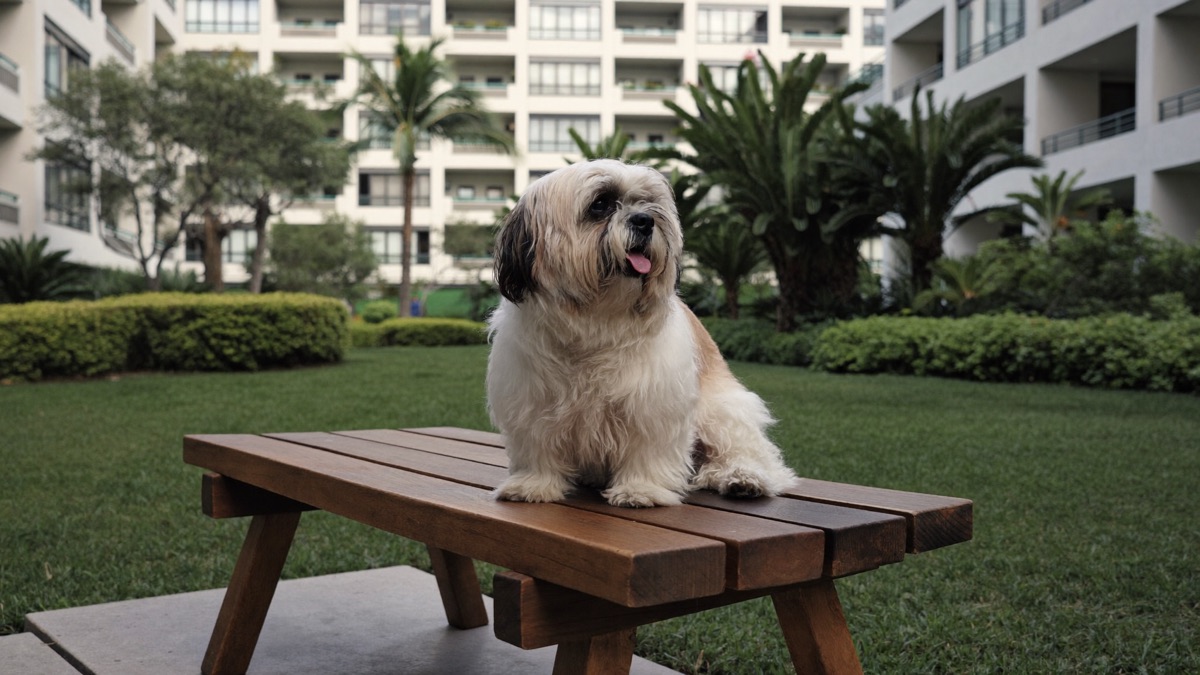
Yes — this is one of the best-suited pedigree breeds for the region, provided you respect the heat. A flat-faced dog cannot cool itself efficiently by panting, so treat the tropical midday as off-limits: walk before 9am and after 6pm, carry water, keep walks short, and never leave the dog in a car or an unventilated room. At home, air-conditioning or strong airflow during the hottest hours is genuinely a welfare issue for this breed, not a luxury. Heavy panting, a purple tongue, or collapse means active cooling and an emergency vet immediately.
Apartment fit is excellent: modest exercise needs, low shedding, and a generally calm indoor manner. For HDB dwellers, the Shih Tzu is on the official approved list — verify the current list on HDB's Keeping Pets page before committing, since rules can change, and remember only one approved dog is allowed per flat. In Singapore, every dog must also be microchipped and licensed with AVS; in Malaysia, licensing runs through your local council (DBKL, MBPJ, and others), with some councils restricting dogs in high-rise strata housing — check your management corporation's house rules first.
The verdict: a superb companion for someone home often, willing to groom, and disciplined about heat. A poor fit for long-hours households or anyone hoping for a wash-and-wear, jog-at-noon dog.