Is dragon fruit safe for dogs?
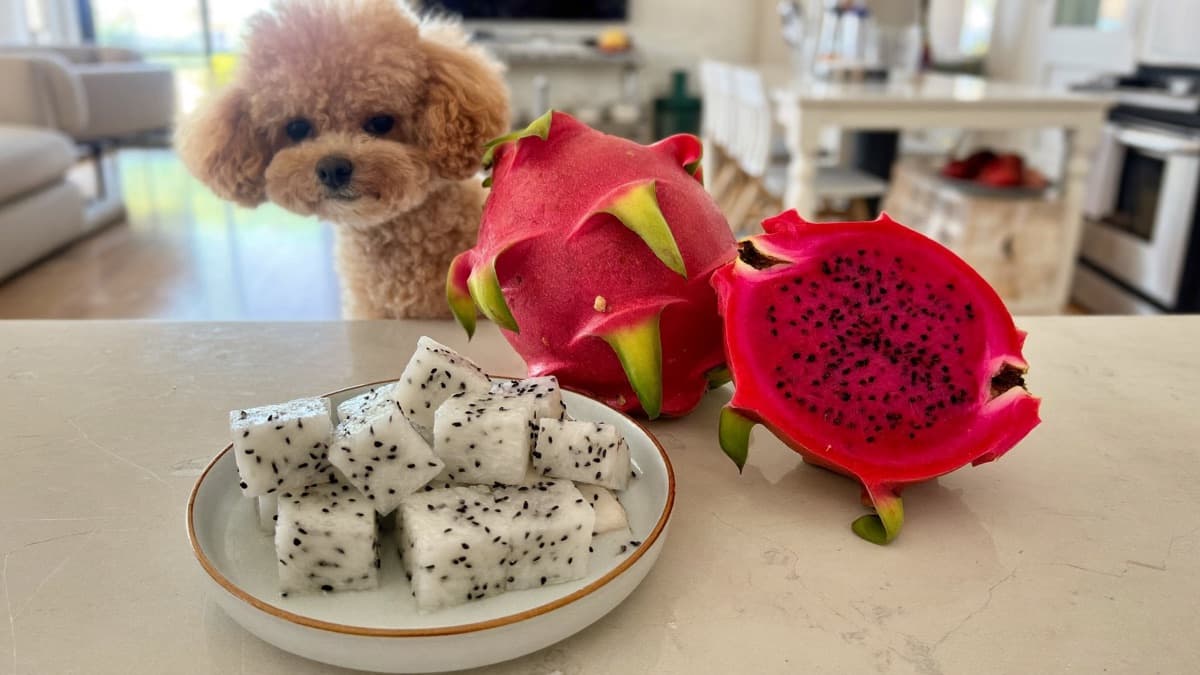
Entirely. Dragon fruit (pitaya) contains nothing toxic to dogs in either the white or red variety, and the yellow-skinned type is safe too. The flesh is about 85% water, low in fat, and carries vitamin C, fibre, and antioxidants — in the red variety, the same betalain pigments that make beetroot dramatic. The seeds are soft specks, not hard pits, so there is no cyanide-style worry and no choking geometry.
The only parts to withhold are the leathery skin and the green scales, which are tough, indigestible, and capable of upsetting a stomach or, in swallowed chunks, causing a blockage.
Why is my dog's poop red after dragon fruit?
Say it plainly, because this single question sends more owners to Google in a panic than anything else about this fruit: red dragon fruit dyes poop — and sometimes urine — pink to red, and it is harmless.
The red flesh is coloured by betacyanin, a plant pigment that a dog's gut barely breaks down. It goes in vivid pink and comes out much the same way, usually within a day, occasionally two. The same thing happens to people, and the same thing happens with beetroot.
How to tell pigment from a real problem: pigment-tinted stool is otherwise normal — formed, regular schedule, attached to a bright and hungry dog, and you can point to the dragon fruit it ate yesterday. Blood in stool tends to look dark and tarry (digested blood) or arrives as red streaks with a dog that is straining, listless, or off its food. Pink poop plus a happy dog plus yesterday's dragon fruit equals nothing to treat.
How much dragon fruit is safe for my dog?
Dragon fruit is mild in flavour but still a fruit, which means natural sugar. Keep it in the treat budget — under about 10% of daily calories — and be conservative with overweight or diabetic dogs.
Scroll sideways to compare all columns →
| Dog size | Example breeds | Safe portion per day |
|---|---|---|
| Small (under 10 kg) | Chihuahua, Toy Poodle, Shih Tzu | 1–2 small cubes |
| Medium (10–25 kg) | Beagle, Singapore Special, Border Collie | 2–4 cubes (about a tablespoon or two) |
| Large (over 25 kg) | Labrador, Golden Retriever, GSD | A few tablespoons of cubed flesh |
The high water and fibre content means overdoing it produces soft stool — pink soft stool, if it was the red variety, which is an alarming combination that is still entirely harmless.
How should I prepare dragon fruit for a dog?
Halve the fruit, scoop the flesh with a spoon, and cube it — thirty seconds of work. Serve it fresh, or freeze cubes for a cooling treat on a humid afternoon. Skip dragon fruit that arrives pre-dressed: fruit salads with syrup, smoothie bowls with condensed milk, and dessert versions all add sugar the dog does not need.
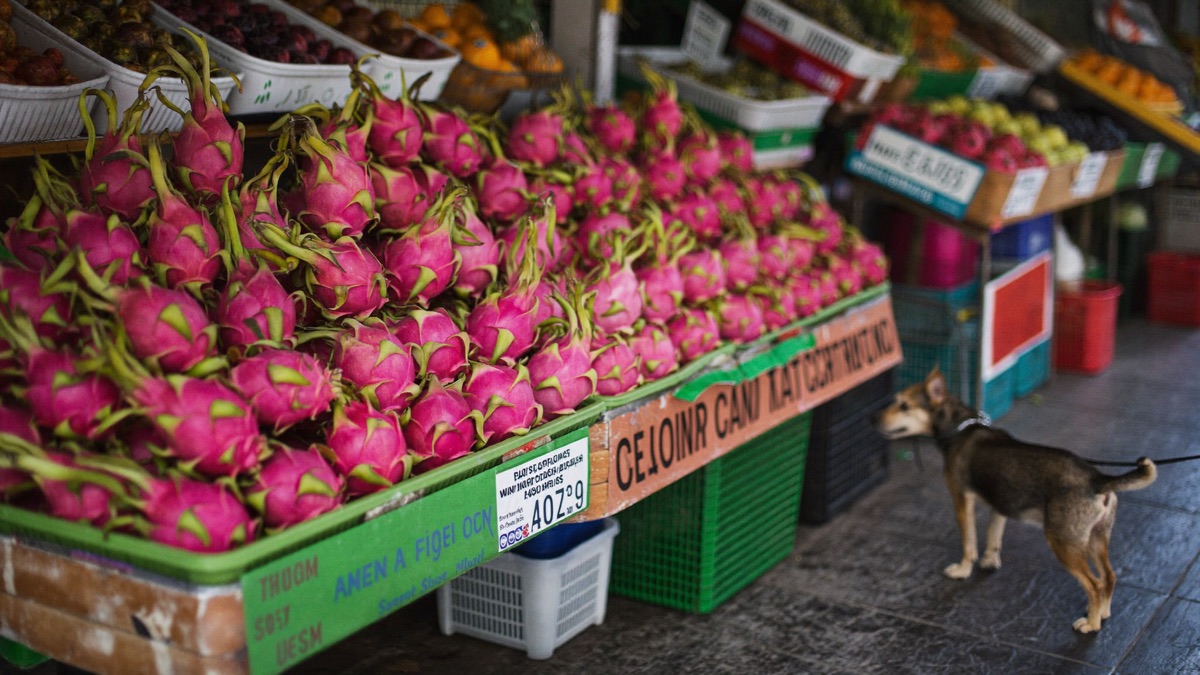
This is one of the easiest local fruits to share. Dragon fruit is a fruit-stall staple across Singapore and Malaysia year-round, it is cheap, and one fruit covers your breakfast and a week of dog-sized portions.
When should I call the vet?
Dragon fruit rarely causes trouble, but call your vet if:
- Vomiting or diarrhoea continues beyond 24 hours — pigment explains colour, not persistent illness
- Your dog swallowed a large piece of skin and is retching, straining, or refusing food — possible obstruction
- You see red in the stool more than two days after the last dragon fruit, or the dog is listless, straining, or off its food — that is no longer a pigment story
For anything urgent, head to your nearest 24-hour clinic — in Malaysia, the Department of Veterinary Services is the national animal-health authority for official guidance.
Which fruit-stall neighbours are the real danger?
Dragon fruit's safety is worth contrasting with what sits beside it at the stall. Grapes — and their dried forms in raisin bread and kueh — can cause kidney failure in dogs with no established safe dose. Durian is extremely fatty even where it is beloved. Fruit pits and seeds from mango, longan, and rambutan are choking and obstruction hazards even though the flesh around them is fine in moderation. Dragon fruit, with its soft safe seeds and dramatic-but-innocent pigment, is one of the least complicated things you can bring home from the fruit stall.