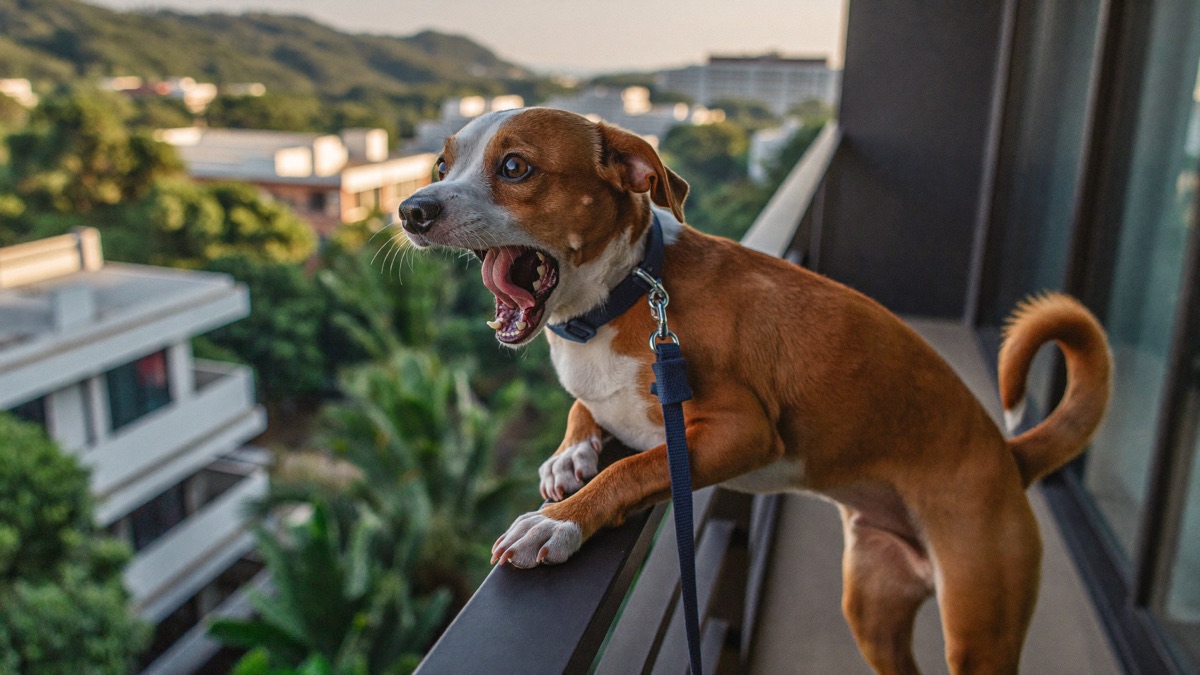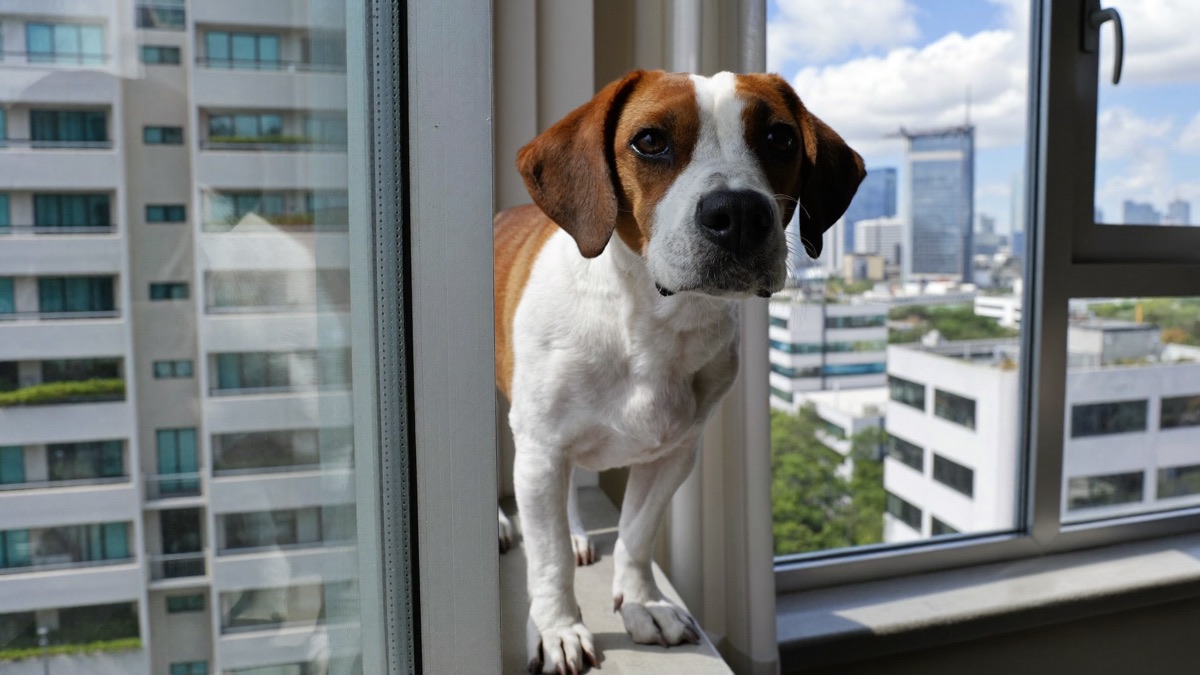
Is my senior dog's night barking medical?
If your dog is over seven or so, start here, not with training. Two conditions specifically peak at night:
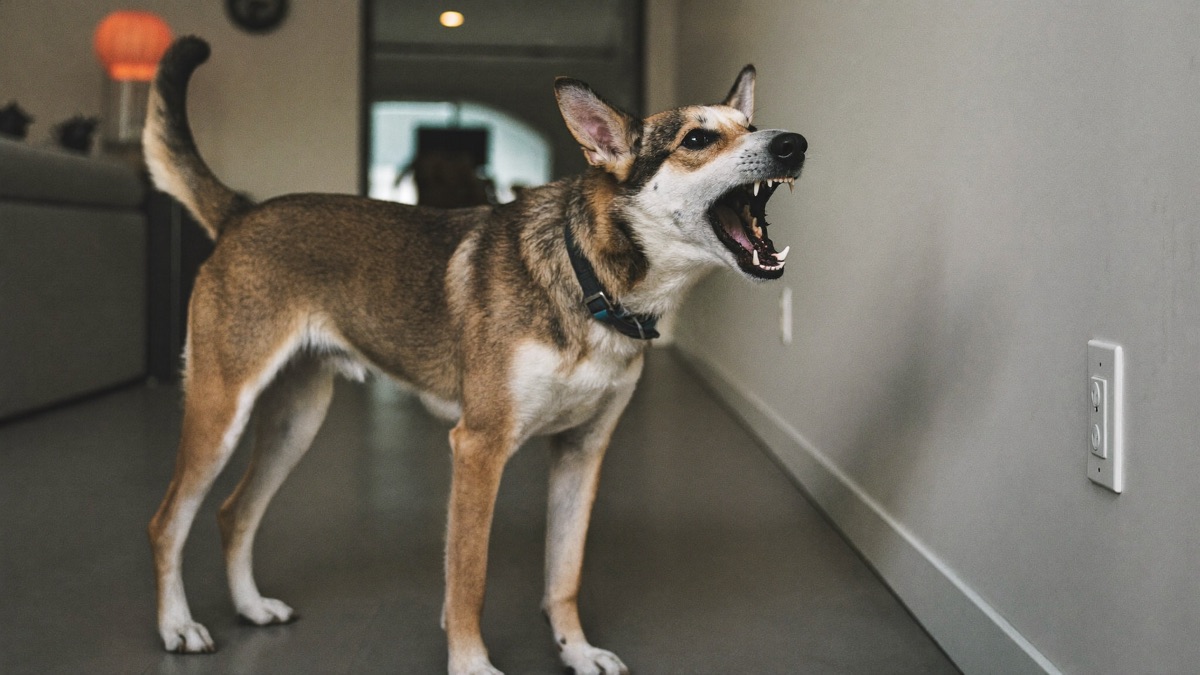
Sundowning (canine cognitive dysfunction). New barking at walls, corners, or empty rooms after dark — often with pacing, getting stuck behind furniture, staring, day–night reversal, or house-soiling — is a recognised pattern of canine cognitive dysfunction, the dog equivalent of dementia. Confusion worsens in the evening and small hours, which is why an affected dog can seem normal all day and lost at 2am. This is under-reported because owners file it as quirky ageing; it shouldn't be, because early management genuinely slows it. Our dog dementia guide has the full signs checklist and what the vet work-up involves.
Pain, usually arthritis. Joint pain is worst after hours of lying still on a cool floor, and a dog that can't get comfortable vocalises. Suspect it if the barking comes with repositioning, slow rising, stiffness on the first steps of the morning, or reluctance on stairs — the pattern-spotting guide is in signs of arthritis in dogs. Pain-driven night barking disappears when the pain is treated, which no amount of training will achieve.
A senior whose night barking started recently earns a vet visit before any environmental tinkering. In younger dogs, medical causes are less likely but not zero — itching, gut discomfort, and urinary urgency all surface at night too.
What is my dog actually hearing at 2am?
The night is louder than you think — you just sleep through the parts your dog doesn't. Dogs hear roughly four times further than humans plus an ultrasonic band we lack entirely, and at 3am there's no daytime noise floor masking anything. In an HDB block or condo: lift machinery running for shift workers, corridor footsteps, a neighbour's door, plumbing in the wall. Outside: community cats, rats in the service ducts, bats, monitor lizards in the drain, another dog three blocks over, the karang guni bugle at dawn. Your dog isn't barking at nothing — it's barking at a real event you're not equipped to perceive, a theme we unpack in dog barking at nothing. A cheap pattern-finder: set a phone to record overnight, note the barking timestamps, and you'll usually find the trigger repeats at the same hours.
Could my dog just need the toilet?
Do the honest check before assuming habit. A dog that barks once or twice, is standing at the door, and toilets immediately when taken out wasn't being dramatic — it needed to go, and answering that bark is correct. Recurring 2am toilet needs have their own causes worth fixing: dinner and last water too late, a last toilet break at 8pm that's simply too early for a twelve-hour night, or — in dogs drinking more than usual — a medical driver like kidney or urinary issues that warrants a vet check. Moving dinner earlier and adding a genuinely last-minute toilet trip at your bedtime solves a surprising share of "mystery" barking.
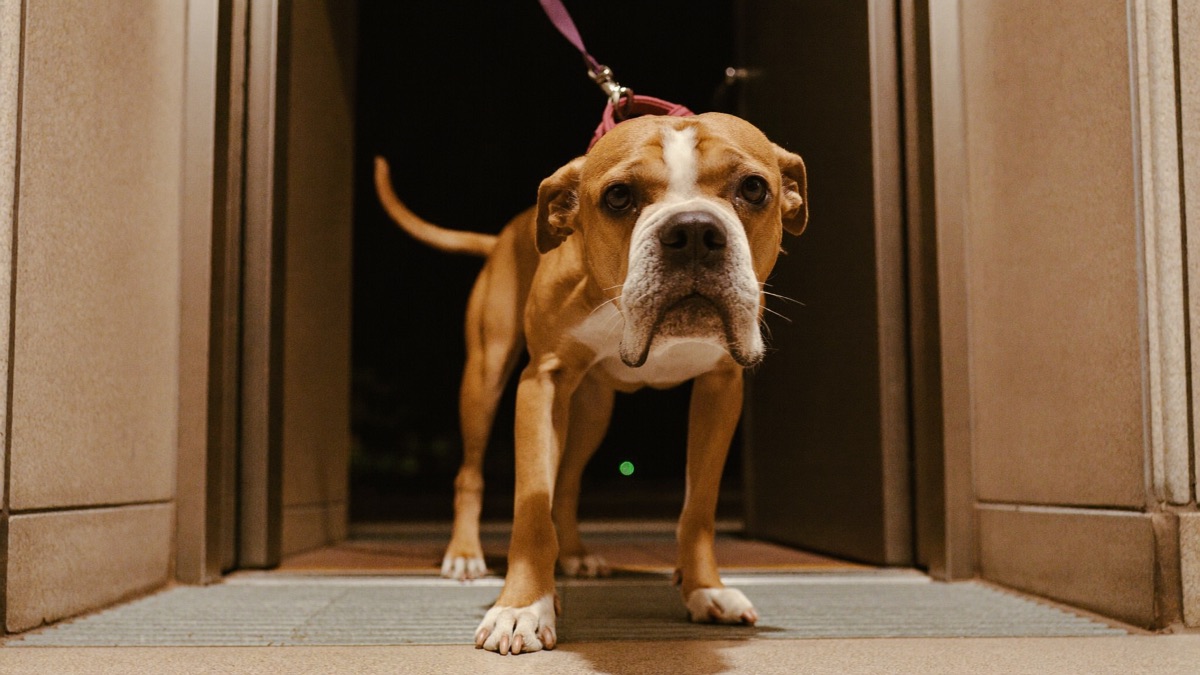
What can I change about the room?
Once health, sounds-worth-checking, and toilet needs are ruled out, engineer the night:
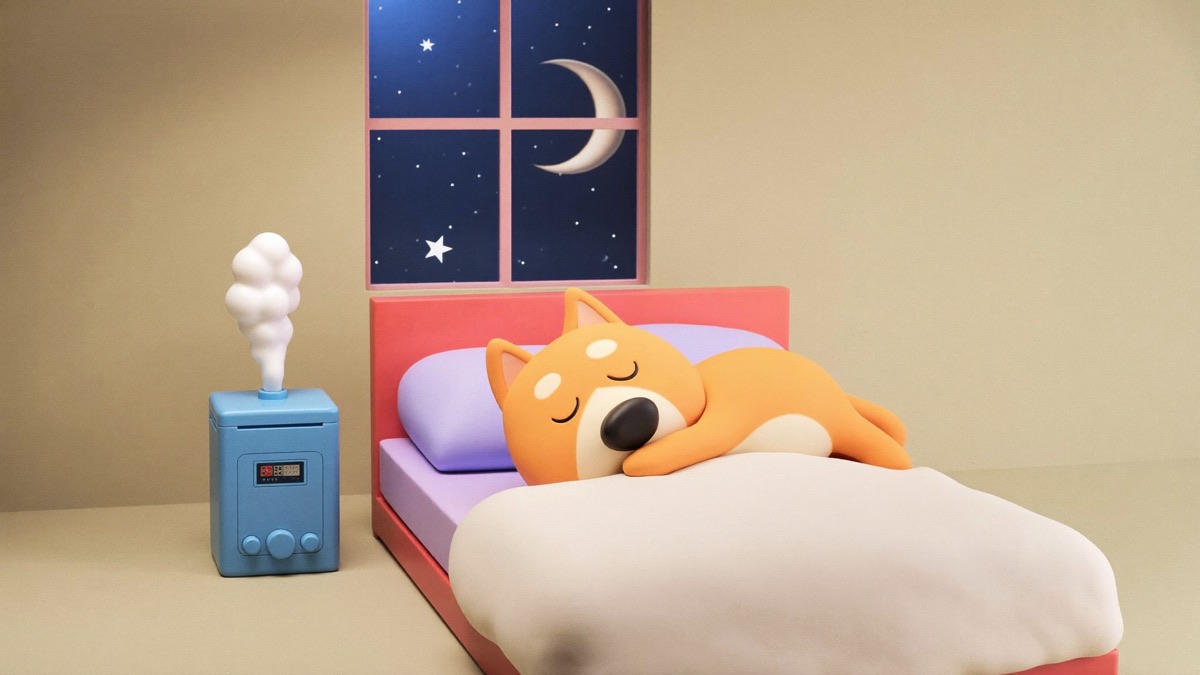
- White noise is the highest-value fix — a fan or white-noise machine near the dog's bed flattens corridor and outdoor sound spikes that trigger startle barking.
- Move the bed away from the front door, shared walls, and windows; a quiet corner of your bedroom is often the single change that ends the problem.
- Block sightlines — a dog that can see the corridor light strip under the door, or headlights sweeping the ceiling, has visual triggers too. Blackout curtains and a draught excluder are cheap.
- Raise the daytime baseline. An under-exercised dog sleeps lighter and patrols more; check the walking baseline and add an evening sniff walk.
One boundary on age: a new puppy crying in the night is a different problem with different rules — that's distress at first-time solitude, and the settling plan is in puppy crying at night, not this page.
Why should I never punish night barking?
Because barking is your dog's only channel for "something is wrong", and punishment doesn't teach "nothing is wrong" — it teaches "don't tell the humans". A dog suppressed out of night barking is also silent about the genuinely important events: the smoke it smelled, the person testing the gate, the pain that got worse. Punishment also adds stress to a moment that's usually confusion, discomfort, or alarm, which reliably makes night waking worse, especially in seniors. Find the reason, fix the reason, and keep the alarm system. For the full cause-by-cause method — and why every barking fix starts with the why — see how to stop dog barking.