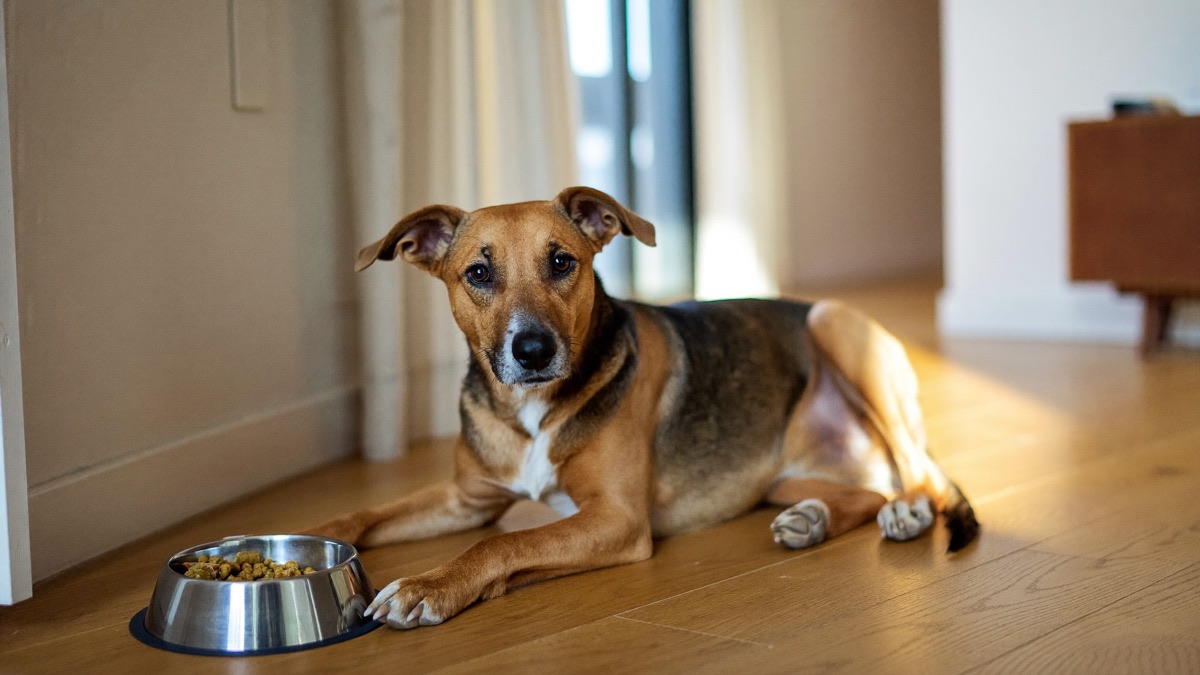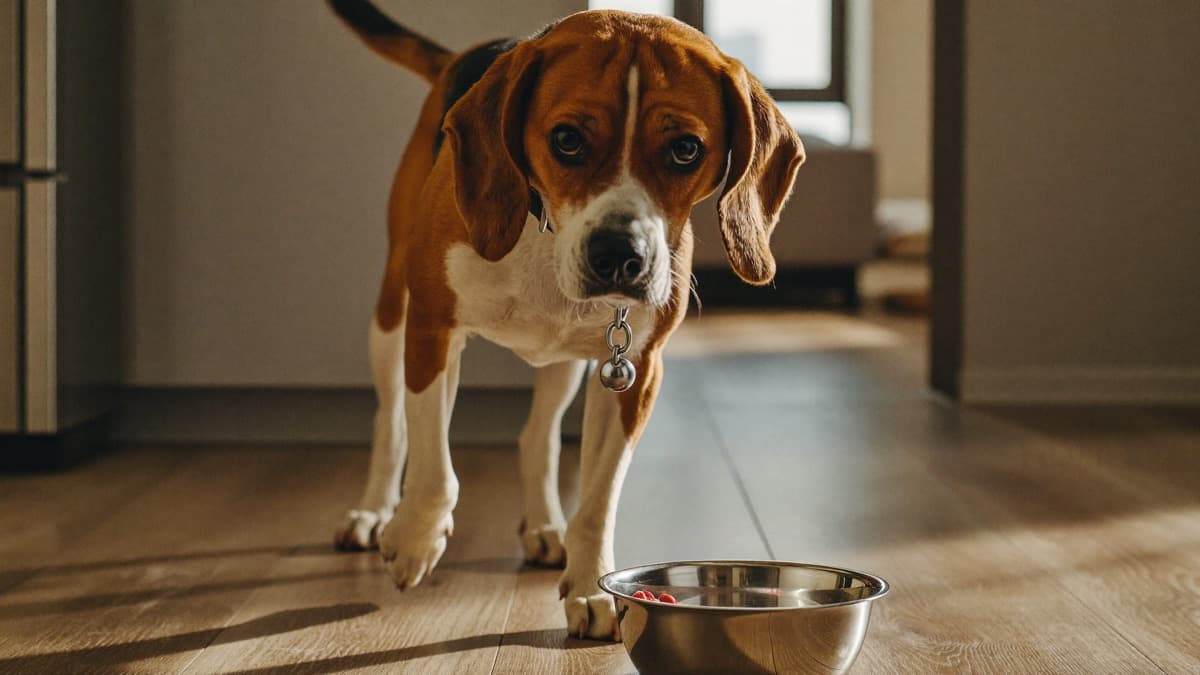
Why does my dog growl over food or toys?
A dog may act to retain food or another valued object. A growl is a reason to stop approaching, not an invitation to test how far the dog will go. VCA describes guarding of food and other possessions.
Possible signals include freezing, a fixed stare, growling, snapping or biting. Do not expect every dog to show every signal or follow a predictable sequence. Our dog body language guide gives broader context; no single posture proves that approaching is safe.
Why must I never punish a growl?
VCA advises against punishment and confrontation around food. If guarding occurs, quietly give space instead of scolding or reaching towards the dog. Note what happened and discuss it with your vet. Avoid assuming that a dog which has stopped growling is now comfortable.
What is the trade-up protocol?
If your dog has already shown guarding signals, consult your vet and a qualified behaviour professional before attempting approach or exchange exercises. VCA warns against taking an item from a dog showing aggression. The outline below describes a training concept, not instructions to approach a tense dog. Your professional should adapt the starting distance, equipment and steps to the individual case.
Discuss these points before starting:
- Prevent conflict now. How should meals, toys, children and other pets be managed while training is planned?
- Define a safe starting point. Which situations can the dog handle comfortably, and what signs mean the session must stop?
- Agree who does what. Who should practise, how will progress be recorded, and when should the vet or behaviour professional review the plan?
Do not use a tail wag or a single successful exchange as proof that an item is safe to take. If the dog becomes tense or threatens, stop and give space.
Should I put my hand in the bowl or take food away to "show who's boss"?
No. Leave the dog to eat undisturbed and keep people and other pets away from the feeding area. Do not put your hand in the bowl or take food away as a test. Ask a professional to plan any approach or exchange exercises, especially if guarding has already occurred.
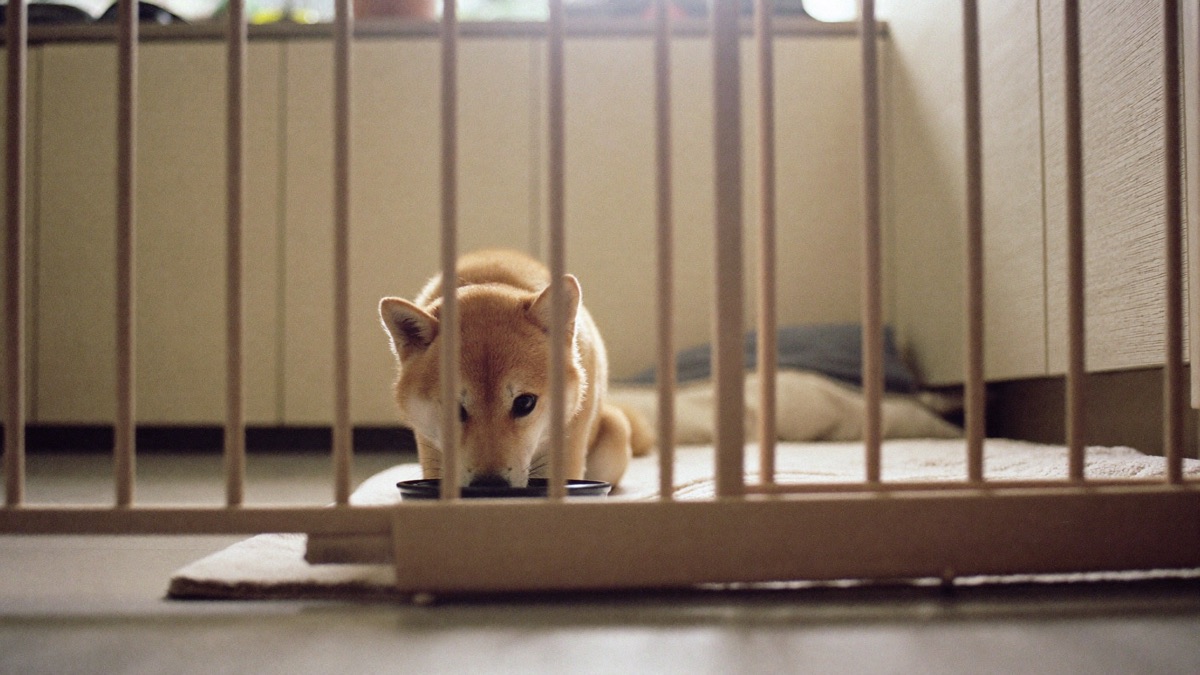
What are the kids-and-bowls rules?
Children need adults to manage the environment and prevent access to a dog guarding food or possessions:
- Nobody bothers a dog that is eating or has a chew. Not petting, not hugging, not "just saying hi." Feed the dog behind a baby gate or in a separate room if the household is busy.
- Kids never take anything from the dog. If the dog has something it should not, keep children away and follow the agreed professional plan. Do not reach for an item from a tense or threatening dog; contact your vet promptly if the object may be dangerous.
- Adults supervise, always. Toddlers and dogs are never alone together, guarding history or not.
- Teach kids the freeze. A dog that goes still over an item is saying "no" — the child's job is to back away and tell an adult.
When should I hire a professional?
Discuss guarding with your vet, particularly if it is new, escalating or involves snapping, biting or children. Ask about a qualified behaviour professional and an immediate household management plan.
In Singapore, the AVS accredited trainer directory is a starting point for checking credentials. Ask about relevant case experience, reward-based methods and coordination with your vet; a listing alone does not establish suitability for a bite-risk case. In Malaysia, ask your vet about local behavioural help.