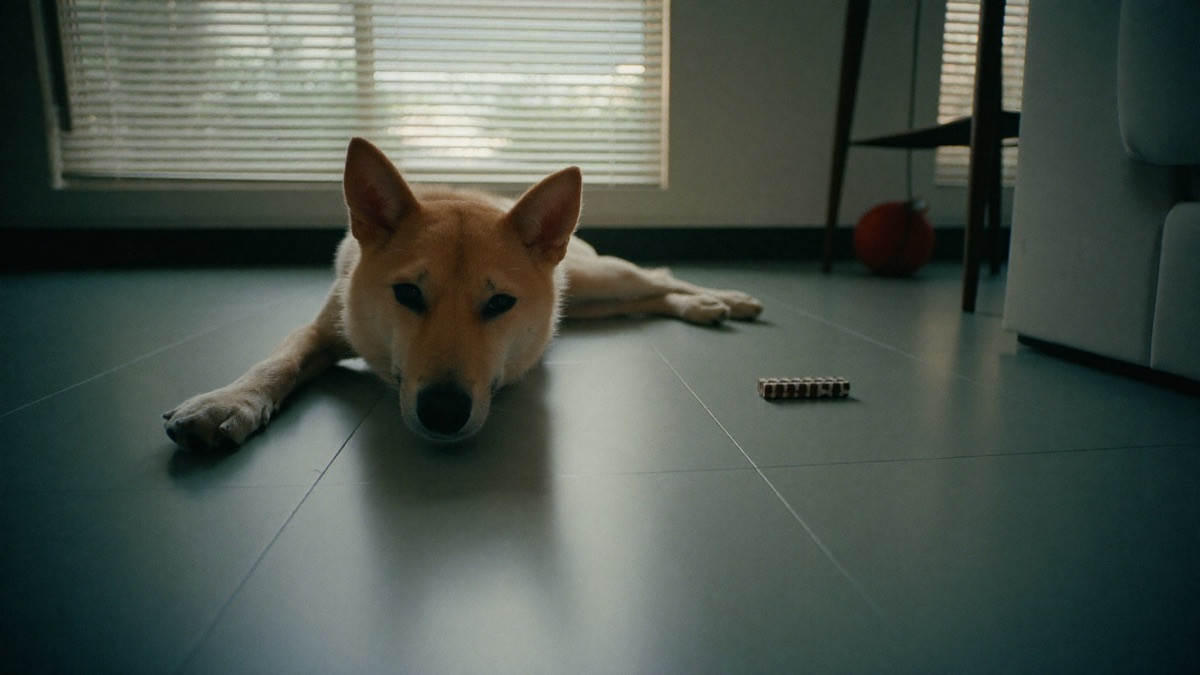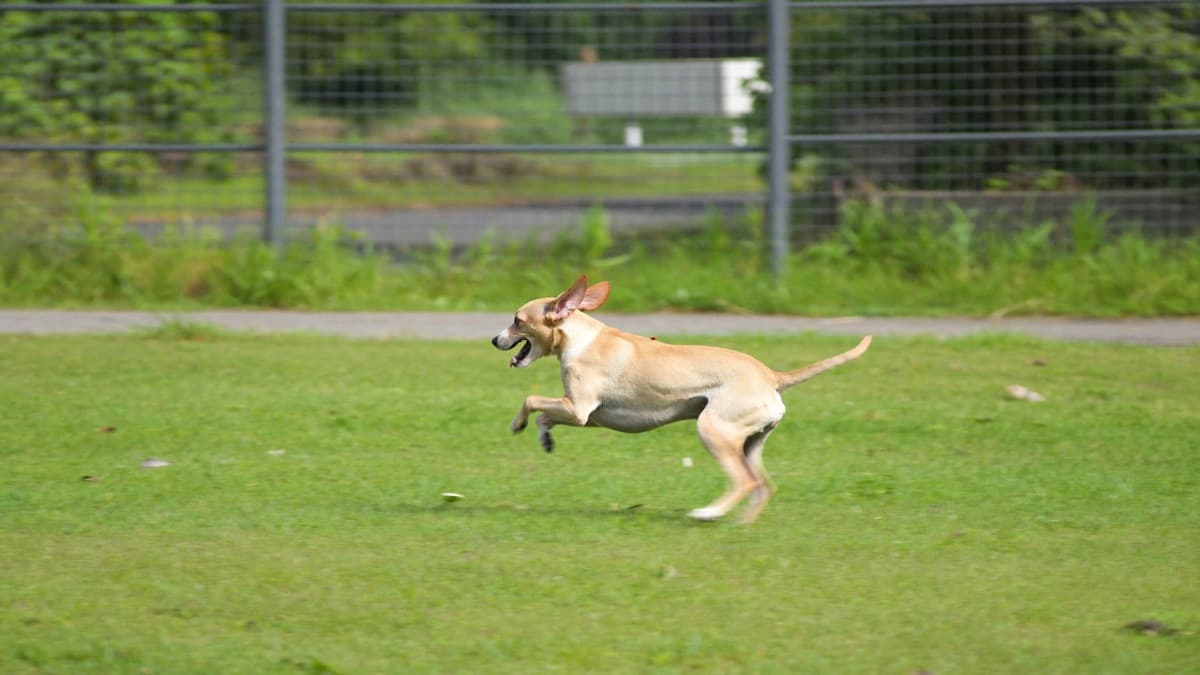
The bigger questions are the practical ones: what sets them off, when they signal an under-exercised dog, and how to keep a sprinting dog safe on tile floors in a small flat.
What triggers dog zoomies?
The classic triggers all share one theme — a spike of arousal or a release of held tension:
- Post-bath. Relief, the urge to dry off, and released handling tension in one package. Usually the most dramatic zoomies of all.
- Evenings. The "witching hour" FRAP, especially in puppies — a day's worth of unspent energy meets tiredness and lowered self-control.
- Post-poop. Genuinely common. Relief plus the general good mood of an emptied system; some dogs kick and sprint straight after.
- After crate time, grooming, or the vet. Any period of restraint or mild stress often ends in a shake-off, then a FRAP.
- Cool moments. In SG/MY heat, many dogs save their zoomies for air-conditioned rooms, rainy-evening walks, or the cool tail end of the day — sprinting in midday humidity is unappealing even to a Labrador.
- Contagious joy. A playmate's zoomies, your excited voice, the leash coming out.
A zooming dog often throws play bows mid-lap and carries a loose, grinning face — signals covered in our dog body language guide that confirm this is play, not panic.
When are zoomies a sign of a problem?
Zoomies are an overflow valve. A dog with a well-sized outlet — proper walks, sniffing, play, training — overflows occasionally and briefly. A dog whose only outlet is the overflow valve zooms constantly, and that's the flag:
- Multiple intense FRAPs daily, especially in an adult dog, usually mean the exercise budget is too small for the dog. Check it against our guide to how often you should walk your dog — apartment dogs in particular tend to be under-walked, and mental work (sniff walks, food puzzles, training games) drains the tank as effectively as distance.
- Zoomies you can't ever interrupt, that end in destructive behaviour or frantic spinning, or that replace rather than accompany normal play, deserve a closer look.
- Distress lookalikes. True zoomies are bouncy and loose. Frantic pacing, tail-chasing that becomes compulsive, sudden bolting with a tucked tail and wide eyes, or scooting and biting at the rear (think itch, parasites, or anal gland trouble) are not FRAPs — the first two are behavioural concerns, the last is a vet visit.
How do I keep zoomies safe in a small flat?
Zoomies themselves are harmless; tile floors and coffee tables are not. HDB and condo living is mostly ceramic tile, marble, and laminate — fast surfaces for a sprinting dog and a real slip risk, especially for puppies, seniors, and long-backed breeds like Dachshunds.
- Traction first. A rug or foam-mat "runway" along the usual zoomie circuit changes everything. Keep nails short and trim paw-pad fur — see our paw care guide — since overgrown nails and furry pads are skates on tile.
- Clear the circuit. Dogs tend to reuse the same loop. Move sharp-cornered furniture, floor lamps, and charging cables off that route, and keep balcony doors and gates closed — a zooming dog steers badly.
- Redirect, don't grab. Never snatch at a sprinting dog (that's how humans get knocked and dogs get hurt). Run the other way calling happily, or toss a toy into a safe room, and let the FRAP finish there.
- Time-shift it. If evening zoomies are demolishing the living room, schedule the evening walk or a 10-minute play session just before the usual witching hour.
Do dogs grow out of zoomies?
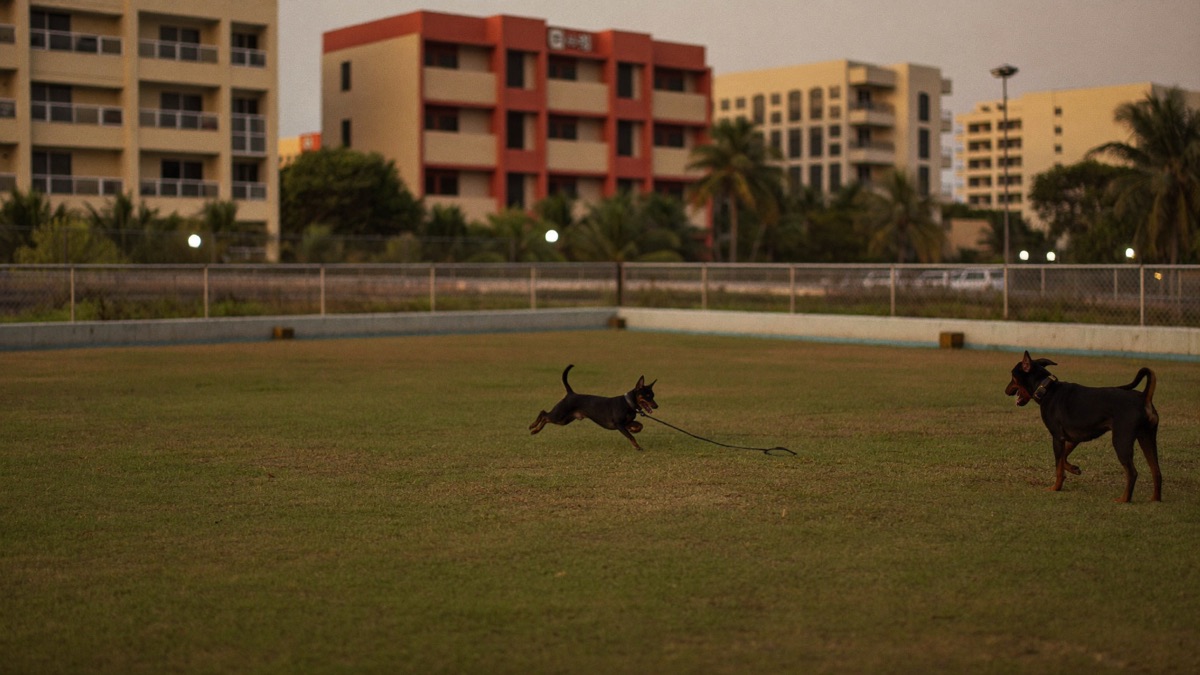
Mostly, yes. FRAPs peak in puppyhood and adolescence and fade with age, though many healthy adults and even seniors keep an occasional lap in them — a senior dog that suddenly zooms after a bath is doing fine. What changes with age is your job: keep the floors grippy and the circuit clear, and let an old dog enjoy its thirty seconds of nonsense.
Zoomies are one of the few dog behaviours with no downside when managed: free exercise, visible joy, and a reliable sign that your dog feels safe enough to be silly. Give them somewhere good to happen.